
China Adopts Restrictive Theory of Foreign State Immunity

On September 1, 2023, the Standing Committee of the National People’s Congress promulgated the Foreign State Immunity Law of the People’s Republic of China (FSIL) (English translation here). When the law enters into force on January 1, 2024, China will join those countries—a clear majority—that have adopted the restrictive theory of foreign state immunity. For…
Continue ReadingCassirer on Remand: Considering the Laws of Other Interested States

Claude Cassirer brought suit in federal court in California eighteen years ago against the Thyssen Bornemisza Museum of Madrid, Spain, to recover a painting by Camille Pissarro that was stolen from his grandmother by the Nazis during World War II. After a reversal and remand from the U.S. Supreme Court last summer, the case is…
Continue ReadingUsing TLB to Teach Foreign Relations Law
This post discusses Foreign Relations Law as part of our series explaining how professors can use resources on TLB to teach various classes. Previous posts have discussed Transnational Litigation, Civil Procedure, International Business Transactions, and Conflict of Laws. Although TLB focuses on litigation, and Foreign Relations Law classes cover many topics that are rarely litigated, there is significant…
Continue ReadingWhy Terrorism Exceptions to State Immunity Do Not Violate International Law

[Editor’s Note: This post also appears at Just Security.] On June 27, 2023, Iran sued Canada at the International Court of Justice (ICJ), arguing that the terrorism exceptions in Canada’s State Immunities Act (SIA) violate customary international law. As Professor Maryam Jamshidi noted at Just Security, it seems that the main target of Iran’s action…
Continue ReadingSupreme Court Roundup (October Term 2022)

During its 2022 Term, which ended four weeks ago, the Supreme Court decided five cases with important implications for transnational litigation. The questions included whether the Foreign Sovereign Immunities Act (FSIA) applies to criminal proceedings; the standard for aiding and abetting under the Anti-Terrorism Act (ATA); whether states may exercise general personal jurisdiction over foreign…
Continue ReadingU.S. Immunity of International Organizations Since Jam v. IFC: New Challenges and Opportunities

In 2019, the Supreme Court reset the U.S. law of immunities for international organizations with its landmark judgment in Jam v. International Finance Corporation. That case overturned the long-held understanding that the International Organizations Immunities Act (IOIA), 22 U.S.C. §§ 288 et seq., entitled international organizations designated under it to virtually absolute immunity from U.S….
Continue ReadingDiscovery and Immunity: LIV v. PGA

The U.S. legal battle between the PGA Tour (Tour) and the upstart rival LIV Golf continues to revolve around discovery. As regular TLB readers know, LIV Golf is a new professional golf tour that competes with the PGA, in part by luring PGA players to play in LIV tournaments. LIV is financed by the Public Investment…
Continue ReadingDear Justice Gorsuch: There’s No Reason to Worry About the Remand in Halkbank

In Turkiye Halk Bankasi A.S. v. United States (Halkbank), the Supreme Court held that the Foreign Sovereign Immunities Act (FSIA) does not apply to criminal proceedings. The Court remanded the case to the Second Circuit to reconsider Halkbank’s claim of common law immunity. Justice Gorsuch, joined by Justice Alito, wrote a partial dissent. He would…
Continue ReadingChina’s Draft Law on Foreign State Immunity—Part II
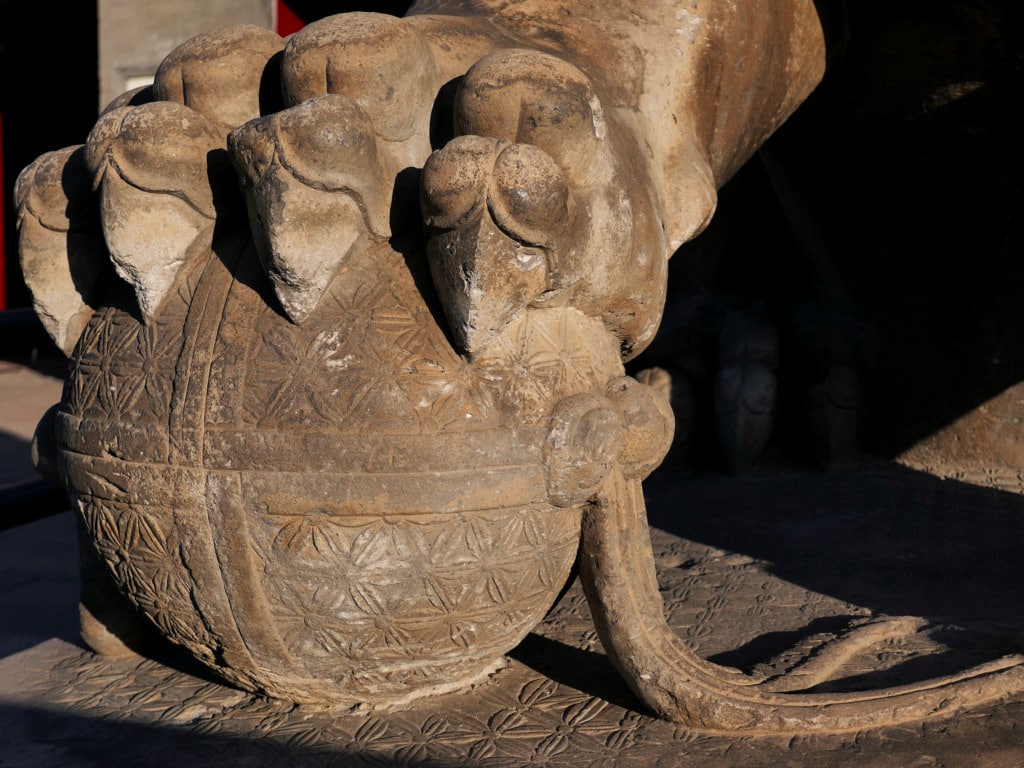
In December 2022, Chinese lawmakers published a draft law on foreign state immunity, an English translation of which is now available. In a prior post, I looked at the draft law’s provisions on immunity from suit. I explained that the law would adopt the restrictive theory of foreign state immunity, bringing China’s position into alignment…
Continue ReadingOpen Questions after Halkbank

The Supreme Court held this week in Türkiye Halk Bankasi, A.S. v. United States that the Foreign Sovereign Immunities Act (FSIA) does not apply to criminal prosecutions. That holding was a blow to Halkbank—a foreign state-owned enterprise under indictment—which had argued that the FSIA provided it with immunity. But the case is not over. The…
Continue Reading