
Enforcing Foreign Judgments in Non-Uniform Act States

The recognition and enforcement of foreign judgments in the United States are generally governed by state law. Most states have adopted one of two uniform acts to address this. Twenty-nine states and the District of Columbia have adopted the 2005 Uniform Foreign-Country Money Judgments Recognition Act. Nine additional states still rely on its predecessor, the…
Continue ReadingIs It Too Dangerous To Litigate In Israel?

Many international contracts contain forum selection clauses stating that litigation must occur in the courts of a particular country. While these clauses provide a welcome measure of certainty as to where future disputes will be resolved, they are sometimes viewed as inconvenient by plaintiffs who would prefer to sue in the United States. In an…
Continue ReadingServing Foreign Defendants’ U.S. Counsel to Avoid the Hague Service Convention

Plaintiffs are sometimes frustrated trying to serve process on foreign defendants through the Hague Service Convention. Sometimes, they ask federal district courts to authorize service by email as an alternative means. The problem with this, as Maggie Gardner and I have explained in detail, is that that the means of service provided in the Convention…
Continue ReadingThe Fuld Oral Arguments as Haiku
Justice Roberts: This is all just words! It sounds like a grab bag. Please: Give us a clear test. Justice Thomas: PLO, PA? Are these things “persons” really? And do they have rights? Justice Alito: Why is this unfair? Don’t the defendants have an Office in New York? Justice Sotomayor: We still need…
Continue ReadingSecond Circuit Expands Scope of Anti-Terrorism Act Suits Against Foreign States

On February 4, 2025, in Schansman v. Sberbank, the U.S. Court of Appeals for the Second Circuit ruled that foreign states and their agencies and instrumentalities may be sued under the Anti-Terrorism Act (ATA) for acts of international terrorism, provided that one of the enumerated exceptions to sovereign immunity in the Foreign Sovereign Immunities Act…
Continue ReadingOral Argument Recap: Fuld v. PLO

On Tuesday, the Supreme Court heard oral argument in Fuld v. Palestine Liberation Organization. The question presented is whether the Promoting Security and Justice for Victims of Terrorism Act of 2019 (PSJVTA) violates the Fifth Amendment’s Due Process Clause by declaring that the Palestine Liberation Organization (PLO) and the Palestinian Authority (PA) have consented to…
Continue ReadingDeciding the “Real Party in Interest” in FSIA Litigation
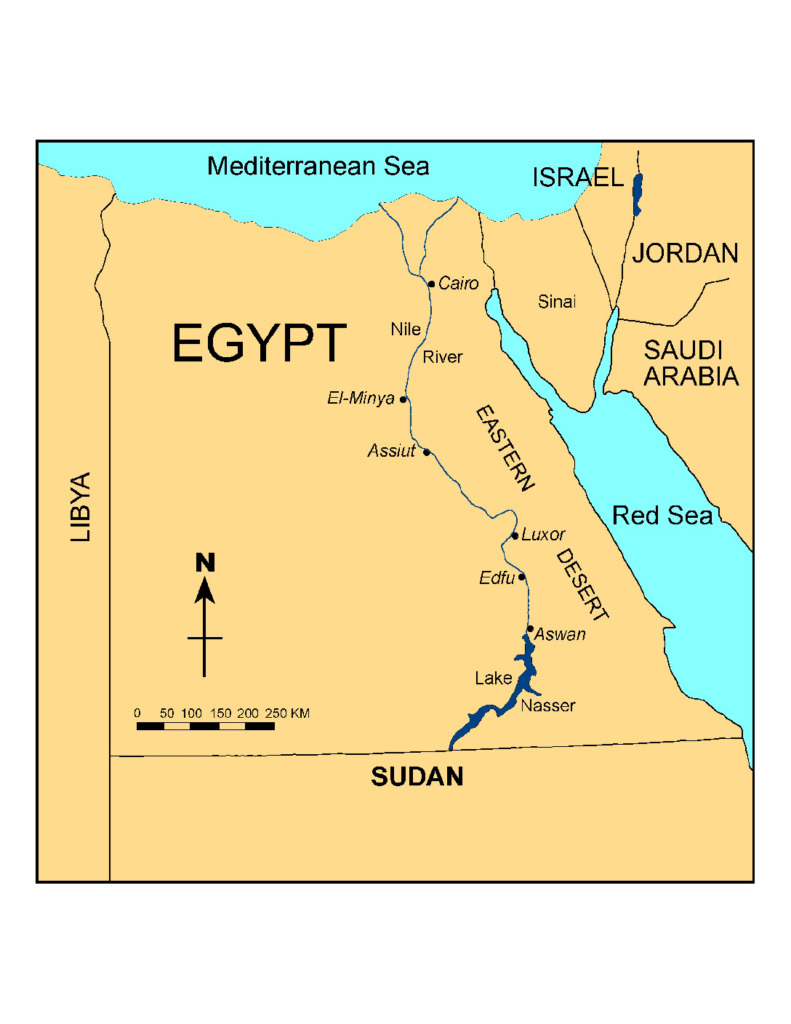
The Second Circuit has categorized a recent case against an individual Egyptian official as a case against the Egyptian government as the “real party in interest.” The case, Hussein v. Maait, was then dismissed because Egypt was immune from suit. The court of appeals did a nice job laying out and applying the relevant “real…
Continue ReadingFuld v. PLO: Argument Day!
Today, the Supreme Court is hearing oral argument in Fuld v. Palestinian Liberation Organization. The petition asks whether the Promoting Security and Justice for Victims of Terrorism Act of 2019 (PSJVTA) violates the Fifth Amendment’s Due Process Clause by declaring that the PLO has consented to personal jurisdiction based on specified conduct. TLB’s prior coverage…
Continue ReadingThe Most-Viewed Posts of 2025 (So Far)

As we approach the third anniversary of Transnational Litigation Blog—the site officially launched on March 28, 2022—I thought it would be interesting to take a look at which posts have attracted the most views in the first few months of 2025. A list of the top ten appears below. Views 1 A Primer on Choice-of-Law…
Continue ReadingFuld Preview: Professor Briefs

Next week, the Supreme Court will hear oral argument in Fuld v. Palestinian Liberation Organization. Fuld raises two interrelated issues: (1) Does the Promoting Security and Justice for Victims of Terrorism Act (PSJVTA) provide consent-based personal jurisdiction consistent with Mallory v. Norfolk Southern Railway Co.?; and (2) What are the differences (if any) between the…
Continue Reading