
Supreme Court Decides Cisco and Cimex
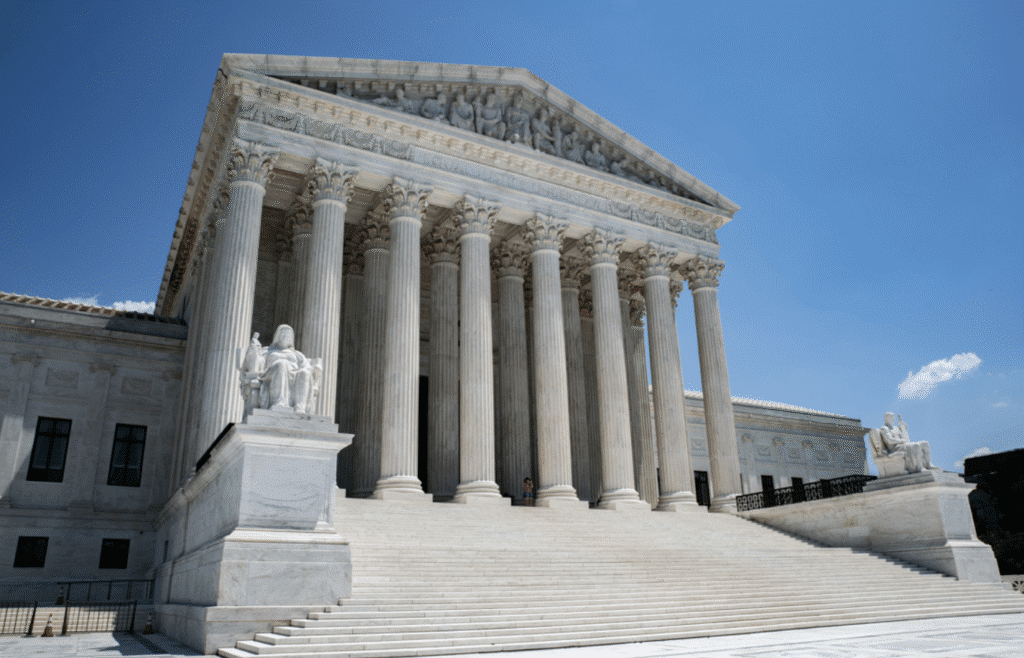
Earlier today, the U.S. Supreme Court handed down decisions in two significant transnational litigation cases. In Cisco Systems, Inc. v. Doe, the Court held that federal courts may not recognize any new causes of action under the Alien Tort Statute (ATS), “clos[ing] the door” on human rights litigation under the ATS and effectively overruling Sosa…
Continue ReadingDistrict Court Rejects Constitutional Challenge to TVPA

On June 9, 2026, in Boniface v. Viliena, Judge Allison D. Burroughs (District of Massachusetts) rejected a challenge to the constitutionality of the Torture Victim Protection Act (TVPA), holding that the act applies extraterritorially to torture and extrajudicial killing between aliens and that Congress had authority to pass the act under the Offenses Clause of…
Continue ReadingThe FSIA and Agreements to Aribtrate

The enforcement of foreign arbitral awards has led to contested questions about personal jurisdiction, about the scope ofthe arbitration exception to the Foreign Sovereign Immunities Act (FSIA), and about the relationship between that exception and the New York Convention. A new case from the D.C. Circuit, Global Voice v. Republic of Guinea considers the scope…
Continue ReadingThe Solicitor General Opposes Cert in Spain v. Blasket but Opens the Door to Future FSIA Challenges to Award Enforcement

Last week, in Kingdom of Spain v. Blasket Renewable Investments LLC, the Solicitor General (SG) weighed in on whether U.S. courts have jurisdiction to enforce arbitral awards arising from disputes between European investors and EU Member States—so-called “intra-EU” investment arbitrations. These awards have generated significant controversy around the world following landmark rulings by the Court…
Continue ReadingSeventh Circuit Limits Email Service on Foreign Defendants

Last Friday, the Seventh Circuit held in Kangol LLC v. Hangzhou Chuanyue Silk Import & Export Co., Ltd. that defendants located in China cannot be served by email when the Hague Service Convention applies. (Disclaimer: Bill Dodge and I filed an amicus in Kangol with the help of friend-of-the-blog Ted Folkman urging this result.) The…
Continue ReadingJurisdictional Puzzles about the Enforcement of Judgments & Arbitral Awards
Two recent cases highlight unsettled questions about jurisdictional limitations on the recognition and enforcement of foreign judgements and arbitral awards. The first, Alterna Aircraft V B Ltd. v. SpiceJet Ltd., addressed whether due process requires the presence of property in the forum state if the court otherwise lacks personal jurisdiction over the debtor. In Alterna,…
Continue ReadingHavlish v. Taliban: Second Circuit Denies Rehearing En Banc

As of Spring 2026, Afghan central bank assets blocked by the U.S. government remain unavailable to satisfy terrorism-related judgments. In March, a divided Second Circuit denied rehearing en banc to victims of terrorist attacks who hold judgments against the Taliban and who seek to enforce those judgments against $3.5 billion in “blocked” assets held in…
Continue ReadingWashington Supreme Court Requires In-State Property for Recognition of Foreign Judgments

To recognize and enforce a judgment rendered in another jurisdiction, a U.S. court need not have in personam jurisdiction over the judgment debtor. The U.S. Supreme Court observed in Shaffer v. Heitner (1977): Once it has been determined by a court of competent jurisdiction that the defendant is a debtor of the plaintiff, there would…
Continue ReadingThe Good and the Bad of King v. Bon Charge

The Supreme Court’s latest personal jurisdiction decision, Fuld v. Palestine Liberation Organization (2025), left the lower courts to work out what exactly the Fifth Amendment due process analysis entails. The emerging consensus is that those questions can be avoided as long as the facts of a case meet the preexisting test for personal jurisdiction under…
Continue ReadingSupreme Court Coverage
The Court will hear oral argument today in Cisco Systems v. Doe I et al. to decide whether a U.S. corporation can be held liable under the Alien Tort Statue or the Torture Victim Protection Act for aiding and abetting violations of international human rights law. The argument, which is the only one scheduled today, starts…
Continue Reading