
A Narrow Interpretation of the FSIA’s Expropriation Exception

Introduction Three generations of the Herzog family have sought to recover some $100 million in artwork stolen by Hungarian government officials and Nazi collaborators during and following World War II. The looted works included pieces by the renowned artists El Greco, Renoir, and Monet. To the family’s disappointment, the Court of Appeals for the D.C….
Continue Reading“Waiving” the Hague Service Convention

Complying with the Hague Service Convention (HSC) is admittedly not always easy, quick, or even feasible. Not surprisingly, then, parties may want to work around the HSC through contractual language. John Coyle, Robin Effron, and I have previously explained how private parties can—and cannot—contract around the HSC. Unfortunately, the District of New Jersey (Judge Julian…
Continue ReadingEnforcing U.S. Judgments Against “Foreign” Assets of Foreign Sovereigns: a Rejoinder

On June 30, 2025, in Petersen Energia Inversora, S.A.U. v. Argentine Republic, a federal district court in New York ordered the Republic of Argentina to “(i) transfer its Class D shares of YPF to a global custody account at BNYM in New York within 14 days from the date of this order; and (ii) instruct…
Continue ReadingFifth Circuit Interprets Copyright Termination and Renewal Provisions to Apply Worldwide

In recent years, the U.S. Supreme Court has relied increasingly on the presumption against extraterritoriality to determine the geographic scope of federal statutes. This presumption seems particularly strong for intellectual property statutes. Most recently, the Court strictly applied the presumption against extraterritoriality to the Lanham Act (the federal trademark statute) in Abitron Austria GmbH v….
Continue ReadingSecond Circuit Holds Hague Service Convention Prohibits Email Service on Chinese Defendants

On December 18, 2025, just as TLB was going on holiday break, the Second Circuit issued its decision in Smart Study Co. v. Shenzhenshixindajixieyouxiangongsi, holding that the Hague Service Convention prohibits email service on Chinese defendants. As friend-of-TLB Ted Folkman wrote shortly thereafter, “This is the one we’ve been waiting for.” The question of email…
Continue ReadingNinth Circuit Reverses Personal Jurisdiction Decision in Lufthansa Case

Last year, I expressed doubt over the Northern District of California’s dismissal for lack of personal jurisdiction of a suit brought by California residents regarding their alleged mistreatment when checking in for their Lufthansa flight in Saudi Arabia. The Ninth Circuit recently reversed that decision in Doe v. Deutsche Lufthansa Aktiengesellschaft, holding that that the…
Continue ReadingExtraterritorial Application of State RICO Statutes
Over the past decade, the U.S. Supreme Court has twice addressed the extraterritorial application of the federal RICO statute. In RJR Nabisco, Inc. v. European Community (2016), the Court held that RICO’s criminal provisions apply extraterritorially to the same extent as the predicate acts on which RICO charges are based, whereas RICO’s civil cause of…
Continue ReadingDoes China Have to Pay Qing Dynasty Bonds?
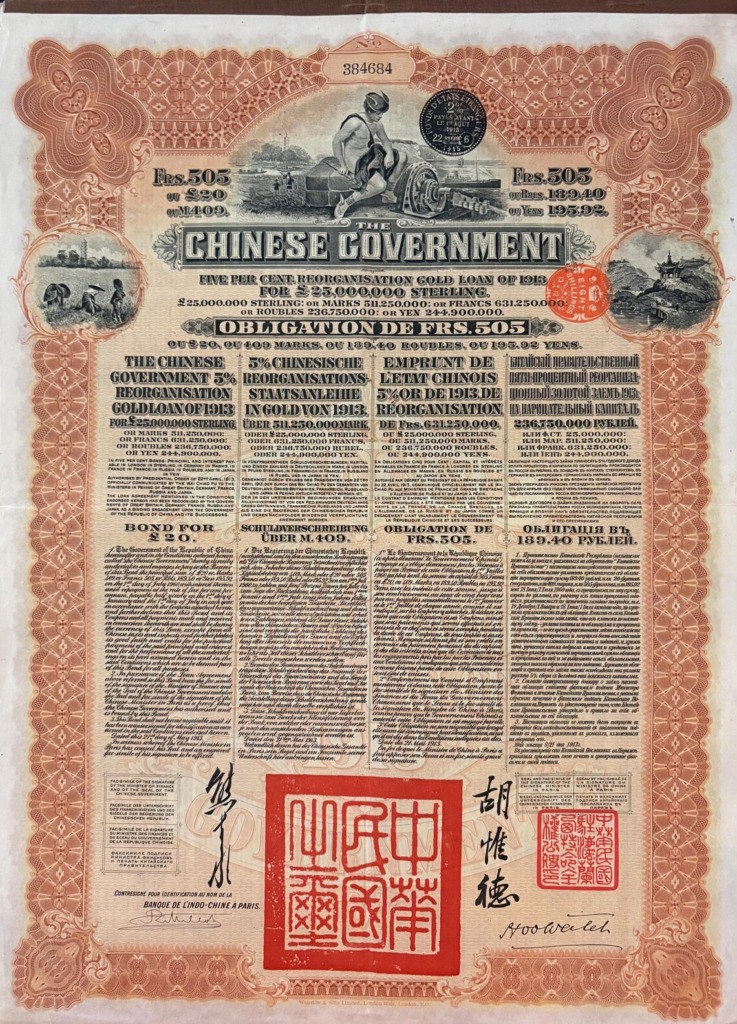
China’s last imperial dynasty, the Qing, fell in 1912. But some bondholders have not given up trying to collect on bonds issued as long ago as 1898. The latest attempt claims that the People’s Republic of China (PRC) violated priority clauses in these old bonds when it issued dollar-denominated bonds in 2020 and 2021, some…
Continue ReadingPig-Butchering, Crypto, and Preliminary Injunctions

The US government just announced its largest forfeiture action ever, seeking $15B in Bitcoin from defendants in Cambodia who allegedly swindled victims in the United States and around the world. The indictment alleges a form of fraud known as “pig-butchering,” one of several kinds of crypto-related fraud beginning to generate significant transnational civil litigation in…
Continue ReadingTexas Court Gives Foreign Judgment Broad Res Judicata Effect

Gottwald v. Dominguez de Cano is a not a case that most readers would normally hear of. It is a Texas Court of Appeals decision giving res judicata effect to a Mexican judgment to bar a claim in state court to recover money paid in a Mexican land sale more than a decade ago. But…
Continue Reading