
Supreme Court Says Helms-Burton Abrogates Foreign Sovereign Immunity
June 30, 2026
In Exxon Mobil Corp v. Corporación CIMEX, S.A. (Cuba), the Supreme Court held that the Helms-Burton Act abrogated the sovereign immunity of Cuban agencies and instrumentalities for suits brought under the Act. Plaintiffs may therefore pursue such suits whether or not they can satisfy one of the exceptions to immunity in the Foreign Sovereign Immunities Act (“FSIA”).
On the surface, the decision is a win for victims of Cuban expropriation, removing a serious threshold obstacle to claims against Cuban state-owned entities. But the decision reveals further obstacles to winning, and then enforcing, a judgment in such suits, while also raising questions about the scope of the Helms-Burton Act’s cause of action.
Expropriation in Cuba
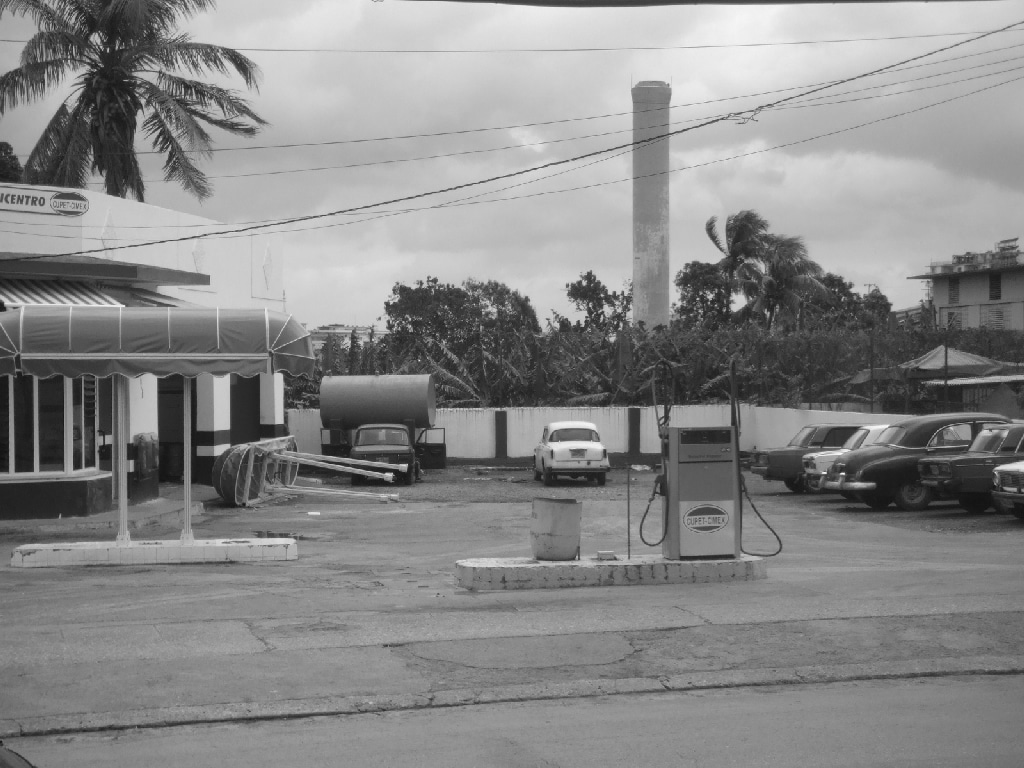
When Fidel Castro took power in Cuba in 1959, the Cuban government seized a vast amount of American-owned property, including gas stations, terminals, packaging plants, and an oil refinery all owned by Exxon Mobil. Those facilities – originally valued at $71 million – are now owned by Cuban state-owned companies, CUPET and CIMEX.
The Helms-Burton Act, enacted in 1996, sought to provide a remedy for those seizures. The Act created a private cause of action against “any person that … traffics in property” seized by Cuba after January 1, 1959. “Person” is defined as “any person or entity, including any agency or instrumentality of a foreign state.” The Act also authorized the President to “suspend the right to bring” such an action for six months at a time, a power successive presidents exercised until 2019. When the suspension lapsed, Exxon sued CUPET and CIMEX under the Act in the U.S. District Court for the District of Columbia for over a billion dollars (the original $71 million, plus statutory treble damages and prejudgment interest).
The Cuban entities argued they were entitled to immunity under the FSIA because Exxon’s suit did not fall within any of the FSIA’s exceptions. The District Court held that the FSIA applied, but it found that the commercial-activity exception covered Exxon’s claim against CIMEX. The D.C. Circuit agreed that the FSIA applied but remanded for further factfinding on the exception’s applicability. Exxon petitioned for certiorari on the question of whether the FSIA applied to suits under the Helms-Burton Act, or whether the Act itself abrogated CIMEX’s sovereign immunity.
The Supreme Court’s Decision
The Supreme Court granted certiorari and reversed in an opinion by Justice Kavanaugh for six Justices. Agreeing with Exxon, the Court held that the Helms-Burton Act abrogates the sovereign immunity of Cuban agencies and instrumentalities, whether or not any of the FSIA’s exceptions to immunity apply.
The Court started from the premise that statutes are construed to abrogate immunity only if the abrogation is “unmistakably clear in the language of the statute,” a rule borrowed from other immunity contexts. Applying that clear-statement rule, the Court gave four reasons for finding an abrogation of immunity in the Helms-Burton Act, seemingly ordered by weight.
First, the Court relied on the Act’s definition of “person,” which expressly includes “any agency or instrumentality of a foreign state.” Since the cause of action runs against any “person” trafficking in confiscated property, the Act by its terms authorizes suits against instrumentalities like CIMEX. The Court relied heavily on Department of Agriculture Rural Development Rural Housing Service v. Kirtz (2024), which held that the Fair Credit Reporting Act (“FCRA”) abrogated the United States’ sovereign immunity where, like the Helms-Burton Act, the statute created a cause of action against “any person” and defined “person” to include governmental agencies.
Second , the Court reasoned that applying the FSIA would “largely negate the Act’s cause of action.” Because of the United States’s economic embargo of Cuba (which the Helms-Burton Act strengthened), the Court reasoned that plaintiffs would “almost never” be able to show the kind of commercial nexus to the United States needed to satisfy the two most likely FSIA exceptions (the commercial-activity and expropriation exceptions). Since Congress “does not ordinarily enact self-defeating statutes,” the Court concluded that Congress intended to abrogate Cuban instrumentalities’ immunity. (The Court did not address the District Court’s conclusion that Exxon had met the commercial-activity exception.)
Third, the Court relied on the Act’s own characterization of the suits it authorized as “action[s] brought under [28 U.S.C. §1331].” Section 1331 establishes general federal-question jurisdiction; whereas section 1330 governs suits against foreign states subject to the FSIA. By placing Helms-Burton suits under §1331, Congress “made clear that [they] are not actions under the FSIA.”
Fourth, the Court equated the President’s power to suspend the Act’s cause of action with the pre-FSIA regime of sovereign immunity, in which the executive made case-by-case immunity determinations. (See TLB’s Primer on Foreign Sovereign Immunity for more on the old way of doing things.) It wouldn’t make sense, the Court reasoned, for Congress to “reinstate[] the pre-FSIA immunity regime while simultaneously subjecting suits under the Act to the FSIA.” Moreover, the FSIA’s near-insuperable barrier to suits against Cuban state-owned entities (in the Court’s view) would render the President’s decision to allow such suits toothless.
Justice Kagan dissented, joined by Justices Sotomayor and Jackson. At the outset, Justice Kagan suggested there ought to be an especially stringent clear-statement rule for abrogating foreign sovereign immunity, since (unlike state or federal immunity) the FSIA set out to “comprehensive[ly]” resolve foreign sovereign immunity questions.
Informed by that heightened standard, the dissenters were swayed by evidence that Congress was aware of the FSIA’s potential applicability to the Helms-Burton Act but had not expressly abrogated it. For one, the Act did amend the FSIA’s rules governing execution against state-owned property. (It expressly extended immunity in Helms-Burton suits to diplomatic mission property.) Since Congress clearly “thought the FSIA would otherwise apply,” its choice “not to change even a jot of the FSIA’s jurisdictional-immunity rule” was presumptively intentional. The majority responded that “execution and jurisdictional immunity are separate concepts,” so amendment of one “tells us nothing” about the other. (More on this below.) Similarly, a draft of what would become the Helms-Burton Act did expressly abrogate foreign sovereign immunity, but the provision was dropped before enactment in response to concerns from the Department of Justice. For the dissenters, this too evinced Congress’s intentional choice to preserve the FSIA.
The dissent also disputed the majority’s reliance on Kirtz to infer abrogation of immunity from the Act’s cause of action. In Kirtz (an opinion Justices Kagan and Sotomayor joined), abrogation was the only way to give effect to the FCRA’s authorization of suits against agencies, since there are no exceptions to federal sovereign immunity other than abrogation. Kirtz thus “required more” than a private right of action that could apply to a sovereign: The cause of action must be “inexplicable absent abrogation.” Not so with Helms-Burton, the dissent argued. Plaintiffs can still sue foreign agencies and instrumentalities within the FSIA framework, so long as they meet an FSIA exception (which the dissenters disagreed was practically impossible).
According to the dissent, the majority had mistakenly adopted a “tunnel-vision perspective” assuming that the Helms-Burton Act authorized suits only against Cuban agencies or instrumentalities. In reality, Justice Kagan explained, the Act authorized – and was in part aimed at – suits against private parties to deter them from investing in Cuba. Correcting that misapprehension, the dissent argued, undermined each of the majority’s points: The Act’s cause of action is explicable without abrogation; suits brought under the Act do generally fall under §1331; and unlike the pre-FSIA immunity regime, the Act’s suspension mechanism applies to all suits rather than just those against foreign states. In short, “[t]he statute is perfectly coherent as written,” and nothing “presents a choice between giving effect to the Helms-Burton Act and preserving the immunity codified in the FSIA.”
What Happens Next?
Although CIMEX is an important victory for Helms-Burton plaintiffs, celebration may be premature, as the Court’s opinion tees up several thorny questions.
For one, CIMEX creates uncertainty about how plaintiffs will obtain personal jurisdiction over Cuban agencies and instrumentalities (an issue identified previously on TLB). Plaintiffs suing foreign states must establish both subject-matter and personal jurisdiction. Ordinarily, the FSIA (specifically, 28 U.S.C. §1330) takes care of both: Section 1330(a) grants subject-matter jurisdiction when one of the FSIA’s immunity exceptions applies, and §1330(b) provides personal jurisdiction if subject-matter jurisdiction exists “under subsection (a)” and the defendant is properly served. But §1330(b) by its terms does not apply when the immunity has been abrogated by another statute – like the Helms-Burton Act.
Plaintiffs may look to §6082(c)(2) in the Helms-Burton Act, which borrowed the FSIA’s requirements for service of process on “an agency or instrumentality of a foreign state in the conduct of a commercial activity.” In CIMEX, the Court described the FSIA’s service provisions as “defin[ing] when a court may exercise personal jurisdiction over a foreign agency or instrumentality.” But disputes will likely persist about what effect, if any, that provision has on the personal jurisdiction analysis. Options under Federal Rule of Civil Procedure 4(k) will likely also have a role to play. And no matter the statutory basis for personal jurisdiction, plaintiffs will also need to satisfy any applicable constitutional due process standards – an issue which will be informed by the Supreme Court’s recent decision in Fuld v. Palestine Liberation Organization (2025). (See here and here for analysis of Fuld.) These questions will call for thoughtful and creative lawyering (and judging) on remand and in future Helms-Burton litigation.
Assuming a plaintiff establishes personal jurisdiction over a Cuban agency or instrumentality, another obstacle lurks: executing any resulting judgment. Rejecting the view (urged by both the dissent and Exxon, in different directions) that jurisdictional and execution immunity stand or fall together, the CIMEX majority explained that the two are “separate concepts” and accepted that property owned by Cuban instrumentalities is still entitled to immunity from execution under the FSIA. But the FSIA’s exceptions to execution immunity all require a U.S. nexus, which the Court thought would be almost impossible to show in Helms-Burton cases. And while there is some question whether the FSIA’s execution immunity regime applies to property outside the United States, the government has taken the position that common law immunity grants categorical protection to such assets. It is ironic that the same opinion which relieved Helms-Burton plaintiffs from having to meet a threshold FSIA exception to jurisdictional immunity also confirmed they would face daunting immunity-based obstacles when seeking to execute against sovereign property.
Finally, CIMEX opens another question for future Helms-Burton suits: Did the Act abrogate immunity for agencies and instrumentalities of states other than Cuba? The majority reserves the question, but (as the dissent notes) textually, the Act’s cause of action runs against “any agency or instrumentality of a foreign state.” The question will thus become whether the statutory language the Court relied on was “unmistakable” enough to abrogate immunity on its own, or whether the other, Cuba-specific factors the Court considered were essential to its decision. The opinion itself can be read to support either view. It will be interesting to see what lower courts do if and when this situation arises.
Conclusion
In CIMEX, the Supreme Court handed Helms-Burton plaintiffs their second victory of this Term. But as in the Havana Docks case, ultimate victory may yet prove elusive.