
Supreme Court Permits Claims Against Cruise Lines for Using Cuban Docks
May 26, 2026
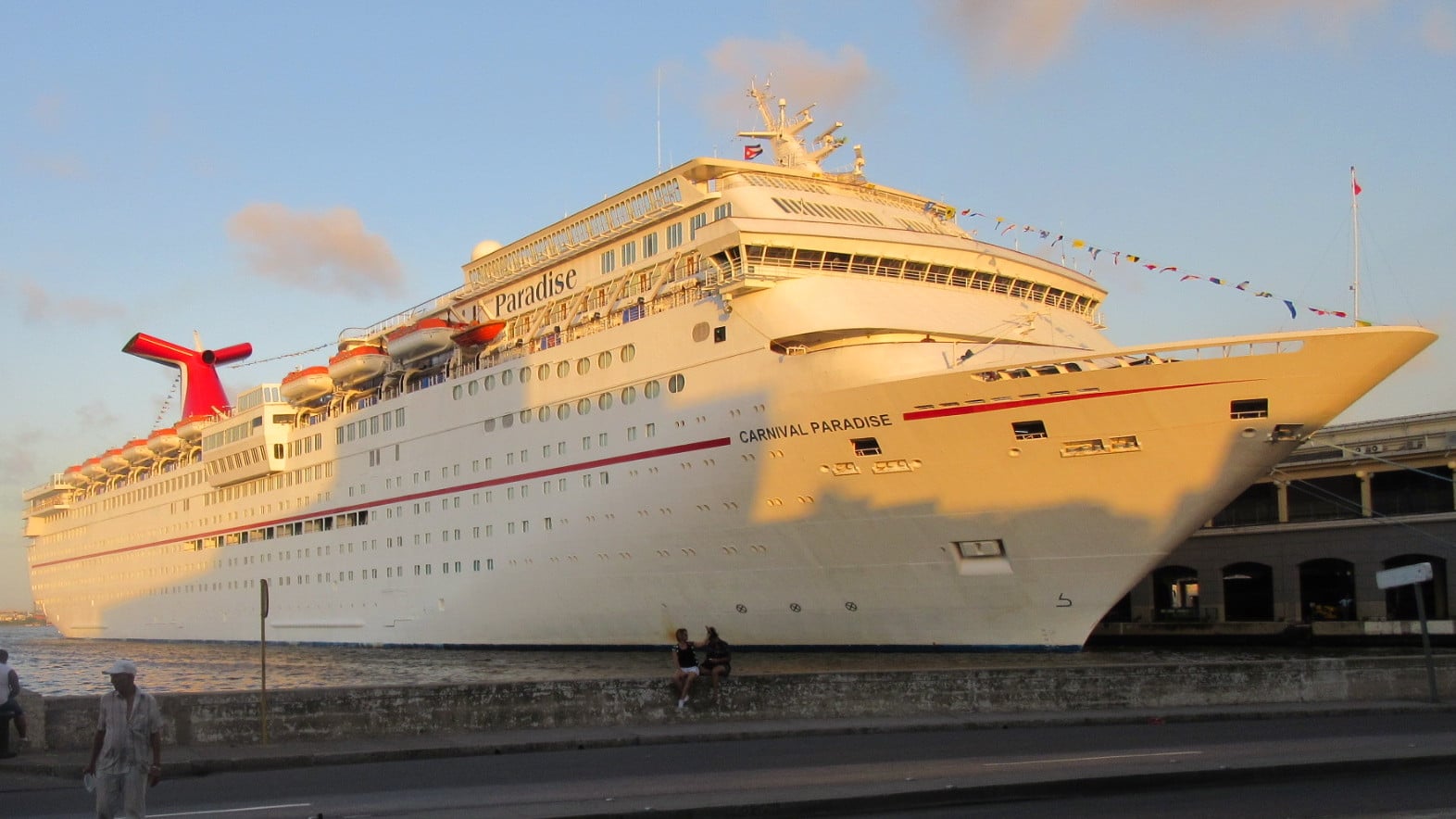
On May 21, 2026, the U.S. Supreme Court held that Havana Docks, a U.S. company, may sue U.S. cruise lines under the Helms-Burton Act for using docks confiscated by the Cuban government in 1960. Title III of the Act allows U.S. nationals with claims to property expropriated by Cuba to sue any person who “traffics in” such property, potentially for three times the value of the claim. Although Helms-Burton is 30 years old, Title III was suspended by successive presidents until 2019, when President Trump let the suspension lapse and Havana Docks sued.
Writing for an eight-Justice majority in Havana Docks Corp. v. Royal Caribbean Cruises, Ltd., Justice Thomas relied on the Act’s plain text to allow Havana Docks to sue cruise lines for using the expropriated docks from 2016 to 2019, even though its own right to use the docks would have expired in 2004. Justice Sotomayor wrote a concurring opinion, joined by Justice Kavanaugh, worrying that the decision might permit the company also to sue the million or so passengers who took cruises to Cuba during that time. Justice Kagan dissented, noting that the property actually expropriated from Havana Docks was the concession to use the docks rather than the docks themselves, which always belonged to Cuba.
The Docks
In 1905, Cuba granted a concession to Compañia del Puerto to build and operate docks at the Port of Havana for 50 years. The concession was later transferred to Havana Docks, a Delaware corporation, and extended to 99 years. In 1960, Cuba expropriated the concession, along with many other properties owned by U.S. nationals. Havana Docks filed a claim with the U.S. Foreign Claims Settlement Commission, which certified a loss of approximately $9 million plus interest from the date of expropriation. When President Trump ended the suspension of Title III in 2019, Havana Docks sued four U.S. cruise lines that used the docks between 2016 and 2019. The district court awarded damages of nearly $110 million (the present value of the claim times three) against each of the four defendants, or about $440 million in total.
The Eleventh Circuit reversed because “Havana Docks’ limited property interest had expired, for purposes of Title III, at the time of the alleged trafficking by the cruise lines.” Since the plaintiff’s concession would have expired in 2004, in other words, the defendants could not be sued for using the docks after that time. The Solicitor General backed the plaintiff in this case, urging the Supreme Court to grant review and filing an amicus brief in its support.
The Act
Title III provides that “any person that … traffics in property which was confiscated by the Cuban Government on or after January 1, 1959, shall be liable to any United States national who owns the claim to such property for money damages.” If the claim has been certified by the Foreign Claims Settlement Commission, the damages may be trebled.
“Property” is defined as “any property (including patents, copyrights, trademarks, and any other form of intellectual property), whether real, personal, or mixed, and any present, future, or contingent right, security, or other interest therein, including any leasehold interest.” And “confiscated” refers to “the nationalization, expropriation, or other seizure by the Cuban Government of ownership or control of property, on or after January 1, 1959.”
A person “traffics” in confiscated property if, among other things, it “sells, transfers, distributes, dispenses, brokers, manages, or otherwise disposes of confiscated property, or purchases, leases, receives, possesses, obtains control of, manages, uses, or otherwise acquires or holds an interest in confiscated property.”
The Decision
The fundamental question in Havana Docks was whether “property which was confiscated” refers only to the property interest that was taken from the plaintiff (here, the right to use the docks until 2004) or also to the underlying property in which the plaintiff had an interest (the docks themselves).
The Act’s definition of “property,” quoted above, refers separately to property and to interests in property. Justice Thomas inferred from this “plain text” that Title III “imposes liability for trafficking in both the physical property and the property interests.” Reading “property which was confiscated” to refer only to the plaintiff’s interest in the property, he reasoned, would substantially limit the Act.
Trafficking is defined to include “us[ing].” “One uses land or other physical property, but one does not ordinarily use someone else’s property interests,” Justice Thomas observed. In this case, he continued, “no matter when Havana Docks’ property interest was set to expire, the cruise lines would not have ‘used’ (or otherwise trafficked in) Havana Docks’ concession. The cruise lines would have ‘used’—and trafficked in—‘the docks’ themselves.”
Justice Kagan took aim at this reasoning in her dissent. “The docks are not ‘property which was confiscated by the Cuban Government’ within the meaning of Title III,” she explained, “[b]ecause the docks belonged to the Cuban Government—not Havana Docks—all along.” This is obviously true, so far as it goes. But as Justice Thomas noted in response, the Act defines “confiscated” to include the seizure of “ownership or control of property” (emphasis added by majority). Thus, when the Cuban Government seized the docks, it “confiscated” them even though it owned them already.
Passenger Liability
Justice Sotomayor, along with Justice Kavanaugh, joined the majority opinion on the narrow question of whether the property trafficked in must be the specific property interest confiscated from the plaintiff. But she wrote separately to flag two potentially troubling issues that the Court did not address. First, she noted, Havana Docks’ reading of the statute “could allow it to recover a potentially unlimited amount of money from an unlimited number of people who use the confiscated docks at issue.”
The company’s loss, certified by the Foreign Claims Settlement Commission, was approximately $36 million ($9 million plus interest from the date of expropriation). The district court trebled this amount to approximately $110, as the Act provides, and then allowed Havana Docks to recover that trebled amount from each of four separate cruise lines. In other words, the district court allowed Havana Docks to recover twelve times the amount of its actual loss, or approximately $440 million.
The company’s claims may not stop there. “If petitioner is correct,” Justice Sotomayor noted, “then petitioner potentially could recover $110 million from every person who uses the docks in any way.” Havana Docks could bring further claims against the four defendants in this case, since each docking was arguably a separate instance of trafficking. It could sue independent retailers aboard the defendants’ ships. It could even sue “the nearly one million passengers who paid [the cruise lines] to sail to Cuba,” each of whom is potentially liable for $110 million.
“It is unlikely that Congress intended for someone who suffered a finite loss to reap infinite recoveries,” Justice Sotomayor observed. The Act’s definition of “confiscated” excludes cases where adequate and effective compensation has been provided, and Congress created a commission to assess the value of claims. “That statutory scheme suggests that Congress intended for the Commission’s certification to supply a benchmark for adequate compensation.” The Due Process Clause might also limit Helms-Burton Act claims, she suggested, if the statute imposes penalties against individual defendants that are wholly disproportionate.
Although the temptation to bring further $110 million claims may prove irresistible, it would probably be wise for Havana Docks not to press its luck and to take its twelve-fold recovery to the bank while it can.
The Bait and Switch
And yet it may yet be too early for Havana Docks to run to the bank because of the other issue that Justice Sotomayor raised. The Act’s definition of “traffics” expressly excludes “transactions and uses of property incident to lawful travel to Cuba.” In 2016, the Obama Administration announced that the U.S. Government had removed barriers to resuming cruises to Cuba, and the Office of Foreign Assets Control (OFAC) ultimately amended the Cuba sanctions to allow carrier services by vessel without a specific license. This policy continued under the Trump administration until 2019.
The district court held that the cruise lines’ activities did not fall within the scope of the “incident to lawful travel exception.” But the Eleventh Circuit did not address the issue, and so the Supreme Court declined to do so as well. Assuming that this issue has been properly preserved, Justice Sotomayor wrote, “the Eleventh Circuit should address [it] in the first instance on remand.”
To encourage cruise lines to resume activities in Cuba and then permit Havana Docks to hold them liable for doing so seems like a classic bait and switch. The United States conceded at oral argument that, if the companies received assurances that what they were doing was lawful, imposing liability could “raise due process concerns.” If the Eleventh Circuit concludes that using the docks was “incident to lawful travel to Cuba,” Havana Docks’ will lose its entire $440 million judgment.
Conclusion
The Trump Administration is currently engaged in an unprecedented campaign of pressure against the Cuban Government. The day before the Havana Docks opinion came down, the United States indicted Raul Castro, Cuba’s former president and brother of revolutionary leader Fidel Castro, for involvement in the downing of two planes in 1996, the very incident that prompted passage of the Helms-Burton Act. Negotiations with Cuba reportedly include compensation for expropriated assets.
There is no question that people whose property was expropriated by the Castro regime deserve compensation. Whether they deserve twelve-fold compensation—or even more—is a different question. As Ingrid Brunk has written, if Cuba’s Government does fall, the Trump Administration should move quickly to suspend Helms-Burton Act claims once again and negotiate a fair settlement.