
Strange Statutory Interpretation in Foreign Relations Law: The October 2025 Term
July 15, 2026
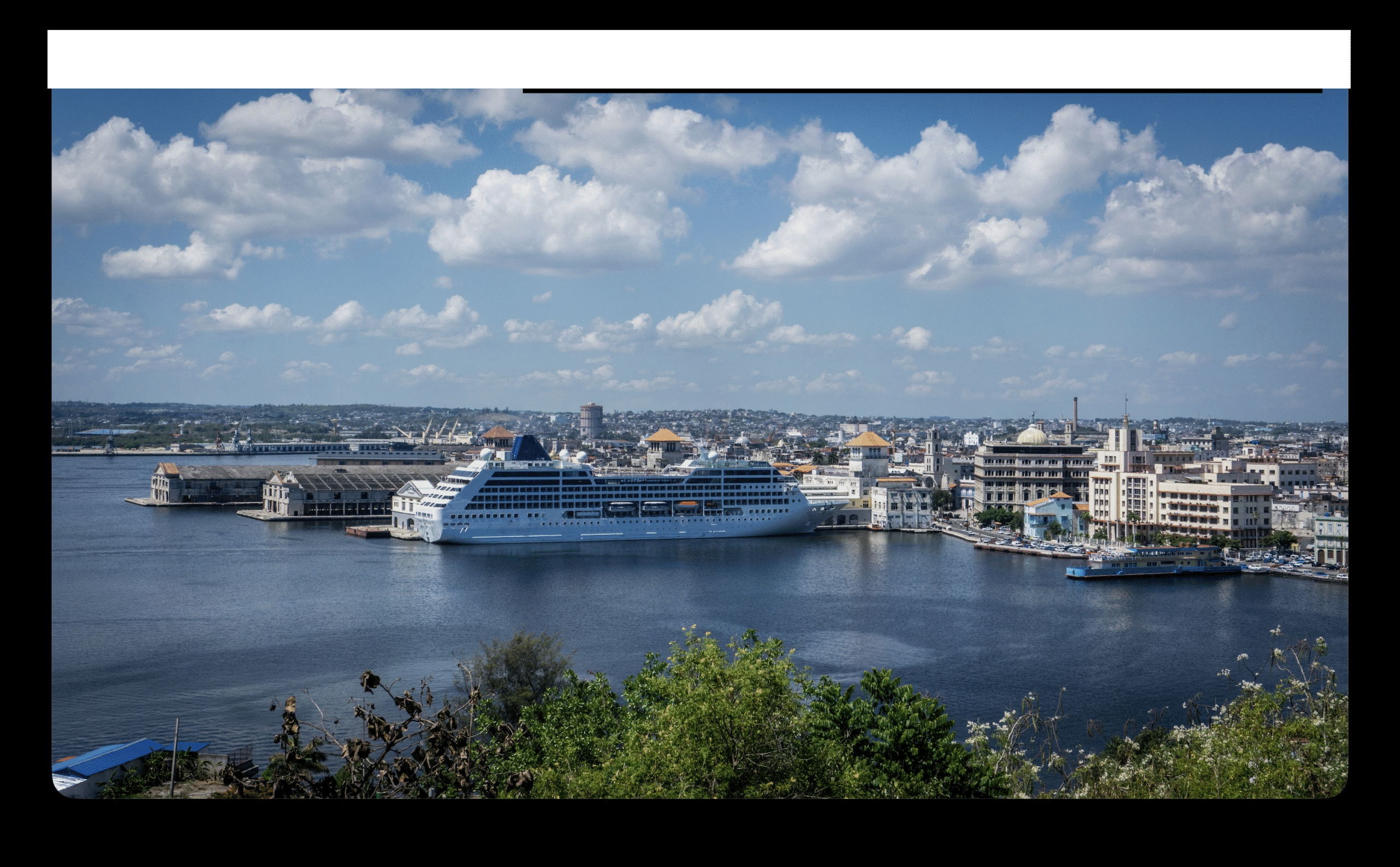
The back end of the Supreme Court’s October Term 2025 brought us three decisions in statutory cases dealing with foreign relations law. Havana Docks Corp. v. Royal Caribbean Cruises, Ltd. explored the scope of the Helms Burton Act, a sanctions statute targeting Cuba. Exxon Mobil Corp. v. Corporación Cimex, S.A. (Cuba) held that this statute created an implied exception to the Foreign Sovereign Immunities Act, expanding the range of defendants subject to the Act’s statutory cause of action. As Bill Dodge has observed, Cisco Systems, Inc. v. Doe shut down the project of basing international human rights torts on the 1789 statute that became known as the Alien Tort Statute. All of the justices owing their appointments to Republican presidents were in the majority; all of those appointed by Democrats distanced themselves from the majority opinions when they did not dissent.
Those inclined to see the world through Red and Blue lenses might note that the alien tort project got its start during the Carter administration and gained ground when Bill Clinton served as President. The private right of action created by the Helms Burton Act was, as Congress anticipated, suspended by every president save Donald Trump (not counting President Biden’s maintenance of the Trump authorization of private suits until the last week of his term, a belated act of resistance that never come into effect). The human rights litigation evolved from suits against thugs in right-wing regimes to claims against multinational businesses, while the Helms Burton Act suits target firms and people who do business with the Havana regime. Hectoring powerful multinationals reads as Blue, suing Cuba’s collaborators feels Red. And the voting pattern corresponded to the supposed Red-Blue factions, even if Exxon was the only decision with a clean 6-3 split.
I never like a Red-Blue take. This perspective is not fit for competent legal analysis and seems largely a toxic by-product of our deplorable if real culture wars. I wish to remain a noncombatant. But I also think these decisions are at odds with each other and mostly unpersuasive. Looking at them as instances of statutory interpretation in the context of private lawsuits with foreign-affairs consequences, they suggest a Court that has lost its way. The Court deploys radically different interpretive strategies in Cisco, on the one hand, and Havana Docks and Exxon Mobil, on the other. Responsibility for the difference cannot be laid on the language of the statutes themselves. As examples of how to read legislation, they are problematic, inviting the too-pat political write-off.
Cisco
To understand the importance of Cisco, some modern history is needed. Filartiga v. Pena Irala, a 1980 Second Circuit decision, ruled that Section 9(b) of the Judiciary Act of 1789, which gave the federal district courts “cognizance, concurrent with the courts of the several States, or the circuit courts, as the case may be, of all causes where an alien sues for a tort only in violation of the law of nations or a treaty of the United States,” allows aliens to sue other aliens in a federal court for violations of the customary international law against torture and, implicitly, all other human rights offenses. The United States filed an amicus brief, with signatures from the State Department, supporting this outcome. The green light for this litigation theory grew even brighter after Congress in 1991 adopted the Torture Victims Protection Act (TVPA), which codified the outcome of Filartiga in response to some pushback from other federal courts.
Between 1991 and 2004, human rights suits became a burgeoning industry, with a gradual shift in focus from bad foreign government officials to international businesses adjacent to bad foreign governments. In the latter year, the Supreme Court decided Sosa v. Alvarez-Machain, its first occasion for an assessment of what the lower federal courts had gotten up to. The Solicitor General filed a brief that rejected Filartiga’s reasoning and would have left victims of human rights violations to the TVPA or non-federal, diversity-based tort claims. A majority of the Court disagreed.
Six of the justices held that the modern codified version of the 1789 language only established federal court subject-matter jurisdiction over these cases and thus did not provide an independent private right of action. To that extent, they endorsed the Solicitor General’s position. On the theory, however, that Congress should not be understood as creating jurisdiction in a legal vacuum, the majority declared that Congress expected courts to create “a relatively modest set of actions alleging violations of the law of nations.” In the case at hand, the plaintiff, the victim of an informal rendition from Mexico to the United States, could not bring his claim for unlawful detention within that “modest set.” Justices Scalia, joined by Chief Justice Rehnquist and Justice Thomas, concurring in the result, objected to this position. Writing for both, Scalia argued that federal courts should never take over from Congress the business of creating private causes of action in federal courts.
Between 2004 and this June, the Court returned to the scope of the Sosa cause of action four more times (Kiobel v. Royal Dutch Petroleum Co., Jesner v. Arab Bank, PLC, Nestlé USA, Inc. v. Doe, and Cisco). In the earlier cases, the plaintiffs lost, but a consensus as to why eluded the Court. None of the decisions had a real five-vote majority for a clear explanation of what rights victims could assert, notwithstanding Justice Kennedy’s purported concurrence in Kiobel. Finally in Cisco, a rule emerged: as Scalia had argued in Sosa, the federal courts should leave the creation of causes of action to Congress. Unlike Scalia, the Cisco majority said it would tolerate Sosa’s pronouncement that the 1789 Congress expected the federal courts to hear cases involving what were then three well-established international-law offenses based on violation of safe conducts, infringement of the rights of ambassadors, and piracy. To that extent only, Sosa is not a dead letter.
Some tension in Cisco’s reasoning immediately jumps out at the reader. If Scalia had it right all along, why preserve the three causes of action that Sosa endorsed? In a footnote, Justice Barrett, the opinion’s author, argued that in 1789 Congress expected causes of action to be found or discovered by courts, not made or created, and these then were the only causes available for finding. But does this mean that these legislative expectations have survived the Erie revolution, where the Court overthrew the finding/discovering distinction? If so, why stop at the law of nations on offer in the late eighteenth century?
Justice Sotomayor, in a dissent joined by Justices Kagan and Jackson, argued that Cisco violated stare decisis and amounted to a judicial hijacking of the legislative role of statutory revision. I think she overstates the point: Sosa’s discussion of prospective causes of action was hypothetical, as everyone on the Court agreed that under any theory Alvarez-Machain had no claim. But, for the same reason, the Cisco majority really had no compelling basis not to repudiate Sosa’s dicta.
My point here is not to advocate a “correct” outcome of the case. In Sosa, I authored an amicus brief supporting something close to Scalia’s position. The brief reasoned that Congress intended Section 9(b) of the Judiciary Act only to open the door to district (as opposed to circuit) court jurisdiction for a particular class of preexisting claims, which would have arisen under foreign or general law and which still would have to satisfy constitutional and statutory requirements for federal court subject-matter jurisdiction. The provision also exempted covered cases from the amount-in-controversy threshold that otherwise applies to diversity cases; this rule remains relevant today. That, to me, remains the most elegant solution to an admittedly difficult issue. Given the almost two centuries between the Judiciary Act’s enactment and its application in Filartiga, and assuming an ongoing commitment to the project of suppressing implied causes of action (which I have supported in my scholarship, but more importantly seems a consistent position of the Court over the last forty-plus years), no other outcome makes sense. But reasonable people can disagree about the significance of the historical gap or the validity of the no-implied-cause-of-actions project.
Rather, Cisco fails as a coherent justification for what might have been some much-needed doctrinal housekeeping. That alone is no crime: the rush to close the Term leaves us with more than few opinions that do not withstand careful parsing. But the Court must have known that its audience would look at Havana Docks and Exxon Mobil alongside Cisco, and ask for some plausible theme that would tie these cases together. The remainder of this post argues that such a theme has gone missing.
Havana Docks
The 1996 Helms Burton Act represented a muscular assertion of congressional power to shape foreign policy against the resistance of the president. Senator Helms, the conservative chair of the Senate Foreign Relations Committee, wanted to ratchet up the pressure on the Castro regime. President Clinton wanted to carry Florida in the upcoming election while containing the costs to U.S. foreign policy of the proposed sanctions. Helms contemplated a new private cause of action that would allow the victims of Castro’s expropriations to sue those who derived benefits from the seized property. He had in mind something like a secondary boycott, pressuring Cuba by punishing actors that helped prop up the regime. The main target of the contemplated lawsuits was nationals of U.S. allies, especially in Europe, Canada, and Mexico, countries that had never supported the U.S. sanctions on Cuba.
The compromise that emerged between Congress and the Clinton administration was creation of a private cause of action that might never take effect. Anyone who had obtained U.S. nationality at the time of suit, even if they had been Cubans when victimized by Castro and his colleagues, could seek treble damages from anyone who “trafficked” in their “property.” The extension of the cause of action to people who had been Cubans at the time of their injury took these claims out of international law as traditionally conceived but was well received in Florida. To restrict this ambitious innovation, the legislation allowed the president to suspend the exercise of this right for perpetually renewable six-month periods. For twenty-three years, until President Trump broke with his predecessors in May 2019, the private remedy remained a dead letter. Accordingly, U.S. courts had no reason to consider the scope of civil liability under the Helms Burton Act.
From 2019 to the present, lawsuits have accumulated. Havana Docks presented the Court with its first chance to determine what claims came under the Act. Havana Docks, a U.S. company, had in 1928 acquired from Cuba a seventy-five-year concession. This gave it the right to build and operate docks at the Port of Havana. The Castro regime kicked the company out of the country in 1959 and took over the docks. From 2016 until 2019, foreign cruise companies used the docks to bring tourists to and from Cuba. Once President Trump lifted the suspension of the Helms Burton Act cause of action, Havana Docks sued those companies for their use of its confiscated property.
The cruise lines defended on many grounds, one of which was that they had done nothing with or to Havana Docks’s property. Havana Docks had a concession that by its own terms would have expired long before the cruise lines began operations in Cuba. Whatever trafficking occurred took place long after Havana Docks’s rights had ended.
Justice Thomas, writing for himself and everyone else but Kagan, argued that the Helms Burton Act treats “property” and a “property interest” as legally distinct. Havana Docks may have had a time-limited interest in the docks concession, but the docks counted as a separate property (within the terms of the Act) that still existed when the cruise companies showed up. These companies had made use of (trafficked) the docks, and, for purposes of Helms Burton Act, these docks were Havana Docks’s property.
As a sometimes teacher of property law, I shake my head with bewilderment. Property defines rights in things, and distinguishes between the thing and the right. It contemplates limited rights: There is more to property law than the fee simple absolute. Rights may be limited in time (think of the life estate or a term of years, which best captures what Havana Docks had) or extent (think of an easement or a joint interest). Imagine, for example, that Havana Docks enjoyed a right of way over other docks in the harbor, ones that it had not built or managed. Does it have, for Helms Burton Act purposes, property in those other docks that supports a trafficking claim against anyone who uses them? Kagan in dissent put the point vividly and, for me, compellingly: “Before 2004, Havana Docks had a right to make use of the docks, even though they belonged to Cuba; after 2004, the company had no right to anything.”
To be precise, Havana Docks from 1959 to the present has had a legal right, but not one sounding in property. Because of Cuba’s seizure of the docks in violation of the concession agreement, Havana Docks had a right to compensation, one recognized in both U.S. and international law. The Solicitor General’s brief seemed to argue that this reparations claim against Cuba qualified as a property right under the Helms Burton Act. If so, in what sense did the cruise companies interfere with that right?
Congress, were it to have contemplated these facts back in 1996, might have wished the outcome that the Court endorsed. Perhaps it might have conceived of outstanding compensation claims as creating liens in the seized property, and deemed that use of property subject to a lien entails actionable use of that property. This result, to be sure, would entail a radical revision of how liens work: typically the lien holder has rights against the property, including downstream owners, but not against persons who use the property under a license.
Alternatively, Congress might have wanted to borrow from the rules governing statutes of limitations to revise property law. Actions and events that thwart assertion of a legal right typically toll the relevant statute of limitations, keeping alive legal protection of the underlying right. Perhaps Congress believed that state misconduct similarly should toll the term of the concession, so that Havana Docks’s rights in the docs continued as long as the Cuban government obstructed their exercise. Of course, normally the law recognizes a distinction between an underlying right (the property interest) and the power to enforce it (the right to sue), but perhaps Congress meant to mush them together so as to maximize the power of victimized property owners.
Congress’s ultimate ambition might have been to nail anyone who provides economic benefits to the Cuban government, however attenuated the connection between the provision of those benefits and the injury suffered by the person whose removal made the benefits possible. But it is amazingly hard to get that outcome from the simple use of the word “property.” Reaching the outcome embraced by Havana Docks means creating a new conception of property, casting aside longstanding principles and practice, to further a specific policy end.
Whatever else one can say about Havana Docks’s gloss on the term “property,” it seems purposive in the extreme. Put aside the confusion stemming from the Court’s persistent insistence on textualism in most contemporary statutory cases, in contrast to its practice here. Why is it appropriate to torture the meaning of words to promote the harassment of those who do business with the Havana regime, and to reject the supposed purpose of the 1789 Congress to signal to a British and European audience a desire to been seen as a rule observant member of the international community?
Exxon Mobil
The Helms Burton Act creates a right to sue “persons” who exploit seized property. Separately, the Foreign Sovereign Immunities Act determines when a U.S. court can entertain a lawsuit against a foreign sovereign, including legal persons (companies) belonging to foreign sovereigns. It is useful to think of immunity as the evil twin of a cause of action: one entitles a victim to legal relief through a private suit, the other negates that right. Exxon Mobil considered whether the creation of the Helms Burton Act cause of action implied a carve-out from the Foreign Sovereign Immunities Act. As in Havana Docks, it decided in favor of wider civil liability.
In 1960, the Castro government seized an oil refinery and other assets owned by Exxon and transferred them to two state-owned corporations. Unlike Havana Docks, there was no question but that property owned by the plaintiffs came into the hands of the defendant companies, thus satisfying the substantive requirements of the Helms Burton Act. But under the Foreign Sovereign Immunities Act, a U.S. court can entertain a lawsuit against these defendants only if one of the statutory exceptions to immunity apply. Rather than finding one (likely a fruitless task, as Justice Kavanaugh’s opinion for the majority points out), Exxon Mobil, supported by an amicus brief by the U.S. government, argued that the Helms Burton Act implicitly overrode existing statutory immunities in their entirety.
Kavanaugh, writing for six members of the Court, agreed. He offered four arguments in support of this outcome, but the one that did the most work was a close cousin of that made by the Sosa majority. Congress created a cause of action capacious enough to apply to state-owned companies. Congress would have known that among the entities likely to have exploited seized property would be Cuban companies that came within the current version of the Foreign Sovereign Immunities Act. To ensure that the creation of the cause of action would be meaningful, Congress must have envisioned a way around that Act. “Congress does not ordinarily enact self-defeating statutes,” Kavanaugh asserted, echoing, but not citing, Sosa.
The problem with this argument is that it ignores the many ways in which a plaintiff in a trafficking case can obtain relief even with the Foreign Sovereign Immunities Act in effect. First, as Kagan’s dissent notes, many potential defendants, such as the cruise companies embroiled in the Havana Docks litigation, gain no comfort from sovereign immunity because foreign states do not own them. Second, even companies owned by a foreign state often fit within a statutory exception to immunity, for instance by maintaining an active business presence in the United States. It is difficult to imagine any non-Cuban state-owned company that might take over Exxon’s Cuban assets as not coming within this exception, given the global nature of the petroleum industry.
Moreover, throwing out sovereign immunity for Cuban state companies does little to advance the compensatory goals of the Helms Burton Act. To be sure, Exxon Mobil transforms the domestic- and international-law right to reparations from a claim only against Cuba to one additionally enforceable against separate legal entities belonging to Cuba that did not carry out the expropriation but did derive benefits from the expropriated property. Yet, for all the reasons that Kavanaugh identified in arguing why these companies do not fit within any the express exceptions to foreign immunity, the likelihood of enforcing any U.S. judgments against them remains vanishingly small. These Cuban entities neither own property in the United States nor engage in business transactions that a U.S. court might intercept so as to levy a recovery. At most, U.S. judgments based on a Helms Burton Act claim would exist as lurking threats, to take effect only with the resumption of normal business relations between Cuba and the United States.
Still, for exactly these reasons one might argue that implying an exception to the Foreign Sovereign Immunities Act is no big deal. Why not stoke dread of the future within the Cuban state-owned economy as a means of breaking its government’s will? Perhaps the goal of the Helms Burton Act is to seem resolute with regard to Cuba, even if there is little to resolve. In a post soon to be published on this blog, Rachel Bayefsky makes a strong case for the expressive value of a right to sue, whatever the obstacles to its transformation into compensation.
The real critique of Exxon Mobil does not rest on its real-world consequences, which, expressive values aside, are likely to be marginal. Rather, as with Havana Docks, the problem is the legal method. How can the Court justify such rank goals-driven interpretation of the Helms Burton Act, given its general resistance to purpose-driven creation of rights to compensation, as in Cisco? The Court has never before found in any federal statute an implicit override of the Foreign Sovereign Immunities Act. Kavanaugh offers no persuasive reason as to why the Helms Burton Act should go where no other legislation has gone before.
Common Threads
One common thread in these three cases is the advice of the U.S. government. Each result conforms to that recommended by the Solicitor General as amicus curiae. What we may be seeing here is not partisan hackery by the Court but rather a modesty-driven recognition of the need to take guidance from the executive during a time of international instability and growing challenges to U.S. influence. Of course, none of the opinions say this: the deference, if it exists at all, must be inferred. Still, perhaps the Court, or at least the majority that signed on to all three decisions, may be practicing interbranch humility, not, as Red-Blue critics might have it, giving up its authority to a particular norms-transducing administration. This may only be the waxing of a kind of foreign relations exceptionalism that, not many years ago, perceptive observers had depicted as waning.
I doubt it. First, a tendency to regard foreign-relations cases as demanding their own approaches and solutions, isolated from the law generally applied to other cases, is distinct from deferring to the executive across a disparate class of statutes and problems, linked only by some connection to foreign affairs. Perhaps the most significant decisions of this Term, certainly the ones that grabbed the greatest cultural mindspace, involve the repudiation of statutory (tariff authority) and constitutional (birthright citizenship) claims by the president. If the Court is willing to trust its own views in matters of great public debate, it is hard to understand why it would become subservient with respect to far more technical, inside-baseball issues specific to judicial practice and statutory interpretation, such as the terms of private access to the courts. Whatever explains these decisions, it is not general deference to the executive in case affecting the foreign policy of the United States.
Second, as instances of judicial modesty, these decisions are schizophrenic. Cisco may impose a kind of discipline on the lower federal courts to create more space for legislative decisionmaking. But Exxon Mobil and, especially, Havana Docks express a desire to break the bonds of statutory law in the aid of some general public-policy objective. Their message to the lower courts is “go wild.”
Purposive and Textualist Statutory Interpretation
In the heyday of the Burger Court, the justices would attack problems of statutory interpretation by invoking “the underlying purposes of the legislative scheme” as indicated by a wide array of nontextual sources. But a usually prevailing majority of the Roberts Court says instead that a reader of a statute should “zero in on the precise statutory text.” Textualist practice, its supporters claim, both deters judicial interpreters from selecting evidence that confirms their substantive priors and induces Congress to make its choices clear. Clarity in turn augments political accountability for the choices made.
This Term’s trio of foreign-relations statutory-interpretation cases indicates a less than complete commitment to that project. Cisco treats the Judiciary Act’s silence regarding causes of action as meaningful: if Congress meant to do more, it should have said so. Havana Docks and Exxon Mobil do the opposite: silence should not get in the way of the Helm Burton Act’s mission to make Cuba buckle.
Lapses in textualist commitment may suggest that talk of interpretive method is a smokescreen. Perhaps the justices cannot escape their substantive priors, however much they profess an intention to engage in disinterested decisionmaking. If so, we should assess the Court in terms of its politics, not pretending that there is such a thing as legal method.
Yet I am not ready to give up. At the end of the day, what separates these cases may be nothing more than trial-and-error learning by the Court in response to new legal contexts. The international human rights cases did not come to the Court until nearly a quarter century after the lower courts’ conceptual breakthrough, and then returned to its docket four more times with lots of lower-court decisions ensuing. Cisco’s outcome may be good or bad, but it certainly reflects extensive and considered engagement.
In contrast, until this Term the Court never had occasion to consider what Congress sought to achieve back in 1996, and the lower courts have had only a few years to wrestle with private claims under the Helms Burton Act. Perhaps the Court will end up taking the path marked by Cisco, kicking the hard problems back to Congress and waiting for further guidance before fully buying in to big litigation. Or, less likely I admit, it will abandon textualist practice across the board to empower federal courts to read felt needs into silent statutes. Over time, its approach to Cuban expropriation and international-human-rights cases may converge, however contradictory it seems right now.