
The Post-Award Battlefield: What Stabil Means for Wartime Investment Awards
July 29, 2026
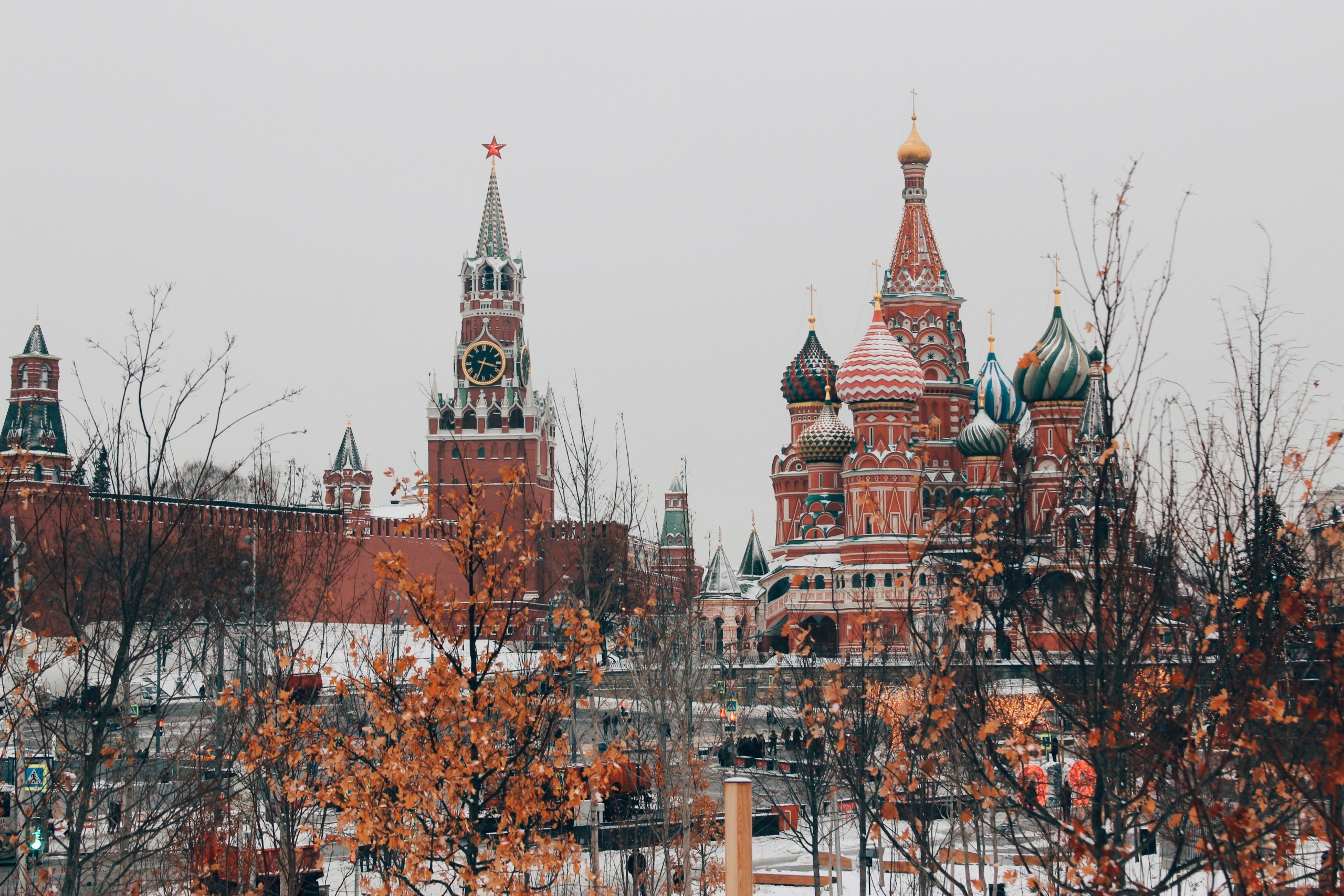
The next phase of Ukraine-related investment law will not unfold primarily before arbitral tribunals. It will unfold in domestic courts asked to convert wartime arbitral awards into recoverable money. The D.C. Circuit’s decision in Stabil LLC v. Russian Federation, affirming jurisdiction to enforce Crimea-related awards against Russia, shows both how far award creditors have come and how much of the battle remains.
This post looks at Stabil and the related district court decision in JSC DTEK Krymenergo v. Russian Federation from the perspective of enforcement strategy: what the decisions settle, what they deliberately leave open, and why award creditors in wartime disputes need to treat enforcement as a campaign rather than a filing.
The Crimea Awards Reach U.S. Courts
The underlying disputes arise from Russia’s 2014 seizure of Crimea. A first generation of arbitral tribunals constituted under the Ukraine–Russia bilateral investment treaty—in cases including Everest Estate, Ukrnafta, Stabil, Oschadbank, and Naftogaz—held Russia responsible for expropriating Ukrainian-owned investments there. Each tribunal reached that result without deciding the sovereignty of Crimea. They treated the peninsula as territory over which Russia exercised effective control for purposes of the treaty, while expressly declining to rule on the lawfulness of the annexation itself.
The petitioners in Stabil were eleven Ukrainian companies that owned petrol stations in Crimea and obtained an award exceeding $34 million. DTEK Krymenergo, a Ukrainian electricity distributor, obtained an award of roughly $207.8 million for the expropriation of its Crimean distribution assets. Both sets of creditors petitioned the U.S. District Court for the District of Columbia to enforce their awards under the New York Convention. Russia moved to dismiss, invoking sovereign immunity and challenging personal jurisdiction.
What the D.C. Circuit Decided
The district courts rejected Russia’s arguments, and in February 2026 the D.C. Circuit affirmed in a consolidated decision. Two parts of that ruling matter most for creditors elsewhere.
The first concerns how narrowly the court read its own jurisdictional inquiry. Under the FSIA’s arbitration exception, the court asked only whether the petitioners had produced an arbitration agreement, an award rendered under that agreement, and a treaty potentially governing enforcement. Russia’s real objection—that the Ukraine–Russia BIT never extended to investments made in Crimea while Crimea was Ukrainian territory, and that Russia therefore never consented to arbitrate these disputes—was treated as an argument about the scope of the arbitration agreement, not a defect in subject-matter jurisdiction. As the court put it, a dispute about treaty coverage and territorial application is not the same question as whether an arbitration agreement exists, and Russia’s attempt to collapse the two did not succeed.
The second concerns personal jurisdiction. Once an FSIA exception applies and service is proper, the D.C. Circuit reasoned, personal jurisdiction follows automatically, because—under long-standing circuit precedent—a foreign state is not a “person” entitled to Fifth Amendment due process protection at all. That holding did the real work. The court also invoked the Supreme Court’s decision in CC/Devas (Mauritius) Ltd. v. Antrix Corp. (2025), but Antrix held only that the FSIA itself imposes no freestanding minimum-contacts requirement; the Court expressly reserved the constitutional question. To the extent the panel in Stabil treated Antrix as resolving whether foreign states possess due-process rights, it overstated the precedent—a point Ingrid Brunk made on this blog when the decision came down.
The gap matters because the constitutional question is not dormant. In Fuld v. Palestine Liberation Organization (2025), decided the same year as Antrix, the Supreme Court held that Fifth Amendment personal jurisdiction analysis is not simply Fourteenth Amendment minimum-contacts analysis transplanted into federal court—without saying what the Fifth Amendment test actually is. The Stabil panel never engaged with Fuld at all. Whether foreign states are “persons” for due process purposes, and if so what test applies, remains an open question that is squarely presented on remand in the Ninth Circuit in Antrix and is a plausible vehicle for further Supreme Court review. Award creditors should not assume the due-process door is permanently closed.
The Deliberate Modesty of the Enforcement Courts
What strikes me most about these decisions, read alongside the underlying awards, is the disciplined division of labor between tribunals and courts. The arbitral tribunals decided questions of effective control, attribution, and expropriation without pronouncing on sovereignty. The enforcement courts, in turn, decided jurisdiction without revisiting either sovereignty or the merits. Deciding the status of Crimea was never the D.C. Circuit’s job, and it said so.
That modesty is a feature, not a bug. It lets the international legal system respond to unlawful annexation through ordinary legal categories—protected investment, treaty breach, compensation, recognition—without requiring any single adjudicator to resolve the underlying territorial conflict. It also builds a template that will matter for the next wave of claims arising from territory occupied since 2022.
Why Jurisdiction Is Only the Opening Move
For award creditors, Stabil and DTEK resolve only the first stage of a long campaign—and that stage is now closed for good. On June 29, 2026, the Supreme Court denied certiorari in Stabil, alongside a parallel petition by Spain arising out of Energy Charter Treaty awards. The denials leave the D.C. Circuit’s jurisdictional rulings undisturbed and, as a practical matter, close off further review of the existence/scope distinction that decided both cases: whether a sovereign’s objection denies that any arbitration agreement was ever formed (a jurisdictional question courts decide de novo) or merely disputes the reach of an agreement it does not deny making (a merits question for the tribunal). For Stabil and DTEK, the jurisdictional fight is over. What remains is execution, and it is a considerably harder fight, fought on at least three fronts.
Execution operates under a separate, less forgiving immunity regime than the one Stabil addressed. Section 1610(a) of the FSIA permits attachment only of property “used for a commercial activity in the United States”; a broad waiver of jurisdictional immunity in the arbitration clause does not get a creditor past this separate requirement. Section 1611(b)then carves out two categories that remain immune even where Section 1610(a) is satisfied: property of a foreign central bank held for its own account, and property connected with a military activity. Central bank funds are immune from prejudgment attachment altogether, regardless of any waiver. That matters enormously here, because the most visible pool of Russian sovereign wealth in principle reachable is central bank reserves, and Section 1611(b) puts them beyond reach absent an explicit waiver Russia will never give. Creditors are not entirely without tools, however. Republic of Argentina v. NML Capital established that Rule 69(a)(2) permits post-judgment discovery into a sovereign debtor’s worldwide assets without the commercial-activity limitation that governs attachment itself, so a creditor can compel disclosure of what Russia and its instrumentalities own and where—even if much of what turns up proves immune once located. And under First National City Bank v. Banco Para el Comercio Exterior de Cuba (“Bancec“), a state-owned entity is only presumptively separate from the state; that presumption falls where the state’s control is so extensive that a principal-agent relationship exists, or where separateness would work fraud or injustice. Given the degree of state direction over entities like Gazprom, Rosneft, and Russia’s major state banks, Bancec piercing is likely to be the real execution-stage battleground, more than the search for some as-yet-unidentified ordinary commercial asset.
Stabil and DTEK creditors should also study the cautionary tale sitting one floor up in the same courthouse. In Hulley Enterprises v. Russian Federation, the D.C. Circuit vacated confirmation of the roughly $50 billion Yukos award because Russia signed but never ratified the Energy Charter Treaty—meaning the real question was not the scope of an admitted arbitration agreement but whether one existed at all, which courts decide independently rather than deferring to the tribunal. Stabil came out the other way only because Russia’s objection presupposed the Ukraine–Russia BIT’s standing offer to arbitrate and disputed only its territorial reach. The distinction that rescued the Stabil award — treating disputes over a treaty’s coverage as questions of arbitrability for the arbitrators rather than as jurisdictional facts for the court — is the same distinction that imperiled the Yukos award in Hulley, where the D.C. Circuit insisted that the existence of an arbitration agreement be decided by the court de novo. Where that line falls is contested even within the Executive Branch: in its invited amicus brief in Kingdom of Spain v. Blasket Renewable Investments, the Solicitor General argued that the D.C. Circuit has been drawing it in the wrong place — that whether a state has an arbitration agreement “with or for the benefit of” the plaintiff is a jurisdictional question courts must answer for themselves — even while recommending, successfully, that the Court deny review. That argument did not die with the cert denial. It will be back, in this line of cases or the next one.
Sanctions add a second, largely non-judicial layer, and here the more consequential story for creditors is one of scale rather than licensing mechanics. Attachment, turnover, settlement, and even the receipt of funds may require an OFAC license where the underlying property is blocked. But congressional findings behind the REPO Act put the value of Russian sovereign assets immobilized worldwide at roughly $300 billion, of which only an estimated $4–5 billion sits within
U.S. jurisdiction. The overwhelming majority—on the order of €200 billion—sits in Europe, mainly at Euroclear in Belgium, and is being managed through an entirely different mechanism: the G7’s Extraordinary Revenue Acceleration loan, which channels the interest earned on those immobilized assets, not the principal, into a $50 billion facility for Ukraine, with a larger EU “reparations loan” under discussion for 2026–2027. A private FSIA judgment creditor has no claim on any of that architecture. The upshot is that award creditors pursuing Russia through the courts are fishing in a much smaller pond than the headline $300 billion figure suggests, and the pond keeps shrinking as blocked property becomes the subject of competing legislative and diplomatic claims.
Time and politics are the third front, and they interact directly with the first two rather than sitting apart from them. The REPO Implementation Act introduced in the Senate in September 2025, and the SABER Act introduced in June 2026, would each accelerate the transfer of blocked Russian assets to Ukraine for reconstruction or military use. If either becomes law and the executive branch exercises the seizure authority it grants, some of the very assets a creditor might otherwise target through a turnover motion could be reassigned by statute before that motion is ever filed. Creditors should not assume the pool of attachable Russian property will still be there once the FSIA merits fight is finished. The safer assumption is that it will be smaller, and that private creditors are now competing with the U.S. government itself, and with a coordinated G7 political process, for a shrinking set of assets. Filing in multiple fora and preserving priority now, rather than waiting for the doctrine or the politics to settle, is not just good practice—it may be the only way to stay ahead of that competition.
The Broader Lesson for Wartime Investment Disputes
Stabil and DTEK are the leading edge of what will become a substantial body of enforcement litigation arising from the war against Ukraine. The lesson for investors—and for counsel structuring claims today—is that enforcement analysis belongs at the beginning of the case, not the end. Treaty coverage, the seat of arbitration, the form of the award, the identification of respondent-state assets, and the sanctions posture of every payment channel will determine whether a wartime award turns into a recovery or stays a trophy.
The merits tribunals have shown they can adjudicate expropriation in occupied territory without deciding sovereignty. The enforcement courts have now shown they can recognize the resulting awards without deciding it either. Whether creditors can actually collect is the question the next five years will answer—and it will be answered less in The Hague than in Washington, London, Paris, and wherever else Russian assets can be found.