
W.D. Texas Asserts the Exclusivity of U.S. Jurisdiction in Patent Cases
July 16, 2026
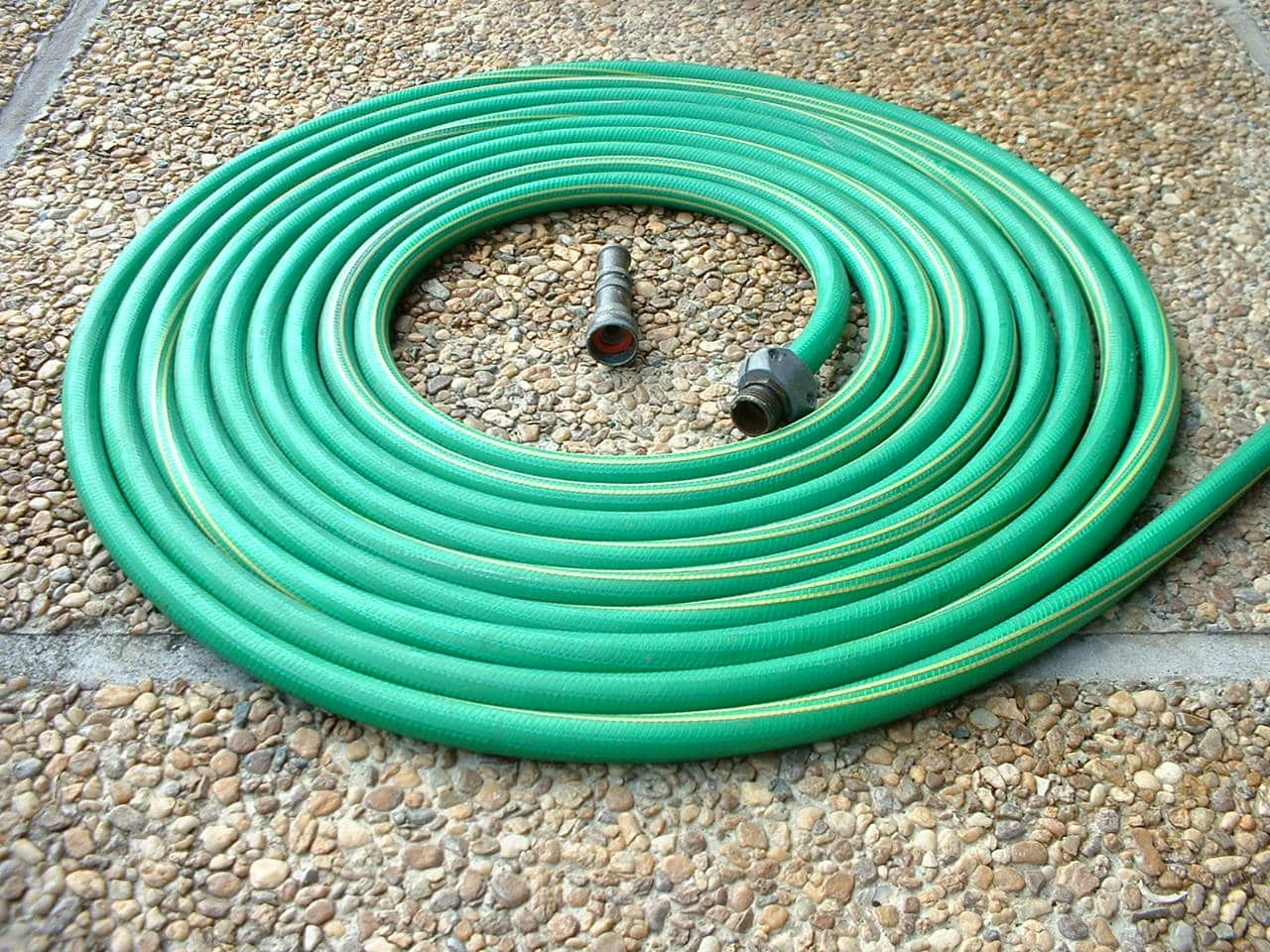
“Garden hose” by Nandhp is licensed under CC BY-SA 3.0.
Patent disputes often create jurisdictional conflict. A lot of attention recently has been focused on complex and policy-laden litigation involving standard essential patents, but garden-variety infringement claims can lead to challenges too. A federal court in Texas recently issued an anti-suit injunction blocking parallel litigation in China in such a claim. Its order asserted that only U.S. federal courts have the authority to determine rights under U.S. patents.
Background
Telebrands, a New Jersey corporation, holds the U.S. patent for a certain type of expandable garden hose. After concluding that a number of Chinese entities had been selling infringing garden hoses on Amazon, Telebrands used Amazon’s “Patent Evaluation Express” procedure, an internal complaint mechanism, to get those products delisted from the platform. In response, some of these entities filed suit in U.S. courts seeking a declaratory judgment of non-infringement. One of those cases was abandoned, and another, brought by an affiliated entity, was dismissed for lack of standing.
In March 2025, some of these entities then sued Telebrands in the Yangjiang Intermediate People’s Court in Guangdong Province, China. Arguing that their products did not infringe Telebrands’ U.S. patent, they alleged that Telebrands’ actions to delist them from Amazon amounted to unfair competition. They sought damages, as well as an order that would require Telebrands to stop filing complaints with Amazon.
Because the Chinese entities’ claims regarding unfair competition would succeed only if their products were found to be non-infringing, litigating those claims would necessarily require the Chinese court to resolve the question of infringement. Telebrands filed a jurisdictional objection in the Chinese action, arguing that U.S. courts are the only appropriate forum for the adjudication of rights under U.S. patents. The Chinese court rejected that objection, a determination that was affirmed on appeal. Telebrands then sued the defendants for patent infringement in U.S. district court for the Western District of Texas. It asked the court to enjoin the defendants from (1) continuing the litigation already underway in China; (2) pursuing any adjudication of any U.S. patents in China; and (3) seeking an anti-anti-suit injunction in China.
The court considered Telebrands’ motions on June 9, 2026, in an ex parte hearing. On that same day, it issued a temporary restraining order. On June 22, 2026, following further briefing, the court issued the requested anti-suit injunction, although it limited the scope of that injunction to proceedings related to the specific patent in question.
Analysis
The June 22 order recapitulated the findings and conclusions laid out in the June 9 TRO. There, Judge Xavier Rodriguez began by observing that federal courts have the authority to enjoin parties from pursuing foreign proceedings intended to “divest U.S. courts of jurisdiction in cases properly before them.” (That kind of proceeding is generally labeled “interdictory,” as discussed in this primer on anti-suit injunctions.) However, it doesn’t appear that the Chinese proceedings here would—at least at this stage—have interfered with the U.S. case. The Chinese court did claim that it had jurisdiction to determine whether the U.S. patent had been infringed. But the Chinese entities didn’t appear to have sought an injunction preventing Telebrands from continuing with the U.S. suit; they had simply asked the Chinese court to block Telebrands from using Amazon’s internal complaint mechanism. The U.S. proceeding could have continued and reached judgment first, supporting a pleading in the Chinese proceeding of res judicata.
Judge Rodriguez then reached his core concern. To adjudicate issues of U.S. patent law in a Chinese court, he said, “would frustrate U.S. policy”—one of the grounds on which an anti-suit injunction can be granted in the Fifth Circuit. He did not lay out his rationale for that conclusion; instead, he simply cited to BMW v. Onesta, a case decided in another division of the Western District earlier this year. That decision addressed claims for infringement of a U.S. patent that had been filed in a German court, and concluded that foreign litigation would undermine “the United States’ policy interest in adjudicating its own patents and protecting litigants’ jury rights in infringement cases.”
Although couched as a public policy argument, this is really an argument that U.S. courts have exclusive jurisdiction to adjudicate rights under U.S. patents—a conclusion underscored by Judge Rodriguez’s subsequent characterization of the foreign proceedings as efforts to secure “illegitimate” determinations of U.S. law. As Bill Dodge explained in his post on the Onesta case, though, that is not so clear. 28 U.S.C. Section 1338(a) provides that the jurisdiction of federal courts in patent disputes is exclusive of state court jurisdiction, but does not speak to the jurisdiction of foreign courts.
Nevertheless, Judge Rodriguez entered the requested anti-suit injunction, stating that it would “serve the public interest in preserving Telebrands’ duly granted U.S. patent rights and in preventing foreign courts from harming U.S. patent owners’ rights through illegitimate determinations of U.S. patent law.” Nowhere—as the Fifth Circuit’s test for anti-suit injunctions requires—did he address the implications for international comity of preventing the adjudication of the Chinese entities’ unfair competition claims in China.
Conclusion
This case involves difficult issues. If jurisdiction to adjudicate rights under U.S. patents is indeed exclusive to U.S. federal courts, then any determination of such rights by a foreign court would not be entitled to recognition and enforcement in the United States. That in turn raises the question whether the law of recognition and enforcement alone is enough to protect the interests of U.S. patent holders and the U.S. patent system, or whether under some circumstances preventing foreign proceedings from developing in the first place is justified. That is the kind of analysis that the comity-based framework for anti-suit injunctions is meant to guide. Unfortunately, Judge Rodriguez’s thinly reasoned order failed to engage meaningfully with that framework.