
D.C. Circuit Holds Jurisdictional Discovery in FSIA Cases Not Immediately Appealable
August 20, 2026
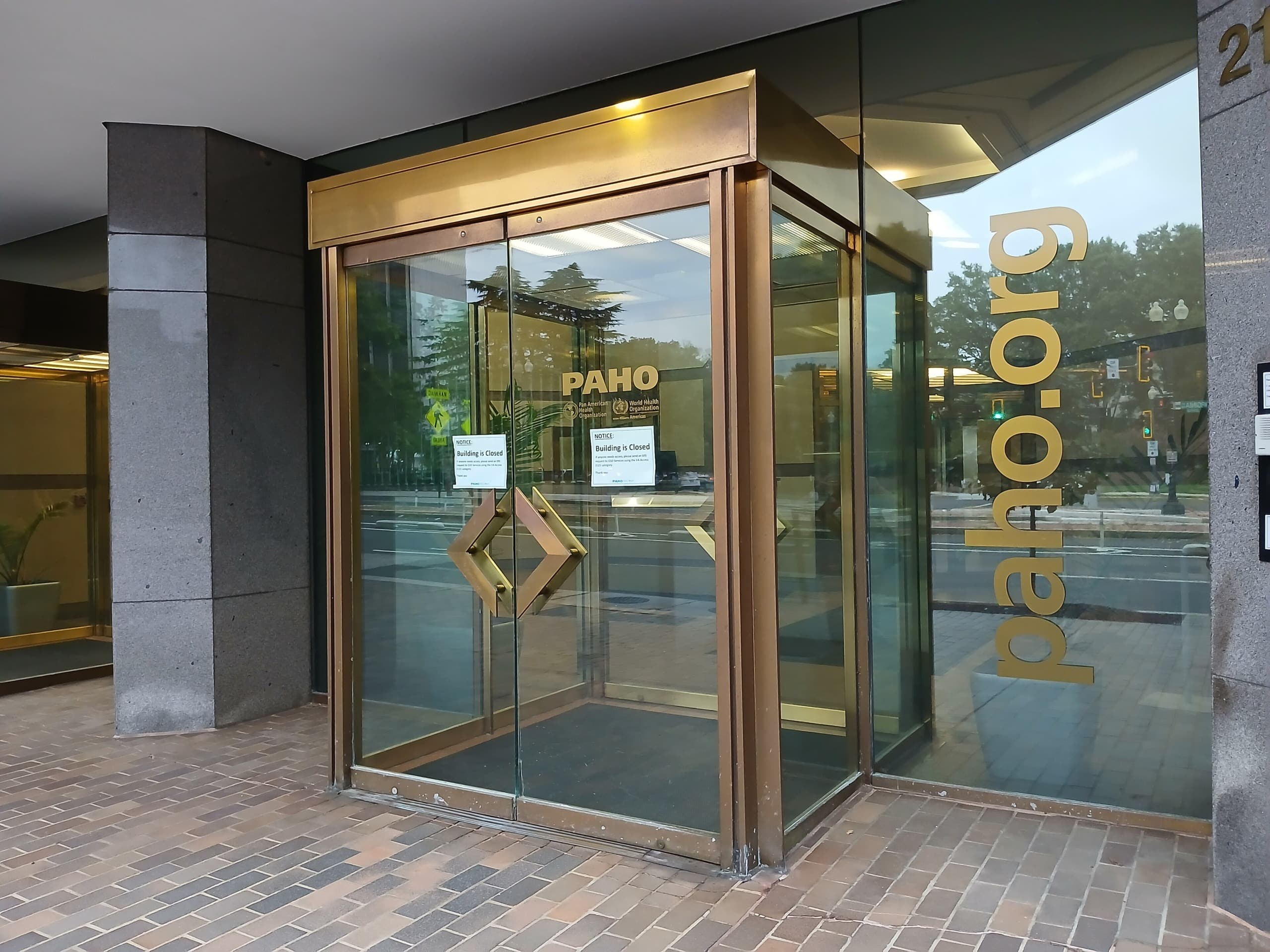
Entrance of the PAHO Building
Ser Amantio di Nicolao, CC BY-SA 4.0
Last Friday, August 14, 2026, the D.C. Circuit held in Rodriguez v. Pan American Health Organization that international organizations, and by extension foreign states, cannot immediately appeal district court orders for jurisdictional discovery aimed at determining if they are immune from suit. (Disclosure: I joined an amicus brief urging the court to take this position.)
The question sounds technical, but it is important. International organizations and foreign states are already entitled to make two separate motions to dismiss on immunity grounds. They can make a “legal” motion to dismiss, arguing that they are immune from suit even if the plaintiff’s allegations are true. And they can make a “factual” motion to dismiss, challenging the facts on which the plaintiff relies to overcome immunity. If the international organization or foreign state loses either motion, it may appeal immediately.
In Rodriguez, the Pan American Health Organization (PAHO) argued that it was additionally entitled to immediately appeal jurisdictional discovery orders with which it disagreed. Writing for the panel, Judge Bradley N. Garcia observed that such a holding “would allow seriatim interlocutory appeals and substantial delay over every interrogatory, document request, or deposition.” In Rodriguez itself, he noted, “[n]early eight years have passed, and the question of immunity has yet to be resolved.” Deciding threshold questions of immunity may still take a long time, but the court’s decision at least avoids multiplying the opportunities for delay.
Cuban Doctors
The plaintiffs in Rodriguez are Cuban doctors who allege that their participation in Brazil’s Mais Médicos program constituted forced labor. PAHO allegedly served as a financial intermediary for the program, receiving payments from Brazil and transferring the funds to Cuba, while keeping a 5% offset to recoup the costs of technical and administrative support. The plaintiffs sued PAHO under the Trafficking Victims Protection Reauthorization Act (TVPRA), on behalf of themselves and a class of 3,500 other Cuban medical professionals, alleging that PAHO benefited from participation in a venture that it knew engaged in forced labor. (For TLB coverage of the TVPRA, see here.)
Under the International Organizations Immunities Act (IOIA), international organizations such as PAHO “enjoy the same immunity from suit … as is enjoyed by foreign governments,” which is in turn governed by the Foreign Sovereign Immunities Act (FSIA). PAHO filed a “legal” motion to dismiss, arguing that it was immune from suit even if all the facts plaintiffs alleged were true. The district court (Judge James E. Boasberg) denied the motion, holding that plaintiffs had alleged facts sufficient to come within the FSIA’s commercial activity exception, and the D.C. Circuit affirmed.
On remand, PAHO then made a “factual” motion to dismiss, challenging the plaintiffs’ allegations. Plaintiffs sought discovery to clarify whether PAHO engaged in commercial activity in the United States that would subject it to jurisdiction. After two years of unsuccessful negotiations over the scope of the discovery, Judge Boasberg ordered PAHO to comply with ten requests for production, two interrogatories, and one deposition. PAHO appealed.
The Question of Appellate Jurisdiction
Generally, defendants may not appeal a district court’s denial of a motion to dismiss because it does not result in a final order. But denial of immunity from suit is an exception under the “collateral order doctrine.” Because international organization immunity and foreign sovereign immunity are immunities from suit, not just liability, they could not be vindicated if denial could be appealed only after a trial on the merits. Thus, a defendant entitled to such immunity may immediately appeal the denial of a “legal” motion to dismiss, a “factual” motion to dismiss, or both.
Under the collateral order doctrine, a key question is “whether deferring review until final judgment so imperils the interest [at stake] as to justify the cost of allowing immediate appeal of the entire class of relevant orders.” For the denial of immunity itself, the answer is clearly yes. But is the same true when a district court grants discovery in order to decide the immunity question?
The D.C. Circuit’s Decision
The court of appeals concluded that the stakes are lower with jurisdictional discovery orders. “There is a stark difference between the ‘interest[s]’ that are ‘imperil[ed],’” Judge Garcia wrote, “when a district court denies a motion to dismiss based on immunity grounds and when, as here, the district court orders discovery for the purpose of deciding the immunity question itself.” “It is true that responding to jurisdictional discovery is itself a burden,” he continued, but that burden “is not comparable to the burden of being forced to litigate the merits of a suit.”
The court also noted that when a defendant makes a “factual” motion to dismiss on immunity grounds, “the defendant itself” places the factual questions in dispute. It would be unfair to allow a defendant to challenge the plaintiff’s facts without subjecting itself to discovery. “[W]hen a defendant disputes a complaint’s well-pleaded factual allegations with its own evidence aimed at establishing its immunity,” Judge Garcia reasoned, “answering discovery targeted to resolving that dispute is part of the bargain.”
Immediate appeals also make less sense when a district court’s decision is unlikely to be reversed. When the district court has made an initial determination that the complaint adequately pleads an exception to immunity, “[t]hat determination makes jurisdictional discovery more likely to be appropriate and immediate appellate review less necessary.” And, though Judge Garcia mentioned it only in passing, the fact that discovery orders are reviewed on appeal for abuse of discretion also makes reversal less likely.
PAHO relied heavily on the D.C. Circuit’s earlier decision in Nyambal v. International Monetary Fund (2014), where the court allowed an international organization to appeal a discovery order relating to immunity. But Judge Garcia limited Nyambal to instances when the district court “ordered discovery without any prior assessment of whether the plaintiff had adequately pleaded an exception to immunity.” That was not true in Rodriguez, where the district court rejected PAHO’s “legal” motion to dismiss (and the D.C. Circuit affirmed).
Judge Garcia was also “also wary of the consequences of PAHO’s broad reading of Nyambal, which seemingly has no limit.” If any burden of litigation is sufficient to trigger the collateral order doctrine, it would mean “not just that every jurisdictional discovery order is immediately appealable, but also that any order of any type entered against a potentially immune defendant is immediately appealable unless and until the immunity issue has been finally resolved.” That would risk undue delay and needless burdens on the courts of appeals.
Finally, Judge Garcia identified three safeguards against overbroad discovery. First, “[i]f a district court orders jurisdictional discovery without first identifying well-pleaded allegations that an exception to immunity applies,” immediate review is available under Nyambal. Second, a defendant may ask the district court to certify an interlocutory appeal under 28 U.S.C. § 1292(b). Third, “mandamus can provide relief from particularly egregious discovery orders,” as the D.C. Circuit has done in at least one previous case.
Conclusion
Rodriguez is a significant case because it rejects the immediate appealability of jurisdictional discovery orders not just for IOIA cases, but also for FSIA cases—of which there are many in the District Court for the District of Columbia. Under the IOIA, PAHO is entitled to immunity only if a foreign state would be. What goes for PAHO also goes for foreign states.
To me, Rodriguez represents a triumph of common sense. Allowing international organizations and foreign states a virtually unlimited number of interlocutory appeals would create extraordinary opportunities for delay. Remember that such defendants already get two motions to dismiss and two immediate appeals, a “legal” motion on the pleadings and a “factual” motion after discovery. That seems sufficient.
Finally, courts of appeals are not well-suited to superintend jurisdictional discovery, which is one reason why such orders are reviewed for abuse of discretion in the first place. Like other district judges, Judge Boasberg is perfectly capable of deciding what information needs to be disclosed in order to determine whether PAHO engaged in a commercial activity in the United States.