
Forum Connections in Arbitration Enforcement
August 18, 2026
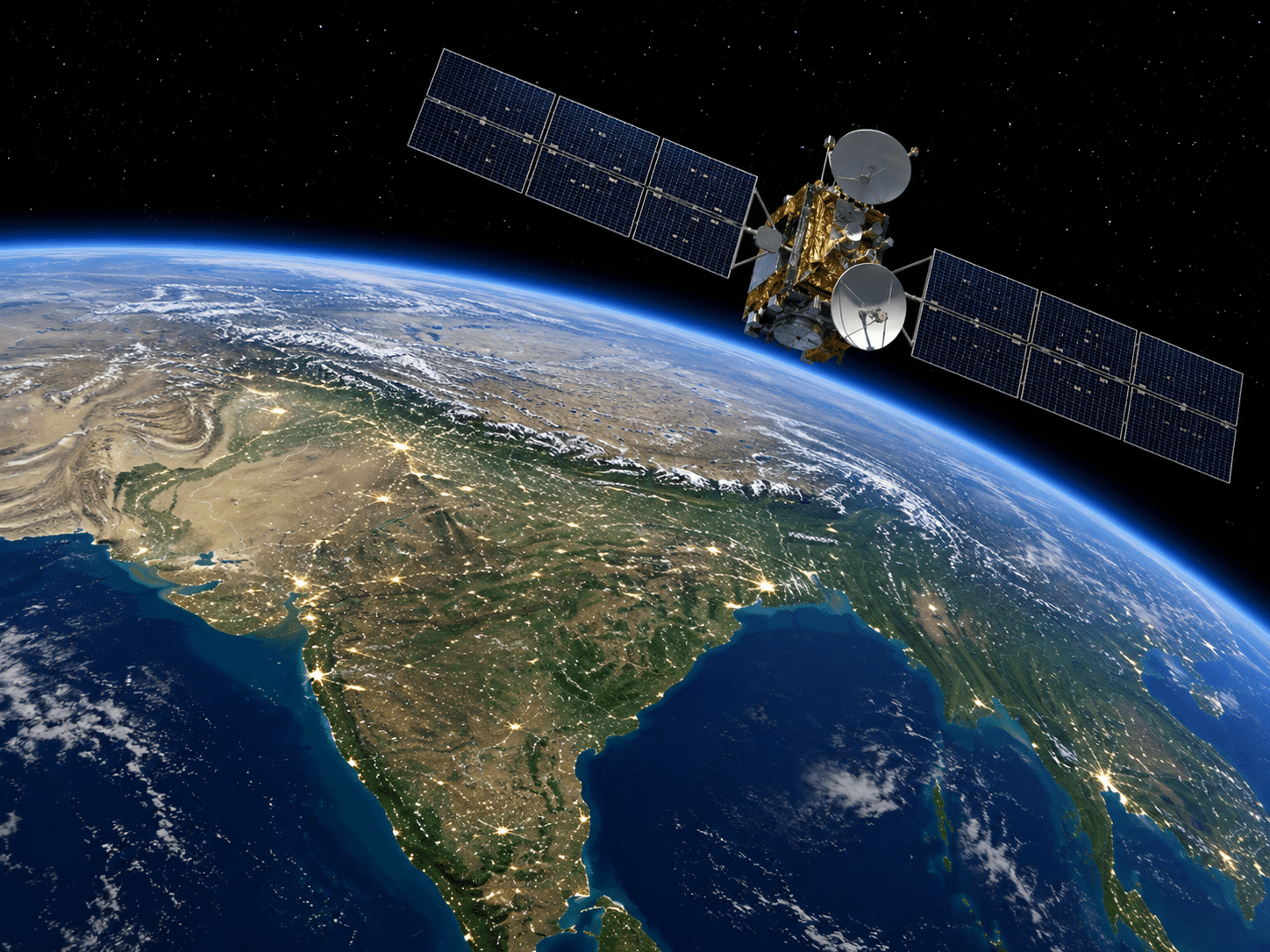
Image by ChatGPT
The New York Convention requires signatory states to recognize and enforce foreign arbitral awards, subject only to narrow exceptions set forth in the treaty. The Convention’s fundamental purpose is to facilitate enforcement by making arbitral awards portable, allowing award holders to search the globe for assets (or information about assets) when a counterparty that promised to resolve disputes through arbitration later refuses to pay.
That philosophy of portability has had a rocky relationship with various U.S. doctrines that shield domestic courts from predominantly foreign disputes by requiring forum connections. In a traditional civil suit, for example, long arm statutes or due process principles may require that a defendant have “minimum contacts” with the forum state to support personal jurisdiction. In a contract suit against a foreign state, the Foreign Sovereign Immunities Act (“FSIA”) may require commercial activity with a sufficient nexus to the United States. The federal venue statute may require an adequate connection to the forum district. And common law doctrines like forum non conveniens grant courts discretion to dismiss actions more conveniently tried elsewhere.
Courts have often grappled with the interplay between those forum connection doctrines and the New York Convention’s mandate of international enforceability. The Supreme Court resolved one such dispute in CC/Devas (Mauritius) Ltd. v. Antrix Corp. Ltd. (2025), holding that the FSIA imposes no general requirement of minimum contacts in award enforcement proceedings beyond what the Act’s immunity exceptions themselves require. That decision was unanimous and uncontroversial. Far more groundbreaking was the Ninth Circuit’s decision on remand last week in Devas Multimedia Private Ltd. v. Antrix Corp. Ltd. (2026). The Ninth Circuit decided, not one, but three issues on which the Convention’s enforcement mandate collides with forum connection doctrines—two of which have important ramifications for future disputes.
The Devas Case
Devas arose out of a dispute between Devas Multimedia Private Ltd., an Indian company backed by foreign investors, and Antrix Corp. Ltd., an Indian state-owned company that functions as the commercial arm of the country’s space agency. Devas agreed to fund Antrix’s construction of two satellites and to lease a portion of the radio-frequency spectrum they would use. When the Indian government decided to appropriate the spectrum for its own purposes, Antrix terminated the contract. Devas then brought an arbitration at the International Chamber of Commerce pursuant to the contract’s arbitration clause. The tribunal rendered a substantial award, but Antrix refused to pay. Devas then brought enforcement proceedings in the United States and several other countries in an effort to satisfy its award.
The Ninth Circuit initially ordered the U.S. enforcement proceeding dismissed for lack of minimum contacts. The court relied on an earlier Ninth Circuit case that construed the FSIA to impose a general minimum contacts requirement for suits against foreign state entities. The Supreme Court reversed, holding that the FSIA imposes no general minimum contacts requirement beyond what the Act’s individual immunity exceptions require. The Court remanded for the Ninth Circuit to address Antrix’s various alternative challenges.
On August 12, 2026, the Ninth Circuit issued its decision on remand. The court rejected three arguments, each focused on the dispute’s lack of connection to the United States.
First, the court held that the FSIA’s arbitration exception does not impose a forum connection requirement in enforcement proceedings brought under the New York Convention. That exception, codified at 28 U.S.C. § 1605(a)(6), abrogates immunity in actions to enforce foreign arbitral awards under a treaty providing for enforcement, so long as the dispute concerns “a subject matter capable of settlement by arbitration under the laws of the United States.” Antrix argued that this language excluded wholly foreign commercial disputes because the United States’s domestic arbitral enforcement regime would not reach them. The Ninth Circuit disagreed, observing that the U.S. legislation implementing the New York Convention expressly provides for enforcement of Convention awards without any limitation to disputes involving domestic commerce.
Second, the court held that the Fifth Amendment’s Due Process Clause does not impose a minimum contacts requirement. The court assumed that Antrix was a “person” entitled to due process protections. In Fuld v. Palestine Liberation Organization (2025), however, the Supreme Court held that the Fifth Amendment’s Due Process Clause does not impose the same minimum contacts standard that the Fourteenth Amendment imposes on state courts. Instead, Congress may confer personal jurisdiction even absent traditional forum contacts, at least so long as the assertion of jurisdiction is reasonable. The Ninth Circuit found that reasonableness standard met here: The FSIA grants personal jurisdiction over disputes with foreign states only when narrow and specific exceptions to immunity are met, and the arbitration exception was designed to comply with the United States’s treaty obligations. Moreover, Antrix would not be unduly burdened by litigating in the United States, and Devas had a substantial interest in seeking U.S. assets to satisfy its award.
Third, the court held that the forum non conveniens doctrine is categorially inapplicable to arbitration enforcement cases. This is a question that divides the circuits. The Second Circuit has held that forum non conveniens may justify dismissal of arbitral enforcement proceedings. The D.C. Circuit has disagreed, reasoning that foreign forums are per se inadequate because only a U.S. court may permit execution against U.S. assets. The Ninth Circuit reached a similar result, albeit on somewhat different grounds, holding that forum non conveniens is incompatible with the New York Convention’s mandate of enforcement. The court rejected the argument that the Convention allows for forum non conveniens because it provides for enforcement “in accordance with the rules of procedure” of the forum state. That provision, it explained, permits variation only in the manner of enforcing awards. It does not permit signatories to decline to enforce an award altogether.
Implications
The Ninth Circuit’s statutory ruling on the FSIA’s arbitration exception is unsurprising and unremarkable. But its other two rulings are groundbreaking and could greatly facilitate the enforcement of foreign awards.
The Ninth Circuit’s due process ruling is the first time an appellate court has meaningfully applied Fuld to arbitration enforcement against a foreign state entity. Courts have broadly held that foreign sovereigns themselves are not “persons” entitled to due process, so the ruling will not have a major impact on enforcement against those respondents. But most courts have held that foreign state-owned companies, no less than private corporations, are legal “persons” entitled to due process, at least so long as they are juridically separate entities and not alter egos or agents of their parent government. The Ninth Circuit’s reasoning based on Fuld covers both foreign states and their agencies and instrumentalities, so the decision could significantly ease enforcement against state-owned entities by providing a basis for personal jurisdiction that does not depend on showing minimum contacts or an alter ego or principal-agent relationship. An open question is whether Fuld likewise extends to enforcement against private award debtors, where the FSIA’s express grant of personal jurisdiction does not apply.
The Ninth Circuit’s forum non conveniens ruling is equally important. Award debtors, both sovereign and private, regularly make forum non conveniens arguments in an effort to avoid U.S. enforcement. The Ninth Circuit’s ruling aligns with the D.C. Circuit’s position by foreclosing the theory, while the Second Circuit continues to entertain such arguments. The Ninth Circuit also found support in the Restatement and Judge Lynch’s seminal dissent in a Second Circuit case, while the Solicitor General has argued in favor of forum non conveniens. Parties have been asking the Supreme Court to resolve this circuit split for years—most recently, in Spain’s high-profile Blasket petition that the Court denied only two months ago. If Antrix seeks Supreme Court review, the Devas litigation may produce still more guidance on the topic.
And Don’t Forget Venue
Ironically, despite generating rulings on four different issues at the intersection of arbitration enforcement and forum connections (one in the Supreme Court and now three in the Ninth Circuit), the Devas litigation still has not covered the waterfront. There remains the issue of venue. That question never arose in Devas, because Antrix conducted unrelated business in Washington State that was alleged, and not disputed, to be a sufficient basis for venue there. But the issue often arises in other cases.
Venue in arbitration enforcement proceedings implicates a dizzying array of statutory provisions. Section 204 of the Federal Arbitration Act provides for venue at the seat of the arbitration or in any district where, absent the arbitration agreement, the underlying controversy could have been litigated. The general venue statute, 28 U.S.C. § 1391(b), provides for venue where a defendant resides, where the underlying events or omissions occurred, or where the property at issue is situated. Section 1391(b)(3) provides for venue anywhere the defendant is subject to jurisdiction if no other district is a proper venue, and Section 1391(c)(3) states that defendants not resident in the United States may be sued in any district.
Section 1391(f), added by the FSIA, addresses foreign sovereigns and state entities. That section provides for venue where “a substantial part of the events or omissions giving rise to the claim occurred,” where “a substantial part of property that is the subject of the action is situated,” where “the vessel or cargo of a foreign state is situated” in a maritime action, anywhere “the agency or instrumentality is licensed to do business or is doing business,” or “in the United States District Court for the District of Columbia if the action is brought against a foreign state or political subdivision thereof.” Those prongs are shot through with forum connection requirements, and while the last prong assures venue in at least one district, courts disagree over whether that provision applies to foreign agencies or instrumentalities. Devas’s rulings on personal jurisdiction and forum non conveniens may thus end up shifting more threshold forum connection disputes to the battleground of venue instead.
Conclusion
The long list of potential forum connection requirements raises the question why courts should apply those doctrines to arbitration enforcement cases at all. In the Devas Supreme Court case, our firm filed an amicus brief for Mark B. Feldman, the primary drafter of the FSIA’s arbitration exception, which I discussed in an earlier post. That brief urged that Congress enacted the arbitration exception based on principles of consent, not minimum contacts: When a party agrees to arbitrate in a New York Convention state, enforcement in other Convention states is part of the agreed-upon dispute resolution process. The party’s consent not only waives sovereign immunity but also satisfies any due process limitations on personal jurisdiction. The Supreme Court did not reach that issue, but it remains important. Rather than continuing to tinker with forum connection doctrines in the arbitration enforcement arena, courts should consider whether consent principles provide a firmer foundation that obviates those doctrines entirely.