
How California Broke the Hague Service Convention
The Hague Convention on the Service Abroad of Judicial and Extrajudicial Documents in Civil or Commercial Matters sets forth the rules for serving process on a defendant in another country that is party to the Convention. Under the terms of the Convention, service by mail is not permitted if the nation where the foreign defendant…
Continue ReadingA Baffling Characterization Decision

Characterization plays an important role in a court’s choice-of-law analysis. If an issue is characterized as a “contracts” issue, then the court will apply the choice-of-law rule for contracts to determine the governing law. If an issue is characterized as a “torts” issue, then the court will apply the choice-of-law rule for torts. Because the…
Continue ReadingThe Extraterritorial Application of State Wage and Hour Laws

Many U.S. states have enacted wage and hour laws. These laws generally set a minimum wage and require employers to pay overtime. When a company headquartered in one state hires an employee to perform work in a foreign country, however, it is not always clear which jurisdiction’s laws will apply. Is the payment of wages…
Continue ReadingForum Selection Clause Roundup
Forum selection clauses play a critical role in much transnational litigation. Over the past several months, TLB has published six posts on forum selection clauses. In this post, I try to bring these writings together to show how they all form a coherent narrative. This post is not meant to serve as a substitute for…
Continue ReadingFair Use, the First Amendment, and the Enforcement of Foreign Judgments
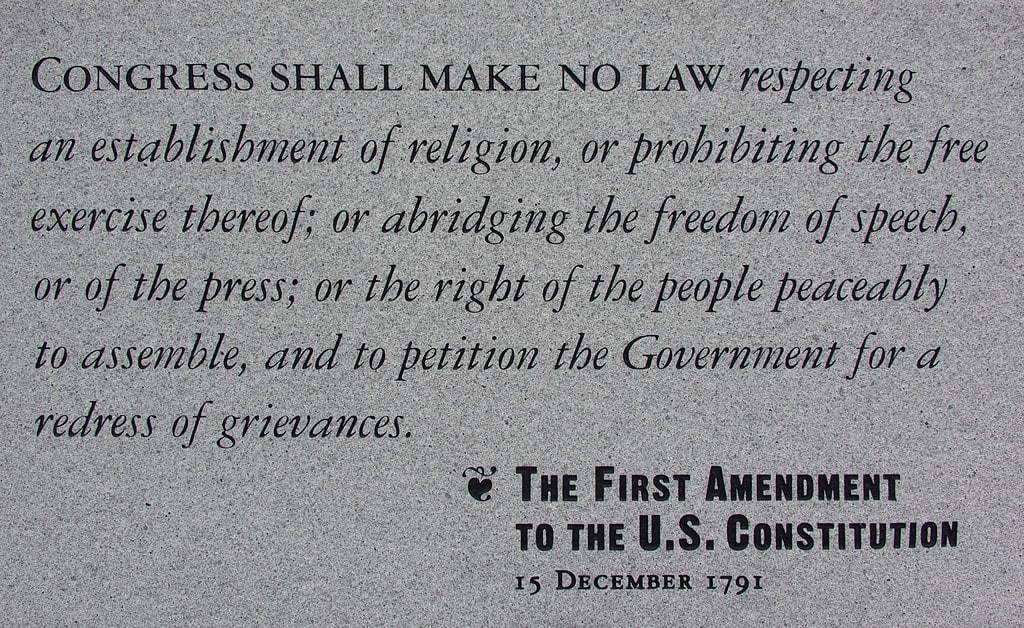
A court in the United States is not required to enforce a foreign money judgment when that judgment is “repugnant to the public policy of . . . the United States.” The First Amendment to the U.S. Constitution is the classic example of U.S. public policy on freedom of speech and freedom of the press….
Continue ReadingWho Owns the Ferrari F50?

The Ferrari F50 is, by all accounts, a pretty amazing car. One website describes it as the “ultimate showcase of the infamous Italian marque” and “one of the most sought-after driving machines in the world.” Only 349 were ever made. Just last year, a Ferrari F50 sold at auction for roughly $3.8 million. All of…
Continue ReadingThe Real Significance of the Hague Convention on Choice of Court Agreements
The stated purpose of the 2005 Hague Convention on Choice of Court Agreements (“COCA”) is to “provide[] certainty and ensure[] the effectiveness of exclusive choice of court agreements between parties to commercial transactions.” The treaty seeks to achieve this goal in two primary ways. First, the courts in contracting states must enforce choice of court…
Continue ReadingThrowback Thursday: Canada, Cannabis, and Forum Selection Clauses

Companies engaged in transnational litigation prefer, as a rule, to litigate disputes at home. Litigating at home allows a party to rely on lawyers and procedures with which it is already familiar. It also forces the other party to bear the costs of litigating in an unfamiliar legal system and (sometimes) in a foreign language….
Continue ReadingCISG Opt-Outs and Party Intent

The United Nations Convention on Contracts for the International Sale of Goods (CISG) is one of the most widely adopted commercial law treaties in the world. It functions as an “international” version of Article 2 of the Uniform Commercial Code (UCC) and, as such, provides the governing law for many cross-border agreements involving the sale…
Continue Reading