
National Security Concerns as a “Burden” in Discovery Disputes

How should U.S. national security concerns be weighed in discovery disputes in cases that do not directly involve the U.S. government? That question is under consideration in Pao Taftneft v. Ukraine, a case currently before the U.S. District Court for the District of Columbia, in which Russian investors seek to enforce a foreign arbitral award…
Continue ReadingHavlish v. Taliban: Second Circuit Denies Rehearing En Banc

As of Spring 2026, Afghan central bank assets blocked by the U.S. government remain unavailable to satisfy terrorism-related judgments. In March, a divided Second Circuit denied rehearing en banc to victims of terrorist attacks who hold judgments against the Taliban and who seek to enforce those judgments against $3.5 billion in “blocked” assets held in…
Continue ReadingImmunity, Consent, and Arbitration Treaties
If a state agrees to arbitrate a dispute with a private party – through, for example, the operation of a bilateral investment treaty – and then loses the arbitration, has it waived its immunity in a suit to enforce the resulting judgment if it is a party to the Convention on the Recognition and Enforcement…
Continue ReadingNew Legislation Aids Claims by Victims of Nazi Expropriations

Congress has passed legislation making it easier for plaintiffs to recover Nazi-looted art and other expropriated property. If the president signs the Holocaust Expropriated Art Recovery (“Hear”) Act of 2025 into law, defendants will have fewer procedural protections from such claims, including a more limited immunity defense for foreign sovereigns. The legislation illustrates how Congress…
Continue ReadingCan Parties Waive the Service Provisions of the Foreign Sovereign Immunities Act?

The answer is yes, sometimes. Failure to Raise the Defense To begin with the easiest situation, a defendant that fails to raise the defense of improper service of process, as required under the Federal Rules of Civil Procedure (FRCP), will waive the defense as provided by FRCP 12(b)(5) and (h). The strict timing requirements apply…
Continue ReadingEnforcement of Arbitral Awards against Russia for Expropriation of Property in Crimea
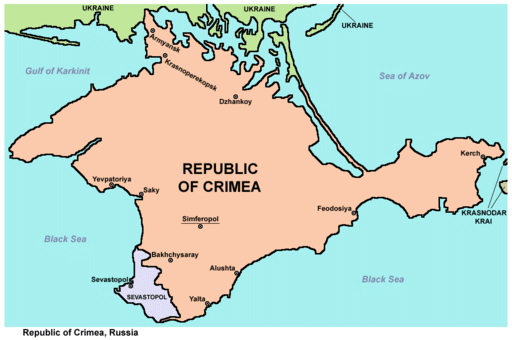
The D.C. Circuit recently cleared the way for the enforcement of foreign arbitral awards against Russia for the expropriation of electricity and gas infrastructure in Crimea. Russia argued in the case, Stabil v. Russian Federation, that there was no jurisdiction because the arbitration exception to the Foreign Sovereign Immunities Act (FSIA) did not apply and…
Continue ReadingPreview of Supreme Court Arguments in Helms-Burton Act Cases: Havana Docks and Cimex

On February 23, 2026, the Supreme Court will hear oral arguments in Havana Docks Corp. v. Royal Caribbean Cruises and Exxon Mobil Corp v. Corporación Cimex. Prior coverage is here, here, and here. The Helms-Burton Act cases slated for argument on February 23 present the following two questions: Question 1: The issue before the Court…
Continue ReadingA Narrow Interpretation of the FSIA’s Expropriation Exception

Introduction Three generations of the Herzog family have sought to recover some $100 million in artwork stolen by Hungarian government officials and Nazi collaborators during and following World War II. The looted works included pieces by the renowned artists El Greco, Renoir, and Monet. To the family’s disappointment, the Court of Appeals for the D.C….
Continue ReadingEnforcing U.S. Judgments Against “Foreign” Assets of Foreign Sovereigns: a Rejoinder

On June 30, 2025, in Petersen Energia Inversora, S.A.U. v. Argentine Republic, a federal district court in New York ordered the Republic of Argentina to “(i) transfer its Class D shares of YPF to a global custody account at BNYM in New York within 14 days from the date of this order; and (ii) instruct…
Continue ReadingChina’s Covid Countersuit

As the Covid pandemic raged in 2020, plaintiffs began filing suits in U.S. courts seeking damages from the People’s Republic of China and other Chinese defendants. In March 2025, a U.S. district court awarded the State of Missouri a default judgment for $24 billion against nine Chinese defendants. In November 2025, another district court awarded…
Continue Reading