
Preview of Supreme Court Arguments in Helms-Burton Act Cases: Havana Docks and Cimex
February 19, 2026
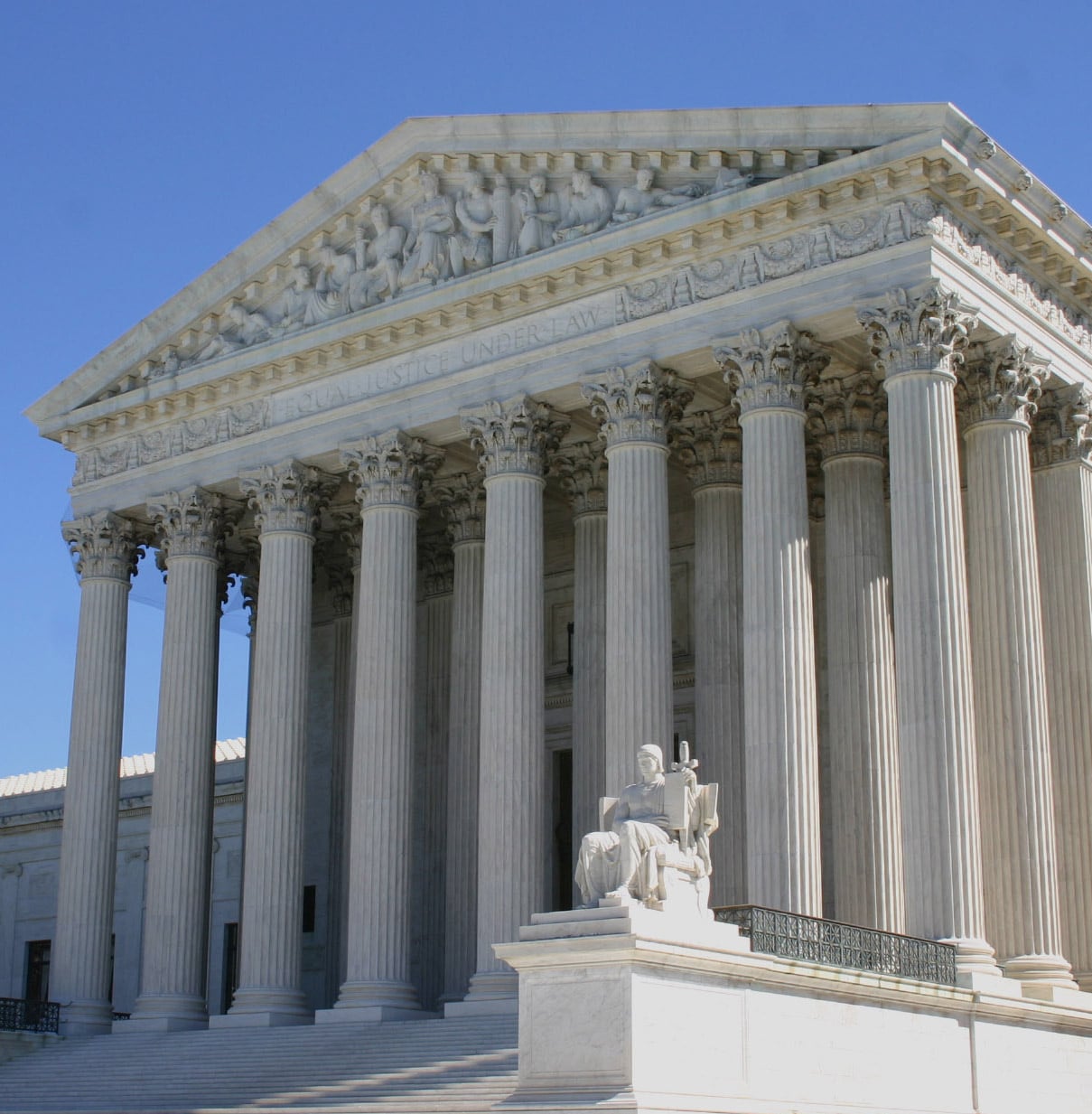
On February 23, 2026, the Supreme Court will hear oral arguments in Havana Docks Corp. v. Royal Caribbean Cruises and Exxon Mobil Corp v. Corporación Cimex. Prior coverage is here, here, and here.
The Helms-Burton Act cases slated for argument on February 23 present the following two questions:
Question 1: The issue before the Court in Havana Docks Corp. v. Royal Caribbean Cruises is whether a plaintiff—under Title III of the LIBERTAD Act, also known as the Helms-Burton Act—must prove that (a) the defendant trafficked in Cuban-government-confiscated property for which the plaintiff owns a claim against the Cuban government, or instead (b) that the defendant trafficked in property that the plaintiff would have continued to own at the time it was trafficked if there had been no expropriation. The respondents allege there is an additional question regarding whether use-limited interests can be expropriated at all. Title III of Helms-Burton “makes any person that traffics in property confiscated by the Cuban Government on or after January 1, 1959, liable for money damages to any U.S. national who owns the claim to such property.” (emphasis supplied). The dispute hinges on the meaning of “owns the claim” and whether that definition includes a temporal limit.
Question 2: The issue before the Court in Exxon Mobil Corp. v. Corporación Cimex is whether (a) the Helms-Burton Act eliminates foreign sovereign immunity for suits against foreign agencies and instrumentalities or instead (b) parties proceeding under Helm-Burton must also satisfy the Foreign Sovereign Immunities Act (FSIA). The Helms-Burton Act defines “person[s]”—as in “any person that traffics”—to include “any agency or instrumentality of a foreign state,” raising the question whether the Helms-Burton Act abrogates immunity, or whether the FSIA must also be satisfied.
Havana Docks: Is Ownership Defined (a) Broadly or (b) Narrowly?
Havana Docks, petitioner, is a U.S. company that owned and operated piers in Havana, Cuba. To recuperate costs spent investing in the piers’ construction, Havana Docks was granted a concession by the Cuban government to operate the docks until 2004, after which it would turn ownership over to the Cuban government. The Cuban government seized the piers and operations in 1960 under Fidel Castro’s nationalization of Cuban industries. The defendant cruise lines used the piers from 2015 to 2019, after Havana Dock’s property interest in the lease would have terminated.
Prior Helms-Burton cases involved the expropriation of fully owned property, but this case considers whether expropriation of a time- or use-limited property interest is valid under Helms-Burton, even after that limited property interest has ended. The district court adopted the petitioner’s broad ownership definition, but the Eleventh Circuit overturned, finding that ownership is time-limited to the interest’s original duration. A green light for the Havana Docks petitioner’s claim could encourage suits for trafficking in Cuban-expropriated licenses, leases, intellectual property, trusts, and more.
Petitioner Argues for Broad Definition of “Owns the Claim”
Havana Docks posits, and the district court agreed, that the plaintiff must prove only that the defendant trafficked in property confiscated by the Cuban government in which the plaintiff owns a claim. Petitioner argues it owns a claim to the property because Cuba expropriated the property after Jan. 1, 1959, as required by the statute. Havana Docks holds an outstanding $9.2 million (today’s value: $90 million) expropriation claim against Cuba for the piers, which the Foreign Claims Settlement Commission (FCSC)—a congressionally authorized body that makes final and conclusive decisions for claims against Cuba—certified in 1971. Royal Caribbean, alongside other cruise lines, paid the Cuban government over $130 million to use the expropriated docks for tourism; thus, according to the petitioners, they “trafficked” in expropriated property to which Havana Docks owns a claim.
The petitioners offer a continued claim ownership theory rather than a temporal limit, arguing that Title III offers continuing protection “for as long as property remains confiscated . . . as long as the claim remains outstanding.” In their view, the ownership claim is outstanding until payment is received. They also argue that Congress purposefully designed Title III to avoid premature termination of claims because it was intended to remedy injury to those that had Cuban property confiscated with no judicial recourse. Therefore, Havana Docks argues, its claim against Cuba can be imputed to any private party that uses the expropriated property, even during a time when they no longer had a legal interest in the property.
Three amicus briefs were filed in support of petitioners. Daniel W. Fisk, who oversaw the drafting of the Helms-Burton Act as the Associate Counsel of the United States Senate Foreign Relations Committee, argues that the Act was part of a “longstanding U.S. policy to deny resources to Cuba’s Communist regime” and sought to protect parties like Havana Docks. Multiple House Representatives claim that the Eleventh Circuit’s decision undermines national foreign policy. Finally, the U.S. Solicitor General argues that there is no temporal limit to a claim and ownership is based upon a claim’s existence, not the characteristics of the property interest.
Respondent Argues for a Narrow Definition of “Owns a Claim”
Royal Caribbean first claims that rather than a full-ownership interest, Havana Docks had a “time- and use-limited ‘concession’” from the Cuban government. As such, the concession was a usufructuary interest—a legal right to use another’s property—and there was no expropriation at all because the docks remained Cuban government property that Havana Docks simply had legal permission to use from 1934–2004. Therefore, Royal Caribbean reasons that a use-limited concession is not ownership, so Havana Docks’s limited interest could not be expropriated.
If the Court determines that there was expropriation despite the limited interest, Royal Caribbean proposes that the Court adopt the more restrictive test for ownership of a claim in which a plaintiff must prove that (b) it would have continued to own a property interest “at the time of trafficking in a counterfactual world ‘as if there had been no expropriation.’” Royal Caribbean urges the Court to affirm the Eleventh Circuit’s holding and find that the limited property interest expired before the defendant’s use of the docks, therefore absolving the cruise line(s) of liability. Royal Caribbean insists that a plaintiff “owns the claim” to expropriated property only through the termination point of its agreed to limited interest (in this case, from 1905–2004); thus, Havana Docks only “own[ed] the claim” from the time of expropriation (1960) until the interest would have ended in 2004 had the Cuban government not expropriated the property.
Two amicus briefs were filed on behalf of respondents by Cruise Lines International and the U.S. Travel Association. Both note that the cruise industry was following the direction of the United States government by offering travel to Cuba, the excursions were meant to “enhance contact with the Cuban people,” and holding the cruise lines liable implicates due process concerns for those who follow the U.S. government’s guidance.
Cimex: Does Helms-Burton (a) Abrogate Immunity or (b) Only Provide a Cause of Action?
Fidel Castro seized Exxon’s oil refineries and service stations in 1960 and then transferred ownership to state-owned companies. The FCSC valued Exxon’s claim against Cuba at over $70 million in 1960 dollars—about $770 million today. Exxon filed suit for trafficking under Title III against the Cuban state-owned oil companies (including Cimex) that received Exxon’s expropriated property in 1960 and have continued to use it since.
The split D.C. Circuit held for Cimex, reasoning that the FSIA applies to claims against foreign agencies and instrumentalities under the Helms-Burton Act and that those claims must satisfy an FSIA exception to overcome sovereign immunity.
Petitioner Argues that Helms-Burton Abrogates Immunity
Exxon argues that the Helms-Burton Act falls outside the FSIA framework and that claims under the Helms-Burton Act eliminate a Cuban instrumentality’s immunity if the instrumentality has trafficked in expropriated property. This view, if it prevails, raises additional questions about establishing personal jurisdiction that we have previously addressed here. Exxon claims the text of Helms-Burton demonstrates that Congress intended to abrogate foreign sovereign immunity and displace the FSIA for claims against Cuban instrumentalities (see A Primer on Foreign Sovereign Immunity for background on the FSIA and jurisdiction). Exxon bolsters its argument about the definition of “person” under Helms-Burton with support from other sections of the Act that arguably infer that a party can sue an agency or instrumentality. Exxon also argues that the legislative record and design of the Act support the conclusion that Congress intended to abrogate immunity because, Exxon claims, the Act requiring FSIA jurisdiction would limit Title III’s ability to provide a “fully effective remed[y]” for expropriation.
Exxon responds to Cimex’s argument—that the FSIA governs sovereign immunity unless abrogated through statutory text—by emphasizing that there is no “ultra-clear-statement rule” that requires a subsequent law, like the Helms-Burton Act, to expressly abrogate the FSIA and the Act permitting the cause of action against agencies and instrumentalities as “person[s]” is sufficient to overcome immunity.
Exxon is supported by amicus briefs from the United States Solicitor General, the U.S. Chamber of Commerce, the Atlantic Legal Foundation, and King Ranch et al. (a group of claimants seeking remedies against agencies and instrumentalities of the Cuban government).
Respondent Argues for an FSIA-Constrained Helms-Burton
Cimex insists that a party must satisfy an FSIA exception to bring a suit against a foreign sovereign’s agency or instrumentality unless the statute expressly states the cause of action overcomes sovereign immunity. Cimex emphasizes that the text of Helms-Burton does not abrogate the FSIA immunity and notes that the Court has repeatedly said that the FSIA is comprehensive and provides the sole way of suing foreign sovereigns in the United States. Thus, in this case, Exxon would need to obtain jurisdiction, waiving Cimex’s immunity, through either the commercial activity or expropriation exceptions of the FSIA. Satisfying an exception would confer subject matter jurisdiction over Cimex to U.S. courts and provide a means for personal jurisdiction to then pursue the Helms-Burton cause of action.
Three amicus briefs supported Cimex. The Foreign Relations and Separation of Powers Scholars argue although Helms-Burton Act gave the president the power to suspend Title III, the power does not eliminate Congress’s and the Court’s role in determining immunity under the FSIA. The Foreign International Law Scholars and Jurists argue that permitting actions under Helms-Burton without regard for the FSIA would harm international legal norms, potentially with negative consequences for the United States’s own immunity elsewhere. The Foreign Sovereign Immunity Scholars provide additional support, advancing many of the same arguments as the respondent and other amici.
Conclusion
Although the two cases present very different textual questions under Helms-Burton, both will require the Court to consider whether to interpret the Act broadly or narrowly. The United States has filed an amicus brief in support of the petitioner in each case, arguing in part that Helms-Burton should be given broad effect. The Solicitor General will participate in oral arguments on behalf of both petitioners when the cases are argued on February 23.