
Enforcement of Arbitral Awards against Russia for Expropriation of Property in Crimea
February 26, 2026
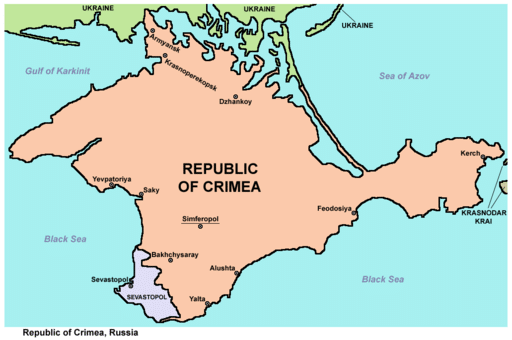
The D.C. Circuit recently cleared the way for the enforcement of foreign arbitral awards against Russia for the expropriation of electricity and gas infrastructure in Crimea. Russia argued in the case, Stabil v. Russian Federation, that there was no jurisdiction because the arbitration exception to the Foreign Sovereign Immunities Act (FSIA) did not apply and because exercising personal jurisdiction over Russia would violate due process. The D.C. Circuit rejected both arguments in a comprehensive opinion. Its due process analysis is incorrect in one respect, however, and its analysis of the FSIA’s arbitration exception is not unproblematic.
Background
Russia invaded Crimea in 2014 and has controlled the territory ever since. Crimea was (and is, formally) part of Ukraine. In Crimea, Russia seized and controlled property of some Ukrainian companies, including JSC DTEK Krymenergo , an electricity distributor, and a group of Ukrainian companies that owned and operated gas stations in Crimea. Russia paid no compensation. DTEK and the Investors initiated arbitration against Russia pursuant to the 1998 bilateral investment treaty (“BIT”) between Russia and Ukraine, which protects against uncompensated expropriation and offered arbitration to resolve disputes arising in connection with investments. They won.
The award creditors sought to enforce the judgements in federal court in the District of Columbia. Russia objected, arguing that it was immune from suit under the FSIA and that the arbitration exception did not apply because the BIT did not cover investments in Crimea. Russia also argued that the awards should be understood as political, not commercial, and thus not subject to enforcement under the New York Convention. Finally, Russia objected to personal jurisdiction as unconstitutional. The district court rejected those arguments. The D.C. Circuit considered the case on immediate appeal under the collateral order doctrine and affirmed.
The Arbitration Exception – an “arbitration agreement”
Under the FSIA, Russia is immune from suit, including actions to confirm or enforce foreign judgments, unless an exception applies. The FSIA arbitration exception, as described by the D.C. Circuit, requires three jurisdictional facts: “(1) an arbitration agreement, (2) an arbitration award, and (3) a treaty potentially governing award enforcement.” Because the FSIA confers subject matter jurisdiction, the court must independently evaluate whether these three conditions are met. But the arbitration exception confers no authority on the court to evaluate the scope of the arbitration agreement or the merits of the underlying arbitral award.
The BIT applies to Russia’s treatment of Ukrainian investors in Russia. Russia argued that when the BIT was concluded, Crimea was Ukrainian and therefore the BIT did not apply to Ukrainian investors in Ukraine. Russia’s subsequent actions did not bring the investments under the BIT, according to Russia. All of this, the D.C. Circuit reasoned, was beside the point. The court put it like this:
By pressing these arguments, Russia collapses two questions that our caselaw keeps distinct. One asks whether a dispute is arbitrable under the Investment Treaty. The other asks whether an arbitration agreement exists for purposes of the FSIA. The first goes to the scope and merits of the agreement; the second to jurisdiction. They are not the same and treating them as such does not make them so.
The reasoning follows other cases recently before the D.C. Circuit, including Hulley Enterprises v. Russia and NextEra v. Kingdom of Spain (in which the Kingdom of Spain has filed for cert, and the Court has asked for the views of Solicitor General). It does seem like the line between “whether an arbitration agreement exists” and the “scope” of the agreement could be a very fine one in some cases, and to this extent the approach is problematic. Presumably, if an entirely unrelated arbitration agreement existed between Russia and Ukraine, governing some other geographic area and other topics, it would not suffice to confer jurisdiction under the exception in this case. And whether the arbitration agreement in question is sufficiently related to the dispute at hand sounds very much like a question about the “scope” of the agreement. To be sure, the D.C. Circuit’s broad interpretation of the exception still allows judgment-debtors to argue that there was no valid agreement of any kind because, for example, the defendant did not actually consent to it. But that was not Russia’s argument.
The Arbitration Exception – “a treaty potentially governing award enforcement”
The arbitration exception applies only if a treaty may govern the enforcement of the award. In this case, the judgement-creditors argued that the New York Convention (“Convention”) requires the enforcement of their arbitral award in the United States. The Convention only applies to arbitrated disputes that arise out of legal relationship that “is considered commercial.” Russia argued that the dispute hinged upon whether Crimea is Russian or Ukrainian territory, and that question is not commercial, but instead geopolitical.
The D.C. Circuit reasoned that the arbitral dispute did not actually involve deciding which country had sovereignty over Crimea. The arbitral tribunal addressed instead whether Crimea was under Russian control at the time of the expropriation, a fact about which there was no dispute, and on that basis decided that Crimea was Russian “territory” within the meaning of the BIT. Moreover, the D.C. Circuit reasoned, the underlying disputes qualified as commercial. One involved Russia’s seizure and operation of 31 gas stations that been owned and Russia’s subsequent sale of gas at substantially lower prices. The other involved an electricity distribution business that supplied “electricity to more than 780,000 consumers” across Ukraine. The record, as summarized by the D.C. Circuit, “tells a straightforward account of commercial enterprises taken, sold, and transferred,” which is adequate to confer jurisdiction under the arbitration exception because the New York Convention at least potentially governs the enforcement of the award.
Personal Jurisdiction and Due Process
If the arbitration exception applies, then the court has personal jurisdiction as a statutory matter. Unlike most other exceptions to the FSIA, the arbitration exception has no true “nexus” requirement that links the defendants’ conduct to the United States. A claim that satisfies the arbitration exception need not, in other words, survive a “minimum contacts” analysis of the kind required under the Fourteenth Amendment Due Process Clause. Stabil involves Fifth Amendment Due Process, however. Following the Supreme Court’s decision in Fuld v. PLO (2025) it seems safe to say that “minimum contacts” is not the correct Fifth Amendment test, although one might argue that when the arbitration exception was enacted by Congress, it would have assumed that due process required minimum contacts or something similar. In this case, the connections to the United States are negligible: the dispute involved Russian conduct in Ukraine with respect to Ukrainian companies, governed by a treaty between Russia and Ukraine, and arbitrated in Switzerland and the Netherlands. The only connection to the United States is the New York Convention, to which Ukraine, Russia, and the United States are parties. That connection may be enough to satisfy due process through a consent analysis, even if it would not satisfy “minimum contacts,” but these are all open questions.
Fuld, however, went unmentioned by the D.C. Circuit in Stabil. Following long-standing circuit precedent, the court reasoned instead that foreign sovereigns are not “persons” and thus have no due process rights at all. Although I disagree – it is crystal clear that foreign countries, like corporations, were viewed as artificial “persons” when the Fifth Amendment was adopted – the court was correct about precedent and made no error in deciding not to revisit the issue.
The Stabil opinion does, however, incorrectly rely on the Supreme Court’s decision in Antrix v. Devas (2025) as foreclosing or resolving due process questions. In Antrix, the Court held that the FSIA as a whole has no “minimum contacts” requirement baked into it. The decision was entirely statutory, and the Supreme Court explicitly declined to answer any constitutional questions. The D.C. Circuit erred in suggesting otherwise.
Conclusion
Stabil highlights long-standing, unresolved questions about the scope of the arbitration exception in the FSIA and about the due process rights of foreign sovereigns. We will see what the Solicitor General says about the first issue when it weighs in on the Next Era cert petition. The second issue is the subject of ongoing litigation in Antrix on remand before the Ninth Circuit.