
Two New Nazi Art Cases
September 30, 2026
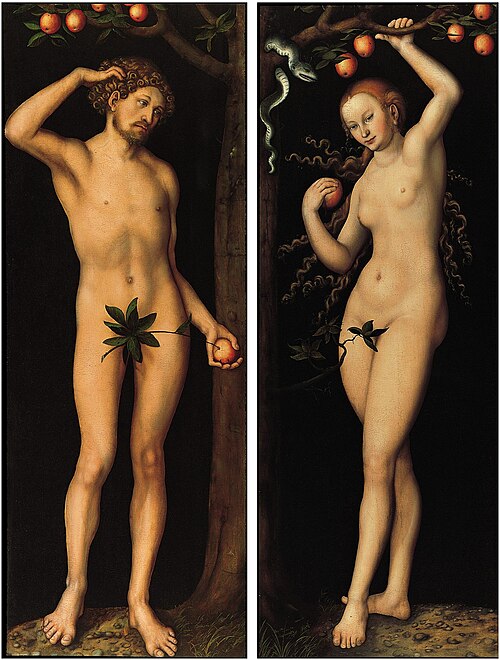
Two new cases have been filed seeking the return of artwork that was taken from Jewish people during the Nazi era. Both cases were brought under a 2024 California law, Cal. Civ. Proc. Code § 338.2, which allows for the filing of claims to “recover personal property stolen due to political persecution” within “six years of actual discovery or two years from the [statute’s] amendment, whichever is later.” The statute explicitly permits the refiling of claims that were previously dismissed on procedural grounds. One of the cases, Jewish Federation-Council of Greater Los Angeles v. Norton Simon Museum, will benefit significantly from new federal legislation, the 2025 HEAR Act. The effect of the HEAR Act on the second case, Kane v. Auschwitz-Birkenau State Museum, is less clear.
Jewish Federation-Council of Greater Los Angeles v. Norton Simon Museum
This suit seeks the return of Adam and Eve (“the Cranachs”), two life-size panels painted by Lucas Cranach the Elder around 1530. These beautiful works of art were looted by Nazis in 1940 from a Dutch Jewish art dealer named Jacques Goudstikker. After the war, the paintings were returned by the Allies to the Dutch government, which sold them to George Stroganoff, who claimed that they belonged to his family before Goudstikker acquired them. In 1971, the Norton Simon Museum in Pasadena bought the paintings, and they have remained there since. Goudstikker’s sole heir, Marei von Saher, learned the location of the paintings in 2000 and sought their return, but the museum refused. She sued in federal court in California in 2007, and after years of litigation the Ninth Circuit held in Von Saher v. Norton Simon Museum of Art at Pasadena (2018) that the act of state doctrine required treating the Dutch government’s transfer of ownership to Stroganoff as valid, so the museum had good title. On September 14, 2026, von Saher assigned her rights to the Cranachs to the Jewish Federation-Council of Greater Los Angeles which promptly sued the Norton Simon Museum in California state court.
The applicability of the 2025 HEAR Act to Jewish Federation-Council is clear because the statute specifically refers to the Von Saher case:
Some courts have frustrated the intent of [the original 2016 HEAR Act] by dismissing recovery lawsuits in reliance on defenses based on the passage of time … or on other non-merits discretionary defenses, such as the act of state doctrine (for example, Von Saher v Norton Simon Museum of Art at Pasadena, 897 F.3d 1141 (9th Cir. 2018)), forum non conveniens, international comity, or prudential exhaustion. In order to effectuate the purpose of the Act to permit claims to recover Nazi-looted art to be resolved on the merits, these defenses must be precluded.
Substantively, the act of state doctrine is a federal common law doctrine that is binding on the states, so presumably the U.S. Congress has the power to determine the applicability of the act of state doctrine applicable in state court cases such as this one.
In terms of timing, the 2025 HEAR Act applies to “any civil claim or cause of action that is” filed “on or after the date of enactment of this Act,” language that clearly applies to the Jewish Federation-Council case, which was filed after the statute’s enactment in 2026. The California statute appears to resolve any potential claim preclusion arguments because it specifically permits refiling of claims that were previously dismissed. There at least one potential wrinkle: the claim-preclusive effect of judgments from federal courts is generally determined by federal common law, meaning that the claim-preclusive effect of the Von Saher judgment is governed by federal common law – not California law. But Von Saher was a diversity case brought under state (or foreign) law, not under a substantive federal statute, so the applicable law is that of the state in which the federal court sits. The relevant court is the one that issued judgment in the first case, and that federal court sat in California.
It thus seems likely that the California courts will now reach the merits of the case. The plaintiffs will still need to prove their case, of course, which may not be easy. Norton Simon argues that Stroganoff was improperly stripped of ownership through an illicit auction in 1931 conducted by the Soviet Union, so Goudstikker never had good title. Indeed, the Dutch tribunal handling such claims after World War II appeared to consider significant evidence and apparently concluded that the works belonged to Stroganoff.
Kane v. Auschwitz-Birkenau State Museum
Dina Gottliebova Babbitt was a Jewish artist imprisoned at Auschwitz. In 1944, she was forced by Josef Mengele to paint seven watercolor portraits of Roma prisoners. All seven of the people depicted in the incredible portraits were killed. Babbitt survived and eventually moved to California. The Auschwitz-Birkenau Museum (“Museum”) bought six of the watercolors in 1963 from a camp survivor, and the seventh was acquired in 1977. The Museum invited Babbitt to identify the watercolors in 1973, and she sought for decades to have them returned to her, a cause her daughters have advanced since her death in 2009. They have now brought suit under California’s § 338.2 seeking a declaration that they own the works. The Museum has said it will argue that the artifacts of the former camp are state property, based on Polish laws and a museum statute.
The Museum is an arm of the Polish state and thus likely entitled to immunity under the Foreign Sovereign Immunities Act (FSIA), unless an exception applies. The complaint, filed in federal court in California, asserts that because the Museum markets and sells books and other materials in the United States, some of which include images of the watercolors at issue, the commercial activity exception to the FSIA is satisfied. It is not clear, however, that lawsuit itself is based upon conduct with a nexus to United States that is sufficient to satisfy the commercial activity exception.
The plaintiffs allege that the expropriation exception is also satisfied because the taking violated international law and the Museum engages in commercial activity in the United States. This also seems correct, even without the language of the 2025 HEAR Act that abrogates the “domestic takings rule.” That rule requires that the person from whom the property was expropriated have a different nationality than the state doing the expropriating; otherwise, the taking did not violate international law, and the statutory expropriation exception is not satisfied. In this case, however, Babbitt was Czech and Mengele was German (and presumably expropriated on behalf of Germany or Poland), so this rule would not have barred the suit in any event. The expropriation exception also requires a nexus between the defendant’s conduct, the claim, and the United States, but that requirement may be easier to satisfy under the expropriation exception than the commercial activity exception. The expropriation exception (unlike the commercial activity exception) requires less of a connection to the United States if the defendant is a state agency or instrumentality instead of the state itself, and that language would apply to the Museum. In any event, the 2025 HEAR Act does not change this aspect of the FSIA, but it will prevent the defendants from raising a variety of potential defenses such as the act of state doctrine.
Conclusion
Both lawsuits were filed on September 14, 2026. The effective date of § 338.2 was September 16, 2024, meaning that the plaintiffs filed just before the two-year deadline. They needed to do so because both appear to have actually discovered the alleged expropriation years ago. The HEAR Act will certainly benefit the plaintiffs in the Jewish Federation-Council case, and it may well also be helpful to the Kane plaintiffs. Winning these cases may still be difficult for the plaintiffs, but at least an on-the-merits adjudication will give effect to the wishes of the federal and California state governments, even if at significant cost to the defendant museums.