
Argument Preview: Enbridge Energy, LP v. Nessel
February 24, 2026
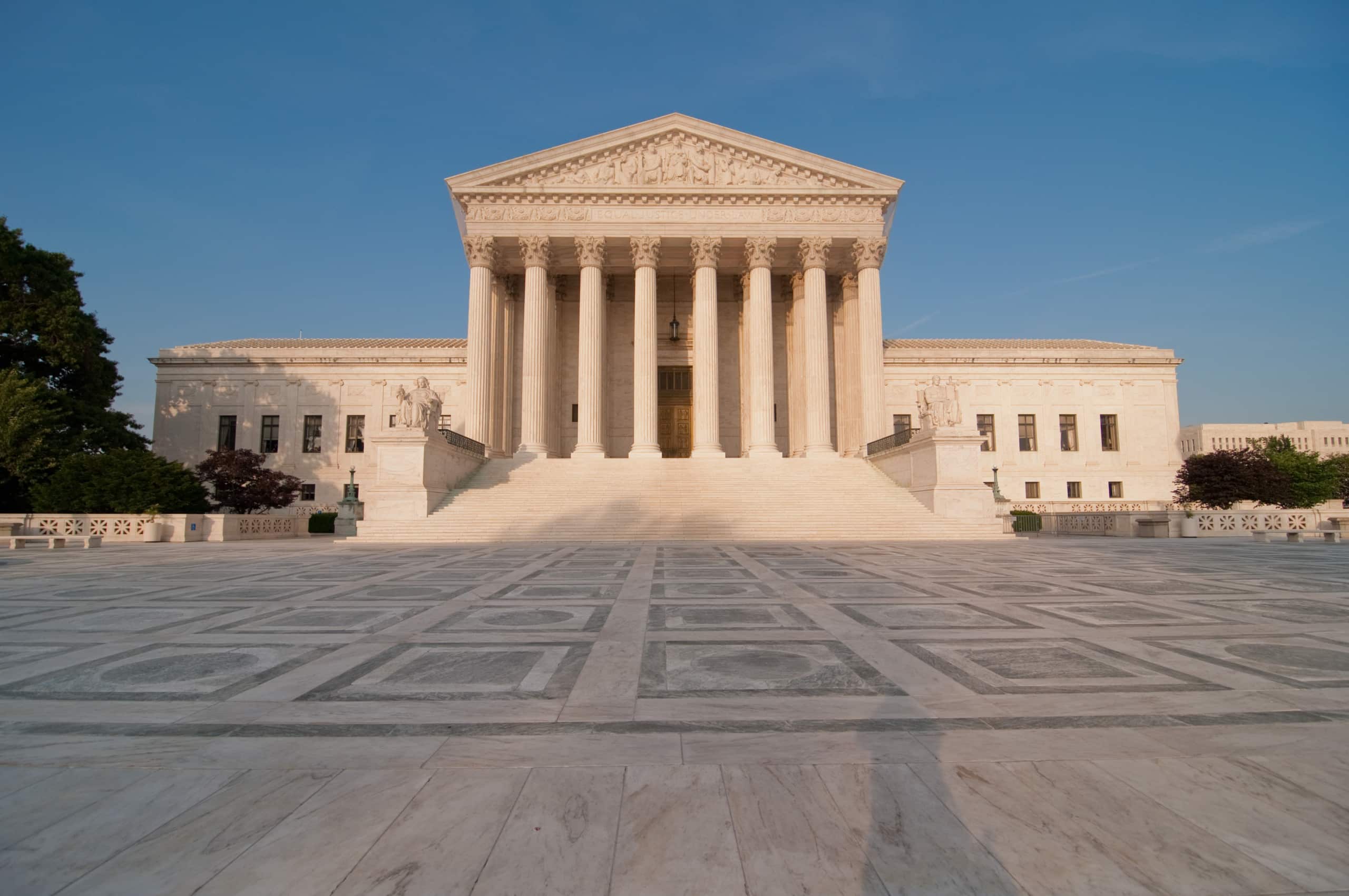
The Supreme Court will hear oral argument this morning in Enbridge Energy, LP v. Nessel, a case involving Michigan’s effort to end an easement across the Straits of Mackinac for an oil and natural gas pipeline between the Midwest and Canada. As Bill has covered previously for TLB, this is one in a series of cases pitting state and tribal governments against Enbridge Energy, owner of the pipeline. Canada has weighed in, arguing that shutting down the pipeline would violate the Transit Pipelines Treaty (an aspect of the case on which Bill’s prior posts have focused). Despite the high political salience of the underlying dispute, however, the question before the Court is a fairly technical procedural one: whether the statutory 30-day time limit to remove cases from state to federal court may be subject to equitable tolling.
The Supreme Court’s recent forays into removal procedure suggest it will take a textualist approach to this question and rule that Enbridge’s belated removal is out of time. But the pipeline context of the dispute may prove distracting for some of the Justices. Oral argument should give us a sense of which way the Court is likely to turn. In advance of argument, this post provides a brief primer on the procedural question in the case.
Brief Primer on Removal
State and federal courts often have concurrent subject-matter jurisdiction, meaning either a state or a federal court can hear a given dispute. That leaves the initial choice of forum to the plaintiff, but defendants may have the option of removing the case to federal court under 28 U.S.C. § 1441. (Other statutes, like § 1442 and § 1443, allow defendants to remove some cases from state to federal court even though the plaintiff may not have had the option of filing in federal court to begin with.) The defendant’s choice to remove is operative unless and until the federal court remands the case to state court. The procedures for removing a case are provided in § 1446, while § 1447 explains how the plaintiff can move to remand the case back to state court.
Both removal and moving to remand are subject to 30-day time limits. Under § 1446(b), the defendant has just 30 days to remove after receiving the initial pleading. If that initial pleading does not state a case that is removable, a defendant has 30 days to remove after receiving an amended pleading “or other paper from which it may first be ascertained that the case is one which is or has become removable.” But cases that would be removable solely on the basis of diversity jurisdiction cannot be removed if more than a year has passed since the case’s commencement in state court. After removal, a plaintiff has just 30 days to ask the federal court to remand the case to state court due to any defects in removal. (There is no time limit for moving to remand for lack of subject-matter jurisdiction.)
Enbridge Energy asks just how strict the initial 30-day time limit on removal is, especially if the federal court’s subject-matter jurisdiction would be based on the existence of a federal question (rather than diversity of citizenship).
Three Lawsuits (and Then Some)
The procedural posture of Enbridge Energy reads like a fed courts exam. In Case 1, the Attorney General of Michigan (Dana Nessel) sued Enbridge in Michigan state court in June 2019, seeking an injunction requiring the company to shut down the section of the pipeline that traverses the lake floor of Lake Michigan across the Straits of Mackinac. That lawsuit asserted three claims under state law: that the original easement was void at inception and can thus be revoked under the state-law public trust doctrine; that the pipeline’s continued operation constitutes a common-law public nuisance; and that Michigan’s Environmental Protection Act has been violated.
More than a year later, in November 2020, Michigan Governor Gretchen Whitmer issued a Notice of Revocation and Termination of Easement to Enbridge regarding the pipeline’s easement across the Straits of Mackinac. In Case 2, she sued Enbridge in state court to enforce the revocation, asserting similar public-trust grounds as well as breach of the easement. Within the 30-day time limit of § 1446(b)(1), Enbridge removed Case 2 to federal court. And within the 30-day time limit of § 1447(c)(1), the Governor moved to remand Case 2 to state court.
Enbridge did not try to remove Case 1 at the same time. Instead, the state court agreed at the parties’ request to hold Case 1 in abeyance to see what happened with Case 2. Meanwhile, at the same time that Enbridge removed Case 1 to federal court, Enbridge brought an Ex Parte Young action in federal court (Case 3), seeking to enjoin the state’s enforcement of the revocation order.
Canada reacted strongly to Michigan’s efforts to end the easement for the pipeline across the Straits of Mackinac, asserting that the pipeline was “vital to Canada’s energy sector” and that shutting it down would put the United States in violation of the 1977 Transit Pipelines Treaty. In late 2021, Canada invoked the dispute resolution provisions of the Pipelines Treaty, which provides for arbitration between Canada and the United States.
Soon thereafter, the federal court denied the Governor’s motion to remand, explaining that there were federal issues imbedded in Case 2’s state law claims because the state’s ownership of the bottomlands of the Straits is limited by the federal government’s commerce and international affairs powers. In light of this decision, the Governor voluntarily dismissed her lawsuit, thereby allowing Case 1 to proceed in state court.
Instead, in December 2021, Enbridge removed Case 1 to federal court, two and a half years after the case was filed. Enbridge argued that the district court’s decision in Case 2 refusing to remand that case to state court constituted an “order” from which Enbridge ascertained that Case 1 was removable. As it had in Case 2, Enbridge asserted three grounds for removal: that there was an embedded federal question in the case (the basis on which the motion to remand in Case 2 was denied); that the case implicated the federal common law of foreign affairs; and that the federal officer removal statute (28 U.S.C. § 1442) applied.
The Attorney General moved to remand, arguing that the removal was untimely. The federal district court rejected that argument, reasoning that § 1446(b) permits equitable tolling of its time limits. The court felt that the important federal interests at stake, as well as the Attorney General’s attempt at “forum manipulation,” warranted such tolling. Alternatively, the court held that the 30-day time limit was revived by the order denying remand in Case 2.
Ordinarily, the denial of a motion to remand is not immediately appealable, but the Attorney General sought and received permission from both the district court and the Sixth Circuit to seek an interlocutory appeal under 28 U.S.C. § 1292(b). The Sixth Circuit reversed the district court. It first rejected Enbridge’s argument that the remand order in Case 2 somehow made Case 1 newly removable. Turning to the district court’s invocation of equitable tolling, the Sixth Circuit also concluded that the text and structure of § 1446(b) revealed a “clear intent” that the 30-day limit be strictly enforced. It directed the district court to remand the Attorney General’s case back to state court.
The Parties’ Arguments
Enbridge argues that the 30-day limit in § 1446(b) is subject to a presumption that it can be equitably tolled, requiring a clear congressional indication that it cannot. According to Enbridge, the Attorney General has not rebutted that presumption, thus permitting equitable tolling of the 30-day limit on removal. Professor Arthur Miller submitted an amicus brief, funded by the American Petroleum Institute, the Liquid Energy Pipeline Association, and the National Propane Gas Association, in support of Enbridge’s equitable tolling argument. Other amici in support of petitioner include North America’s Building Trades Unions, the Washington Legal Foundation, the Chamber of Commerce, and West Virginia.
The Michigan Attorney General argues that such a presumption only applies in the context of statutes of limitation, not removal. According to the Attorney General, the language of the removal statutes is clear that, unless a specified exception applies, removal must be made within 30 days. But even if there were a presumption in favor of equitable tolling, she argues in the alternative, that presumption is rebutted here by the removal statutes’ many explicit exceptions, which indicate that other exceptions should not be read into the statute. Finally, even if the Supreme Court were to conclude that § 1446(b) is subject to equitable tolling, the Attorney General argues that no such tolling would be appropriate here as Enbridge did not diligently pursue earlier opportunities to remove Case 1. Professors Jim Pfander, Joan Steinman, Stephen Burbank, Kevin Clermont, Suzanna Sherry, Michael Solimine, and Howard Wasserman filed an amicus brief arguing that equitable tolling does not and should not apply to removal deadlines. Other amici in support of respondent include the Great Lakes Business Network, the Center for Litigation and the Courts, Minnesota, and Indian tribes of the Great Lakes region.
What’s at Stake
Setting aside the context of this particular case, a holding that the 30-day time limit for removal can be equitably tolled could significantly alter federalism dynamics between state and federal courts. It would give federal district judges discretion (where they currently have none) to permit belated removal by defendants after they have received unfavorable rulings from state courts or realize that the federal court would be more hospitable to their claims (as in this case).
Removal is an odd place for such discretion. Congress spelled out the mechanics of removal in significant detail, reflecting a careful balancing of respect for state courts with an interest in preserving a federal forum in some circumstances. Discretion to broaden the removal power risks upsetting that calibration of federalism interests. Further, that discretion would not be reviewable in a meaningful sense: a denial of a motion to remand is not a final order and thus is not immediately appealable. Plaintiffs would typically have to litigate their case in federal court on the merits before obtaining appellate review of the removal decision. Finally, that discretion would be hard to cabin: what counts as extraordinary circumstances is by definition impossible to set out in advance and would thus depend on the eye of the beholder.
In short, though a 30-day time limit for removal may seem like a snoozer of an issue, the decision in this case could open the door to greater federal judicial power to take high-salience cases from state courts when federal judges are sympathetic to defendants or their claims.
What to Watch for
The removal question seems pretty clear cut to me: the Sixth Circuit got it right. We might thus expect a simple unanimous decision like in last Term’s Royal Canin U.S.A. v. Wullschleger (2025), in which the Supreme Court easily concluded that a district court must remand a non-diverse action if the plaintiff amends her complaint to drop any claim arising under federal law. But Royal Canin was, as the Court put it, a case “all about the marketing of dog food.”
As the list of amici in Enbridge Energy suggests (setting aside the civil procedure scholars), what makes this case interesting is not the logistics of removal, but the underlying dispute about the future of the pipeline. As Enbridge emphasized in its petition for certiorari, this case “raises momentous constitutional and foreign-affairs issues.” Indeed, it is hard to imagine why else the Supreme Court agreed to hear the case. In that respect, it reminds me of another recent removal jurisdiction decision, BP p.l.c. v. Mayor & City Council of Baltimore (2021), a case about climate change in which the Supreme Court interpreted the removal statutes to broaden federal jurisdictional power. The fossil fuel company defendants had removed that case to federal court on a variety of grounds, including an argument that the federal officer removal statute (28 U.S.C. § 1442) applied because some of their exploration and drilling activities had taken place at the federal government’s behest. The district court rejected all of the defendants’ arguments and remanded the case to state court, a decision that is generally not reviewable by an appellate court. But denial of removal pursuant to § 1442 is immediately reviewable, and in BP, the Supreme Court held that this right to immediate appeal regarding federal officer removal extended to the entirety of the remand order. That means defendants can seek appellate review of remand orders in toto if they can find any way, however tenuous, to invoke federal officer removal (as, it should be noted, the defendants did here).
Justice Gorsuch’s decision for the Court in BP opened with the following lines: “This case began when Baltimore’s mayor and city council sued various energy companies for promoting fossil fuels while allegedly concealing their environmental impacts. But the merits of that claim have nothing to do with this appeal.” One can imagine a similar opening to Enbridge Energy, with a holding that similarly nudges wider the removal power of the federal courts. Oral argument may well indicate in which direction the Court will head.