
OT26 Opens with Climate Case
October 1, 2026
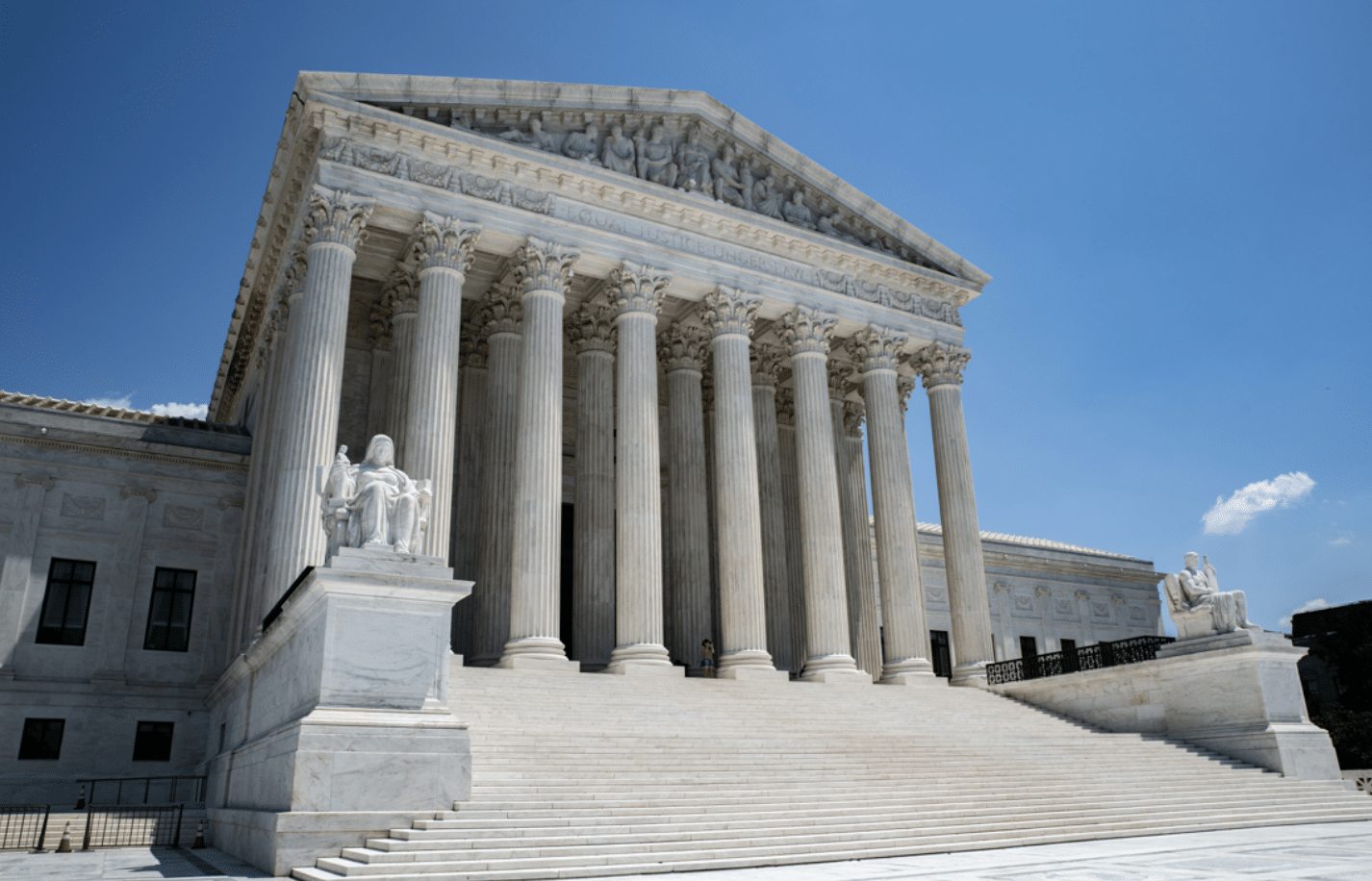
When the Supreme Court opens its new Term next Monday, it will hear oral arguments in Suncor Energy Inc. v. County Commissioners of Boulder County, a case in which the city and county of Boulder are attempting to hold oil and gas companies responsible under state tort law for local harms caused by climate change. Similar lawsuits have been filed around the country by other localities. The political and legal salience of the case is illustrated by the nearly seventy amicus briefs that have been filed before the Supreme Court. Of interest to TLB readers, many of these briefs have argued for new doctrines that would limit U.S. states’ authority to regulate or adjudicate cross-border harms. However, this week Justice Alito recused himself from participating in the case. That may be significant as Alito was projected to be receptive to the defendants’ arguments. With only eight Justices now set to hear Suncor, it seems more likely that the Court will allow the case to proceed in state court, whether by dismissing the case as improvidently granted, affirming the Colorado Supreme Court decision, or leaving it undisturbed due to a 4-4 vote.
The Litigation
When Boulder filed its lawsuit in state court back in 2018, the defendants removed the case to federal court. The district court rejected all of the defendants’ proffered grounds for removal, and the Tenth Circuit affirmed in 2022. Back before the state trial court, the defendants moved to dismiss the case on numerous grounds, including that federal law preempted Boulder’s state-law claims. When the trial court rejected that argument, the defendants invoked the Colorado Supreme Court’s original jurisdiction to seek interlocutory review. That court agreed to consider the defendants’ preemption argument but ultimately concluded, like the trial court, that the state-law claims were not preempted. It is that decision that is now before the U.S. Supreme Court.
Questions Presented
The U.S. Supreme Court granted certiorari on the defendants’ proposed question: “Whether federal law precludes state-law claims seeking relief for injuries allegedly caused by the effects of interstate and international greenhouse-gas emissions on the global climate.” But it also added a second question, reflecting this unusual procedural posture and the interlocutory nature of the appeal: Whether the Court “has statutory and Article III jurisdiction to hear this case.” If, in the absence of Justice Alito, the Supreme Court has lost its appetite to foreclose such climate-change litigation suits through expansive application of federal preemption doctrine, this second question provides a ready out for avoiding affirmatively sanctioning such litigation. (For similar reasons, the Court might just DIG the case.)
As for whether the state-law claims are preempted by federal law, I tend to agree with the Colorado courts that existing preemption doctrine simply does not apply to Boulder’s claims. Dean Chemerinsky summarizes these points in a particularly helpful post over at SCOTUSBlog.
What To Listen For: “Extraterritorial” State Power
What I expect will be of greater interest to readers of this blog are the petitioners’, United States’s, and amici’s broader ranging arguments that the Constitution prohibits Colorado from applying its law to plaintiffs’ claims because those claims involve cross-border harms and implicate foreign relations. According to the Solicitor General’s brief, for example, there are “constitutional prohibitions on extraterritorial regulation” by U.S. states, prohibitions that are “derived from the text and structure of the Constitution.” But what constitutional text exactly these prohibitions are derived from is left unspecified. The Supreme Court has already held that the dormant Commerce Clause does not per se prohibit extraterritorial regulation; neither does the Due Process Clause impose much limit on state choice-of-law rules. Many of the old cases invoked by amici involve a strictly territorial approach to choice-of-law that most U.S. states (as well as the federal courts) have since rejected—as the Supreme Court has held they are constitutionally permitted to do. And while there is of course a federal interest in foreign relations and national security, that interest does not universally displace state power (as Professor Jack Goldsmith, for example, has cogently argued). Under dormant foreign affairs preemption, the federal interest in foreign relations can displace state law—but based on specific congressional enactments, not general policy interests.
In short, I agree with respondents and their amici that the arguments around extraterritorial regulation and foreign relations are more about vibes than actual doctrines—and that the vague new constitutional doctrines being proposed would have far-reaching and disruptive implications. Nonetheless, I expect that Chief Justice Roberts and Justice Kavanaugh in particular will explore these theories at oral argument. When the Supreme Court rejected a “battlefield preemption” doctrine last term in Hencely v. Fluor Corp. (2026), Roberts and Kavanaugh (along with Alito) dissented on the theory that state tort law may not intrude on unique federal interests delineated in the Constitution. That reasoning resonates here. There is also Roberts’ oft-quoted sentence in Fuld v. Palestine Liberation Organization (2025) that the Constitution “confers upon the Federal Government—and it alone—both nationwide and extraterritorial authority.” This sentence has always troubled me because it is demonstrably wrong: as a constitutional matter, states can assert personal jurisdiction over defendants outside their borders and may apply their laws to conduct occurring outside their borders. Yet that sentence is all over the briefing for this case, and I expect it to be echoed at oral argument by Roberts (who wrote Fuld) and Kavanaugh (based on his questions at the Fuld oral arguments).
Conclusion
There may not be, however, three other Justices (in Alito’s absence) who would join an effort to articulate a new form of preemption or identify a broad new constitutional principle. Nonetheless, if the Supreme Court were to do nothing at this stage, or even if it affirms the Colorado Supreme Court’s rejection of the federal preemption defenses, that would only mean that the state court case could proceed on the merits. Of course, litigation in a complex case like this one can itself be a heavy burden. But the plaintiffs would still have to establish their claims on the merits, and there are numerous ways they could fall short. Congress could also step in to preempt or foreclose such litigation (as the defendants have asked it to do). Even if the Justices hearing argument on Monday doubt the advisability of using tort law to address climate change, they need not disrupt the federal-state balance or formulate new constitutional doctrines for that view to ultimately prevail.