
Product Use Restrictions as a Bar to Personal Jurisdiction
February 12, 2026
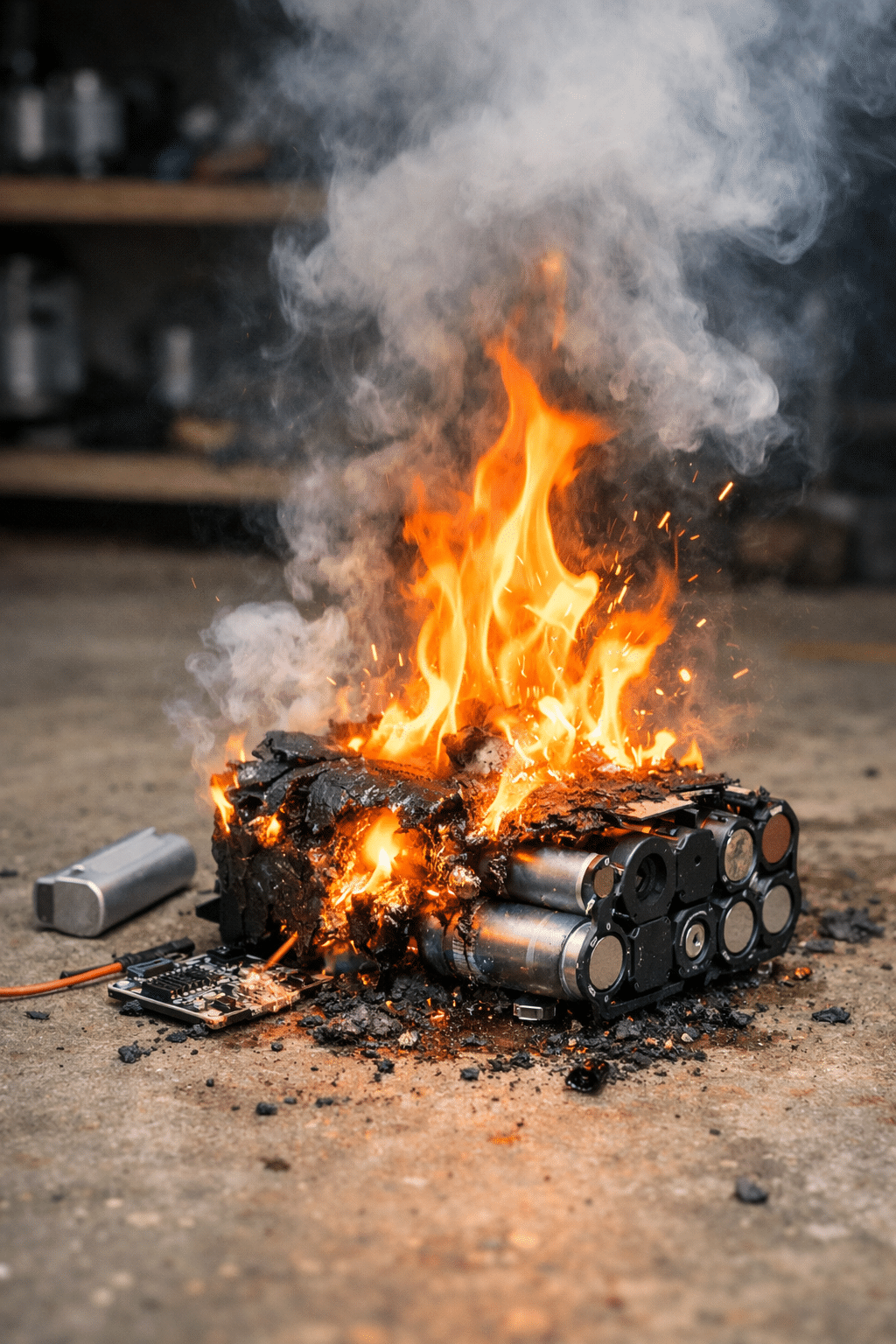
Exploding lithium battery cases against Samsung SDI Company, a South Korean defendant, have raised interesting personal jurisdiction issues. Litigants have not always done a good job of advancing the strongest factual and legal arguments, as a recent decision from the Fifth Circuit, Ethridge v. Samsung, makes clear. The cases, including B.D. by & through Myers v. Samsung Sdi Co. Ltd. from the Seventh Circuit, also provide a new roadmap for foreign manufacturers to avoid personal jurisdiction anywhere in the United States in certain kinds of product liability cases, and they make it very difficult for a customer to know whether or not they can sue in the United States.
How Products Get to the Forum State
Product-liability lawsuits based on an injury sustained in the forum state generally present three ways that the product might have arrived in the forum. The differences among them are important for personal jurisdiction purposes. The defendant may have sold the product directly to the retail purchaser in the forum state; a retail customer might have purchased the product in a different state and brought it to the forum state; or the product may have been sold into the forum state through a middleperson or a distribution chain. Under the Supreme Court’s specific jurisdiction analysis, the first is likely to lead to a finding of personal jurisdiction because the defendant purposefully sold the product into the forum state, and the injury arose from that very product. For the second, personal jurisdiction is unlikely (barring other contacts), following the Supreme Court’s decision in Woodson v. World-Wide Volkswagen (1980) because the seller (in that case, a local dealer) had no purposeful relationship to the forum state. The third pathway is termed “stream of commerce.” Whether putting a product into a stream of commerce that reaches the forum state is purposeful enough to satisfy the test for specific jurisdiction has led the Court to issue two plurality opinions in which the justices simply could not agree. For varying reasons, both cases rejected personal jurisdiction based on the stream of commerce, but the justices generally agree that control over the distribution chain may be relevant to an eventual finding of jurisdiction in the state where the product is finally sold to the consumer.
Some cases involve more than one pathway. In Ford Motor Co. v. Montana Eighth Judicial District Court (2020) for example, the defendant sold many cars to consumers in the forum state following the first pathway, but the car that caused the plaintiff’s injury was initially sold by Ford in a different state and brought to the forum state through resales and relocations by customers, following the second pathway. Ford argued that the claim arose from injury caused by the car that reached the forum through the second pathway, and therefore there was no personal jurisdiction. The Court had little difficulty concluding that the claim arose out of Ford’s contacts with the forum state from both pathways, even though the specific Ford vehicle at issue came to the forum the same way that the Audi in World-Wide Volkswagen had reached Oklahoma – a private party had driven it there.
Lithium Batteries – Two “Streams of Commerce”?
Lithium batteries sometimes explode and cause injuries, and plaintiffs often sue in the states in which they were injured. As a group, these cases involve all three pathways to the forum state: direct sale into the state by the manufacturer, a retail customer who brings the battery into the forum, and the stream of commerce. The recent Seventh Circuit case, Myers v. Samsung Ltd., involves two streams of commerce. Or not?
Samsung sells lithium batteries to corporate customers who put them into “battery packs” that include a circuit board that prevents overheating. The battery packs are then sold to retail customers, or they are incorporated into another product and sold to the retail customer. Retail customers in Indiana acquire battery packs with Samsung batteries in both ways. These products reach the consumer through the “stream of commerce.”
The plaintiff in this case, a minor, acquired his lithium battery in a different way. His stepfather went into an E-cigarette shop in Indiana and bought a Samsung lithium battery, not as part of battery pack, nor as part of a product that had a battery pack. The plaintiff then put that individually sold battery in his pocket. It exploded. The Seventh Circuit called this lithium-battery-pathway-to Indiana a “derivative-product stream of commerce.” Unlike the other stream of commerce, Samsung had not authorized this sale of its batteries but instead had actively sought to avoid it.
I do not agree with the Seventh Circuit that “derivative-product stream of commerce” is actually a true stream of commerce for personal jurisdiction purposes. To be sure, it is not exactly clear how the individual battery got to the E-cigarette shop in Indiana. If a retail customer in Illinois buys battery packs and disassembles them and sells the individual batteries to the E-cigarette shop in Indiana, who then sells it to customers, then this pathway is not the stream of commerce. Similarly, if the E-cigarette shop in Indiana acquired a lithium battery pack through the stream of commerce and then disassembled the battery pack and sold individual batteries, then arguably it did not reach the customer through the stream of commerce either, because this kind of sale was not authorized by the original seller. Finally, if the E-cigarette shop bought lithium batteries from a distributor who – instead of incorporating the battery into a pack – sold them for individual re-sale (contrary to Samsung’s directions), then I do not think this true stream of commerce either. If we focus on what happened with the batteries and the conduct of the manufacturer, they do not seem like “stream of commerce” pathways, contrary to the Seventh Circuit’s terminology.
In any event, that characterization did not matter in this case because the Seventh Circuit reasoned that although lots of lithium batteries wind up in Indiana – many of them through the standard chain of distribution/stream of commerce – this lithium battery did not reach Indiana in that way, and that it was appropriate to separate out these distinct pathways (even if they were both “streams of commerce”). The claim therefore did not arise out of the defendant’s purposeful contacts with the forum. So, no personal jurisdiction. The decision thus gives foreign manufacturers a powerful tool to avoid product liability cases in which the product was sold for something other than its intended use.
The Fifth Circuit Also Dismisses
After the Seventh Circuit reached its decision, a panel of the Fifth Circuit reversed itself and followed suit. The panel had first held that personal jurisdiction in Texas was appropriate. The battery at issue was originally sold to a customer in Wyoming who brought it to Texas where it injured him. But because Samsung sold thousands of batteries to corporate clients in Texas, the court had reasoned – based on Ford Motor Co. – that jurisdiction was appropriate, even though the product in question reached the forum state through the retail customer. In the Fifth Circuit case, Samsung’s lawyers had apparently said very little to the panel about the ways in which Samsung sought to limit the sale of batteries outside of battery packs. It was the Seventh Circuit litigation that brought those facts to light.
If we compare both cases to World-Wide Volkswagen and Ford, the outcomes are somewhat problematic from the perspective of the consumer. It is not clear, for example, that when the consumer purchased the battery in Wyoming that he knew he was purchasing it contrary to Samsung’s instructions to its distribution chain. The customer could reasonably think he was situated like the plaintiff in Ford, not the plaintiff in World-Wide Volkswagen, because Samsung does sell many lithium batteries in Texas.
The Indiana plaintiff could reasonably think he was in a stronger position than the plaintiff in Ford because he did not bring the battery into the state himself but instead purchased the product from a store in Indiana that sells Samsung products. And the plaintiffs in World-Wide Volkswagen could go back and sue in New York, but neither the Texas nor the Indiana plaintiffs have a clear forum in which they could sue in the United States. Justice Ginsburg made this point in her dissent in J. McIntyre v. Nicastro (2011) in which the Court held there was no personal jurisdiction in New Jersey over a British manufacturer that may have sold only a single machine to a single customer in New Jersey through a distributor. The lithium battery cases in one way present a stronger case for personal jurisdiction because many Samsung batteries are sold in Indiana and Texas. But, on the other hand, Nicastro did not involve use-restrictions by the defendant.
Various Justices have mentioned the possibility that manufacturers may limit the fora in which a product is eventually sold and thus avoid personal jurisdiction in those fora. The lithium battery cases involve use-restrictions, not forum-restrictions. Samsung’s efforts to avoid selling within the chain of commerce to anyone who would use its batteries for E-cigarettes might be best understood as a defense to liability rather than a bar to personal jurisdiction.
Conclusion
The Supreme Court has generally insisted that the focus in personal jurisdiction cases is on the purposeful conduct of the defendant with respect to the forum state. The Fifth and Seventh Circuit decisions are generally consistent with that focus. Samsung apparently made a serious effort to limit how its batteries would be used, and (for the appellate courts) that effort meant that there is no personal jurisdiction in states in which the battery reached the consumer contrary to those limitations. But in these cases, the upshot is that there is no personal jurisdiction anywhere in the United States when someone in the stream of commerce ignores the limitations that Samsung sought to impose – a result that may be very difficult for the consumer to know ahead of time, especially if the defendant sells lots of products in the United States. The reasoning also means that a great deal hinges on the efforts by Samsung to limit the use of its batteries, efforts that we might wish to examine as part of the merits of the case, rather than as a question of due process. But for now, foreign manufacturers have a clear way to avoid certain kinds of litigation in the United States: adopt formal policy prohibiting certain uses or sales of a product known to be dangerous.