
Finding the Right International Comity Doctrine
October 28, 2026
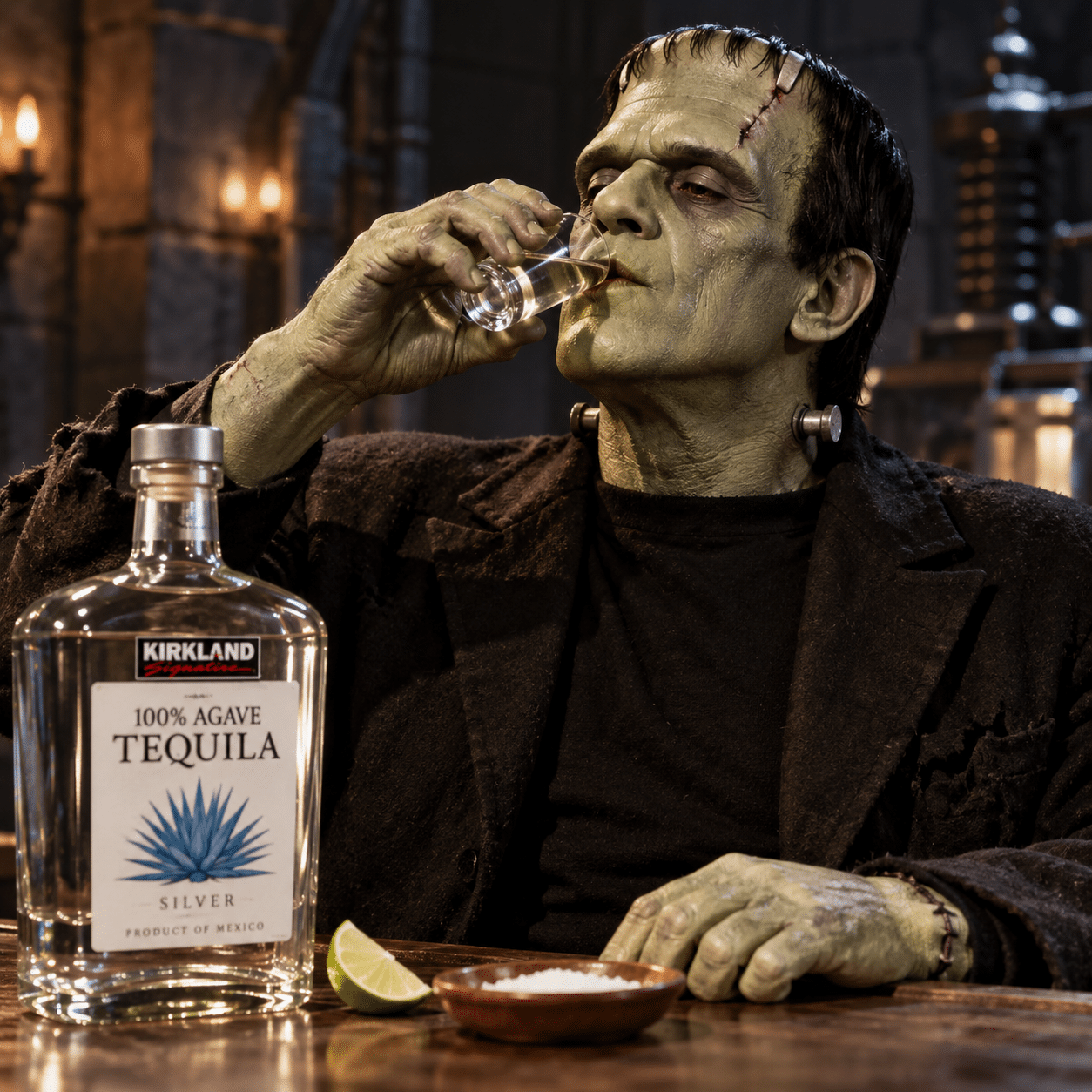
Image by ChatGPT
In Salisbury v. Costco Wholesale Corp., plaintiffs brought a class action in the U.S. District Court for the Western District of Washington alleging that Costco sold, as “100% agave,” tequilas that contain cheaper, non-agave alcohol. Plaintiffs based their allegations on a testing methodology known as SNIF-NMR, which identifies the plant origin of ethanol by measuring its carbon footprint. Under federal law, all tequila must be made in Mexico in compliance with Mexican laws and regulations. Mexican regulatory authorities have rejected the SNIF-NMR methodology for testing tequila in proceedings against Costco brought by different parties. Thus, it seems clear that plaintiffs stand no chance of success in the end. But what is the proper doctrine to dispose of this case?
Costco moved to dismiss under a doctrine of international comity abstention recognized only in the Ninth Circuit, as well as under the act of state doctrine. Agreeing with Costco on both arguments, Judge Kymberly K. Evanson dismissed the complaint on October 16, 2026.
Both international comity abstention and act of state are international comity doctrines that defer to foreign government actors, although they do so in different ways. These doctrines are just two among many doctrines of international comity in U.S. law, and it is not clear that they were the right ones to apply here. In this post, I provide an overview of international comity doctrines and then consider which of them best fits a case like Salisbury.
An Overview of International Comity
As the Restatement (Fourth) of Foreign Relations Law describes it, international comity “is deference to foreign states that is not required by international law.” International comity is not itself a doctrine. Rather, it is a principle of U.S. law that underlies other doctrines.
In a 2015 article, I surveyed the doctrines of international comity in U.S. law, dividing them into three categories. Prescriptive comity doctrines defer to foreign lawmakers, by recognizing foreign law or by restraining the reach of U.S. law. Adjudicative comity doctrines defer to foreign courts, by recognizing the jurisdiction of foreign courts or restraining the jurisdiction of U.S. courts. Sovereign-party comity doctrines defer to foreign governments as litigants, by recognizing them as plaintiffs or by restraining U.S. jurisdiction over them as defendants. (For those who like tables, here is one dividing international comity doctrines into six boxes.)
To give some examples, U.S. courts’ application of foreign law under choice of law rules is prescriptive comity as recognition, as is the act of state doctrine. The presumption against extraterritoriality, by contrast, is prescriptive comity as restraint, limiting the reach of U.S. law. The recognition of foreign judgments is adjudicative comity as recognition, whereas doctrines like forum non conveniens and international comity abstention represent adjudicative comity as restraint. A foreign government’s privilege of bringing suit in U.S. courts is sovereign-party comity as recognition, whereas foreign sovereign immunity is sovereign-party comity as restraint. (Foreign sovereign immunity is sometimes required by international law, but when U.S. law goes beyond what international law requires, it is properly characterized as comity.)
The Salisbury case sounds in both prescriptive and adjudicative comity. Prescriptive comity is implicated because whether tequila is “100% agave” depends on Mexican law. Adjudicative comity is implicated because Mexican regulatory bodies have already decided cases involving Costco and because those same bodies provide alternative forums in which the Salisbury plaintiffs might challenge Costco’s labeling.
Costco raised one doctrine of each kind: (1) international comity abstention (a form of adjudicative comity); and (2) the act of state doctrine (a form of prescriptive comity). But neither is a great fit for this case.
International Comity Abstention
The Ninth Circuit recognizes a doctrine of international comity abstention, first adopted in Mujica v. AirScan, Inc. (2014), that allows a federal court to abstain from hearing a case based on three factors: “[1] the strength of the United States’ interest in using a foreign forum, [2] the strength of the foreign governments’ interests, and [3] the adequacy of the alternative forum.” The term “international comity abstention” can be confusing, as Maggie Gardner has explained, because other circuits use it to refer to a different doctrine of adjudicative comity abstention applicable only to parallel foreign proceedings. The Second Circuit additionally uses it to refer to a doctrine of prescriptive comity that declines to apply U.S. law in some circumstances.
Although Mujica drew on an earlier Eleventh Circuit decision, the Eleventh Circuit has subsequently limited the doctrine. Meanwhile, the Third Circuit has rejected it, and the Eighth has expressed skepticism. One problem with Mujica abstention is that it ignores the “virtually unflagging obligation” of federal courts to exercise the jurisdiction that Congress has given them. Another problem is what it asks courts to balance. How, exactly, is a district court supposed to weigh the interests of the United States and a foreign government in having a case heard in a particular forum? Even Mujica recognized the lack of “substantive standards” for answering that question, and so elaborated additional subfactors—a total of thirteen—for courts to consider. But with the multiplication of factors comes the amplification of judicial discretion.
To assess the interests of the United States, Judge Evanson looked to the subfactors articulated in Mujica: (1) the location of the conduct in question, (2) the nationality of the parties, (3) the character of the conduct in question, (4) the foreign policy interests of the United States, and (5) any public policy interests. She found a U.S. policy of recognizing Mexico’s authority over tequila production reflected in U.S. trade agreements and noted that respecting Mexican proceedings is important to foster the reciprocal recognition of judgments. More generally, she concluded “that abstention is consistent with public policy, given the United States’ express recognition of Mexico’s exclusive authority over Tequila production.”
To assess a foreign government’s interest, a court considers the same subfactors. This analysis “mirrors” the assessment of U.S. interests and, not surprisingly, Judge Evanson concluded “that Mexico’s interests are strong.”
How to assess the adequacy of the foreign forum is confusing because the three subfactors that Mujicaarticulated to guide that analysis focus retrospectively on recognizing judgments rather than prospectively on the bringing of new claims. But in Salisbury, the subfactors fit because there were prior proceedings in which Mexican regulatory bodies had rejected challenges to Costco’s tequila. Plaintiffs argued that they could not bring their U.S. federal and state law claims in Mexico, but the court found that a difference in remedies did not make the Mexican forum inadequate.
Reading Judge Evanson’s analysis, one is continually reminded of other international comity doctrines that address the relevant facts more directly—doctrines such the recognition of foreign judgments, forum non conveniens, and choice of law. As I discuss below, those doctrines may not have allowed the court to dismiss the complaint at this stage. But one should also be concerned by an approach that stitches together pieces of other doctrines to reach a result that none of them could. Like Frankenstein’s monster, Mujica abstention risks running wild.
Act of State Doctrine
Judge Evanson also dismissed the complaint under the act of state doctrine, reasoning that “a ruling in Plaintiffs’ favor would necessarily invalidate the sovereign acts of Mexico.” As she recognized (citing my 2015 article), the act of state doctrine is another manifestation of international comity.
The sovereign acts at issue emanated from the Dirección General de Normas (DGN), a Mexican agency responsible for administering national standards, and the Consejo Regulador del Tequila (CRT), a nonprofit organization accredited by the government to assess compliance with Mexico’s tequila rules. Responding to a complaint against Costco’s tequilas from another party, the DGN determined that SNIF-NMR testing was not a valid means of determining compliance with Mexico’s regulations. The CRT took the same position—both in the DGN proceeding and in connection with a criminal complaint that Mexico’s attorney general declined to prosecute—and certified Costco’s tequilas as compliant. Judge Evanson concluded “that Plaintiffs’ claims challenging the ‘100% Agave’ label as false and misleading due to purported adulteration necessarily challenge the actions and determinations of the CRT” and that plaintiffs’ reliance on SNIF-NMR testing “runs headlong into” the DGN’s rejection of that method.
My concern with this analysis is that it seems to treat the results of foreign adjudicative proceedings as subject to the federal act of state doctrine rather than to state rules on the recognition of foreign judgments. To be fair to Judge Evanson, there is Ninth Circuit authority for treating foreign judgments as acts of state. But the Restatement (Fourth) of Foreign Relations Law takes the position (in Reporters’ Note 9 to § 441) that “the act of state doctrine does not apply to foreign-court judgments,” noting that “nothing in the [Supreme] Court’s [act of state] decisions suggests that the doctrine upsets the post-Erie understanding that, absent a federal statute, the enforcement of foreign judgments is governed by State law.” Of course, one might try to distinguish between administrative proceedings like those in this case and court judgments, saying that the act of state doctrine applies to the former and not the latter. But where to draw the line is not entirely clear.
Other Comity Doctrines
Mujica abstention is a problematic doctrine and act of state is a poor fit for foreign judgments. So, are there other comity doctrines that might have allowed Judge Evanson to dismiss the complaint? Given the earlier proceedings against Costco in Mexico, the recognition of foreign judgments springs to mind. If the decisions in those proceedings were recognized by a U.S. court, they might have preclusive effect. But there are two problems. First, it is not clear that administrative determinations such as those made by the DGN and CRT qualify as foreign judgments. (Restatement (Fourth) § 481, Reporters’ Note 6 collects a couple of cases addressing the question.) Second, and more significantly, the Salisbury plaintiffs were not parties to the Mexican proceedings and so cannot be bound by those decisions.
The doctrine of forum non conveniens is another possibility. Unlike Mujica abstention, which considers the adequacy of the foreign forum as just a factor to be weighed, the federal doctrine of forum non conveniens makes the availability of an adequate alternative forum a precondition. But that requirement was arguably met here, because the Salisbury plaintiffs could have challenged Costco’s labeling before the CRT, even if they could not have sought damages. Under Piper Aircraft Co. v. Reyno (1981), there is “a strong presumption in favor of the plaintiff’s choice of forum” when, as here, the plaintiffs are U.S. residents. But that presumption may be overcome and might have been in this case. Certainly, the public interest factors, at least, point strongly towards dismissal, given that compliance is supposed to be judged by Mexican bodies under Mexican law. In this case, forum non conveniens could have done the same work as Mujica abstention, but under a better established and less manipulable framework.
The strongest possibility, however, is choice of law. It seems absolutely clear that U.S. law defers to Mexican law on whether tequila is “100% agave.” It seems equally clear that Mexican law rejects the SNIF-NMR testing on which the Salisbury plaintiffs rely. In fact, the CRT has certified that Costco’s tequilas comply with Mexico’s laws. Applying foreign law is the oldest international comity doctrine there is, dating back to Ulrich Huber’s 1689 treatise De Conflictu Legum Diversarum in Diversis Imperiis. Perhaps Judge Evanson should simply have dismissed this case for failing to state a claim on which relief can be granted.
Conclusion
I sympathize with Judge Evanson. There are many doctrines of international comity in U.S. law, and it is sometimes hard to find the right one. She stuck to the arguments that Costco raised in its motion to dismiss, and in applying Mujica abstention and the act of state doctrine she had to follow Ninth Circuit precedent. There is something unsettling about knowing that a case should be dismissed on comity grounds and not knowing how to get there. But the answer is not to distort existing doctrines or cobble together new ones. Although the Ninth Circuit has invited such doctrinal muddling, the better approach is to apply international comity doctrines precisely—respecting the careful balancing of interests and power that those doctrines embody—and to let the chips fall where they may.