
Second Circuit Affirms Validity of Venezuela’s Pledge of CITGO Shares
November 18, 2026
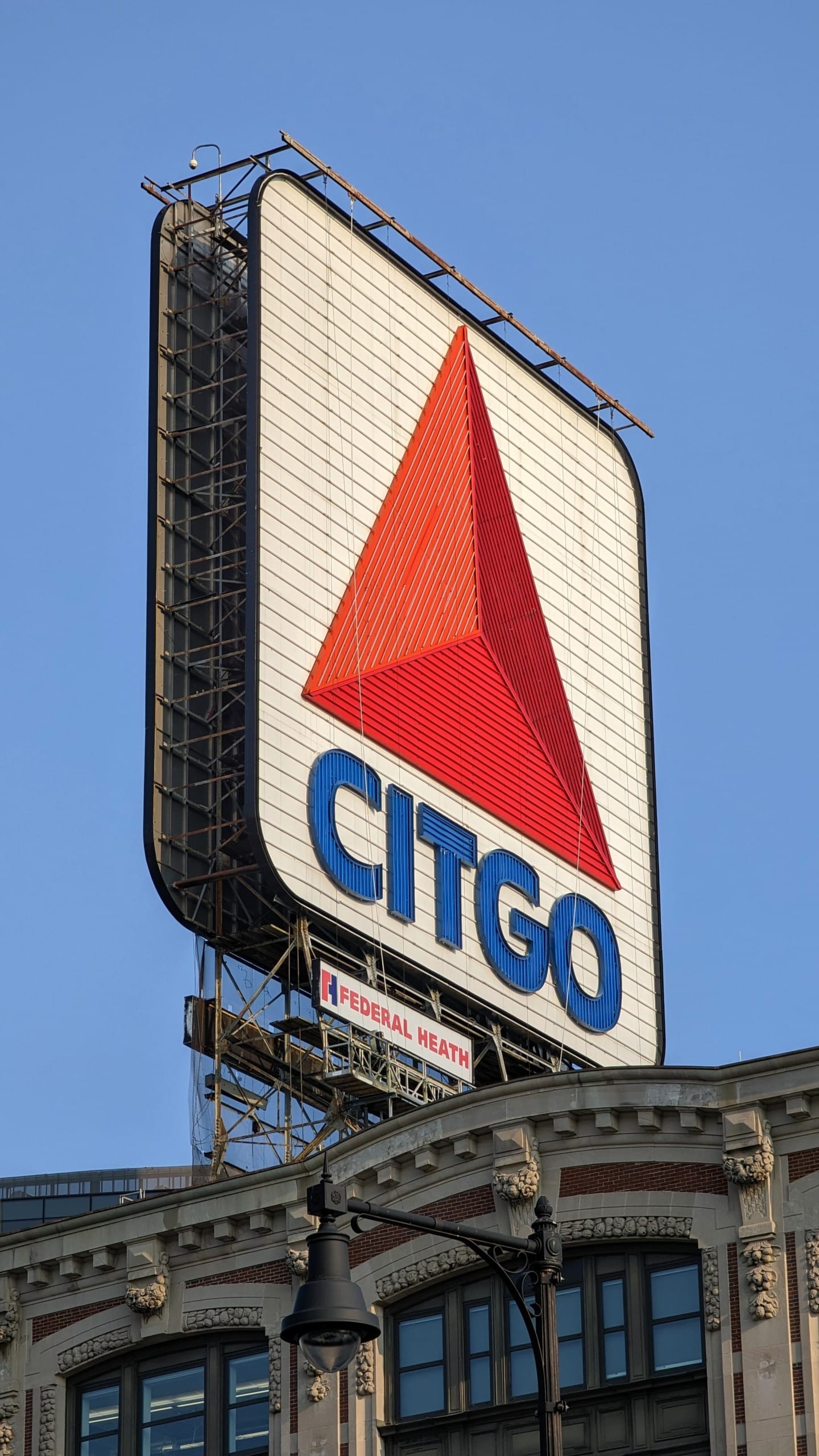

On October 27, 2026, in Petróleos de Venezuela, S.A. v. MUFG Union Bank, N.A., the Second Circuit held that Venezuela’s state-owned oil company, Petróleos de Venezuela, S.A. (PDVSA), validly pledged shares in CITGO Holdings, a U.S. subsidiary, as collateral in a 2016 exchange offer to refinance its debt. Writing for the court, Judge Beth Robinson concluded that the pledge of collateral was valid under Venezuelan law even though it was not approved by Venezuela’s National Assembly. Judge Robinson also held that the act of state doctrine did not apply to National Assembly resolutions disapproving the pledge because the resolutions purported to apply to people and events beyond Venezuela’s borders.
How Did It Come to This?
In 2007, PDVSA issued $3 billion in unsecured notes maturing in 2017. In 2010 and 2011, it issued a additional $6.15 billion in unsecured notes maturing between 2015 and 2017. In 2016, the PDVSA board approved an exchange offer to refinance the more than $7 billion in outstanding principal by offering new notes maturing in 2020. Unlike the old notes, the new notes would be secured by a 50.1% equity interest in CITGO Holdings, which owns CITGO Petroleum Corp., a refiner and marketer of petroleum products in the United States.
The deal was highly controversial in Venezuela. The Venezuelan National Assembly passed a resolution in May 2016 reaffirming its authority under Article 150 of the Venezuelan Constitution to approve “national public interest contracts.” When PDVSA announced the exchange offer, the National Assembly passed another resolution disapproving the pledge of CITGO shares as collateral.
The exchange offer closed in 2016 nonetheless, with noteholders representing approximately 39% of the aggregate principal amount accepting the offer. These noteholders tendered their old notes and received new ones outside Venezuela. The collateral security interest in CITGO’s shares is held in New York.
In 2018, Maduro claimed to have won reelection as Venezuela’s president, but the National Assembly disputed this, declaring that Juan Guaidó would serve as interim president. Guaidó appointed a new, ad hoc board of directors for PDVSA. The National Assembly subsequently passed a third resolution rejecting the pledge of collateral in CITGO. PDVSA then sued its creditors in the Southern District of New York seeking a declaratory judgment that the notes were void ab initio and an injunction to prevent creditors from seizing CITGO’s shares as collateral.
In 2020, the district court (Judge Katherine Polk Failla) rejected PDVSA’s act of state doctrine argument and held that, under New York choice of law rules, the validity of the notes was governed by the law of New York rather than Venezuela.
On appeal, the Second Circuit certified to the New York Court of Appeals the question whether New York or Venezuelan law governed the notes’ validity—what John Coyle termed “the billion-dollar choice-of-law question.” In 2024, New York’s highest court gave a billion-dollar answer, holding that Venezuelan law governed the notes’ validity. In light of this decision, the Second Circuit vacated Judge Failla’s decision and sent the case back for her to determine the notes validity again under Venezuelan law. After hearing from experts on both sides, she determined that the notes were valid under Venezuelan law. PDVSA appealed.
Choice of Law
Under Federal Rule of Civil Procedure 44.1, the determination of foreign law is “a question of law,” which means that it is subject to de novo review upon appeal. The rule gives federal courts broad discretion to consider any sources it thinks relevant. The Supreme Court has held that a foreign government’s statements about the meaning of its own laws are entitled to “respectful consideration” but do not have “conclusive effect.” (For more on the origins of this rule, see here.)
Article 150 of Venezuela’s Constitution provides:
The execution of national public interest contracts shall require the approval of the National Assembly in those cases in which such requirement is determined by law. No municipal, state or national public interest contract shall be executed with foreign States or official entities, or with companies not domiciled in Venezuela, or shall be transferred to any of them without the approval of the National Assembly.
The question was whether PDVSA’s exchange offer pledging CITGO shares was a “national public interest contract.”
The key case interpreting this phrase is Andrés Velásquez, decided by Venezuela’s Constitutional Chamber in 2002. That decision held that “contracts concluded by the Republic through the competent organs of the National Executive to do so and whose purpose is determinant or essential to accomplishing the purposes and objectives of the Venezuelan State would be included within the species of national public interest contracts.” In this case, however, the contracts were entered not by “organs” of the Republic but by a state-owned enterprise, PDVSA, which is considered part of the “Decentralized Public Administration.”
PDVSA also argued that because Venezuela’s Hydrocarbons Law requires National Assembly approval to create joint ventures with PDVSA or its subsidiaries, PDVSA’s contracts must be considered national public interest contracts. But, Judge Robinson reasoned, “it doesn’t necessarily follow that because the state-sanctioned creation of a [joint venture] for the exploitation of Venezuelan hydrocarbon resources amounts to a national public interest contract, contracts executed by PDVSA in its own stead are likewise national public interest contracts.” Moreover, Venezuela’s Financial Administration Law expressly exempts PDVSA from any requirement of National Assembly approval for the “performance of public credit operations.”
Indeed, PDVSA had never before subjected its debt transactions for National Assembly approval, and the National Assembly had never challenged this. The past practice includes the issuance of the old notes that were the subject of the exchange offer. “There may be a qualitative difference between debt transactions generally, and debt transactions expressly secured by a controlling interest in CITGO,” the court acknowledged. But the lack of any past instances in which PDVSA sought National Assembly approval “presents challenges” for PDVSA’s position.
Finally, the Second Circuit considered Venezuela’s views of the law, submitted in an amicus brief, which the Supreme Court has instructed are entitled to “respectful consideration.” Judge Robinson did not doubt the sincerity of Venezuela’s views but concluded that those views were “at odds with the rulings of its highest court.” The varying reasons that Venezuela had given at various times for its position that the pledge of CITGO shares was a national public interest contract also cut against its position.
Because the approval of Venezuela’s National Assembly was not required, the Second Circuit held that the notes and collateral are valid under Venezuelan law.
Act of State Doctrine
As the Second Circuit noted, “[t]he act of state doctrine bars federal and state courts from declaring invalid, and thus ineffective as a rule of decision for the courts of this country, the official act of a foreign sovereign” (quoting Celestin v. Caribbean Air Mail, Inc. (2d Cir. 2022)). PDVSA argued that the National Assembly’s three resolutions disapproving the pledge of collateral were acts of state that a U.S. court was bound to treat as valid.
But the act of state doctrine only applies to the official acts of a foreign government fully performed within its own territory. The resolutions were extraterritorial, Judge Robinson concluded, because they “were ultimately concerned with how PDVSA disposed of property in the United States.” Under the Second Circuit’s decision in Allied Bank International v. Banco Credito Agricola de Cartago (1985) (and under the Supreme Court’s decision in Banco Nacional de Cuba v. Sabbatino (1964) for that matter), the act of state doctrine does not apply to extraterritorial acts of state.
Conclusion
This case is not the only one involving PDVSA’s assets in the United States. In Crystallex International Corp. v. Bolivarian Republic of Venezuela (2019), the Third Circuit held that a Canadian company that won an arbitral award against Venezuela could attach PDVSA’s shares in PDV Holdings, the U.S. subsidiary that in turn owns CITGO Holdings. And in 2025, the district court in Delaware approved its sale to U.S. investors.
The Maduro government compounded liabilities arising from earlier expropriations by refusing to pay arbitral awards and defaulting on sovereign and PDVSA debt. Along the way, the government pledged CITGO shares as collateral for new borrowing, and its extensive control over PDVSA led U.S. courts to treat the company as Venezuela’s alter ego. Together, these decisions have exposed billions of dollars in Venezuelan assets abroad to seizure by foreign creditors.