
Fallout from Cisco in Human Rights Cases, Part I: Al Shimari
September 9, 2026
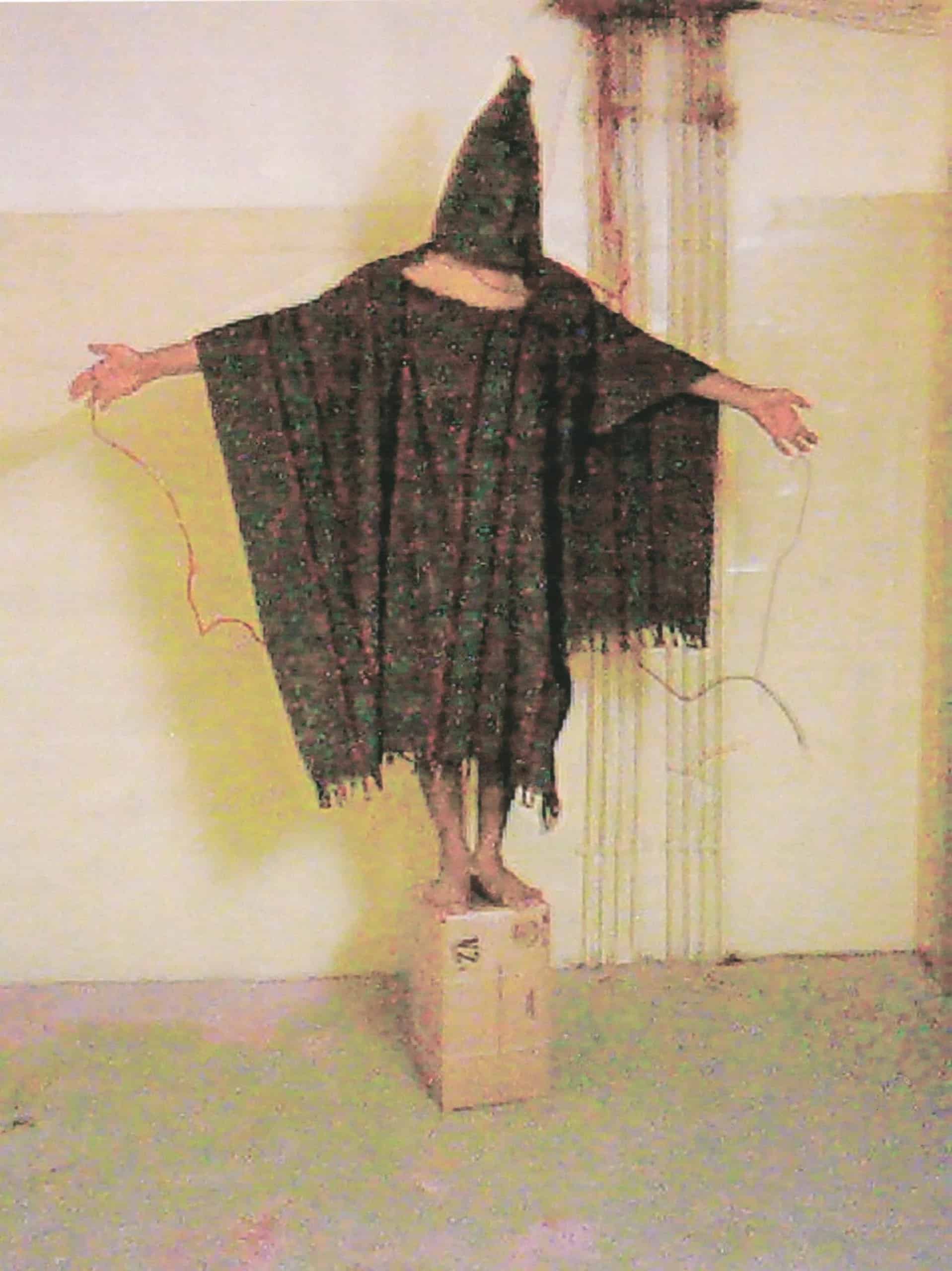
“The Hooded Man”
Public Domain
As regular readers know, last June the U.S. Supreme Court closed the door on modern human rights claims under the Alien Tort Statute (ATS), holding in Cisco Systems Inc. v. Doe (2026) that the ATS’s implied cause of action does not cover such claims.
In two posts, today and tomorrow, I consider recent lower-court developments in two cases. Today’s post focuses on Al Shimari v. CACI Premier Technology, Inc., in which the Fourth Circuit overturned a verdict awarding $42 million to detainees tortured at Abu Ghraib prison in Iraq, holding that Cisco foreclosed their claims. Tomorrow’s post will focus on Cisco itself, in which plaintiffs are arguing that the district court still has subject-matter jurisdiction over their state-law claims under the ATS.
The ATS and the Supreme Court’s Cisco Decision
Passed as part of the first Judiciary Act of 1789, the ATS grants federal courts subject-matter jurisdiction over “any civil action by an alien for a tort only, committed in violation of the law of nations or a treaty of the United States.” In Sosa v. Alvarez-Machain (2004), the Supreme Court recognized an implied cause of action under federal common law for violations of modern human rights norms that are as generally accepted and specifically defined as those with which the First Congress was familiar. Those eighteenth-century paradigms were violations of safe-conducts, infringement of ambassadors’ rights, and piracy, called the “Blackstone three” because William Blackstone identified them as the principal offenses against the law of nations in his Commentaries on the Laws of England (1769).
In a series of cases between 2013 and 2021, the Supreme Court walked back the Sosa decision, repeatedly narrowing the ATS’s implied cause of action while declining to overrule Sosa’s central holding. In Cisco, the Court took that final step. Citing “Congress’s prerogative to provide rights of action and the power of the political branches to direct the Nation’s foreign policy,” the Court held “that courts may not create new causes of action for violations of international norms” under the ATS.
In a nod to stare decisis, the Court sought to preserve a bit of Sosa. “We do not disturb Sosa’s holding that the ATS is a jurisdictional statute; nor do we revisit its assumption that causes of action are available for torts corresponding to the Blackstone three,” Justice Barrett wrote. “We conclude only that Sosa was overly optimistic in its prediction that there might be a narrow class of cases in which courts may create ATS actions without infringing on the prerogatives of the political branches.”
Al Shimari on Rehearing
In 2024, a jury found CACI Premier Technology, Inc., a U.S. military contractor, liable for conspiracy to commit torture and cruel, inhuman, and degrading treatment of detainees at Iraq’s Abu Ghraib prison in 2003, awarding $14 million in damages to each of three plaintiffs. In March, the Fourth Circuit affirmed the verdict, holding that plaintiffs’ claims were not impermissibly extraterritorial and recognizing a cause of action for conspiracy. The approaching arguments in Ciscocast a shadow over their victory, however. “Although Al Shimari is distinguishable, factually and legally,” I wrote then, “what the Supreme Court decides in Cisco may well determine the ultimate outcome in Al Shimari.”
And so it proved to be. Defendants petitioned for rehearing, and the Fourth Circuit ordered supplemental briefing on Cisco. Plaintiffs argued that Cisco permits claims “for torts corresponding to the Blackstone three” and that their claims corresponded to piracy. Like pirates of yore, they noted, CACI pursued profits, committed acts of cruelty, acted without sovereign authorization, and did so beyond the jurisdiction of any foreign sovereign (Iraq under U.S. occupation). Indeed, the Fourth Circuit called the defendants “modern-day pirates” in its March 2026 decision.
But the Fourth Circuit disagreed in a brief, per curiam opinion issued on August 28. Its March decision had applied “the framework announced in Sosa v. Alvarez-Machain,” the panel noted in a brief per curiam opinion. “In Cisco, the Supreme Court effectively overruled this framework.” The court of appeals reversed the district court’s judgment and remanded with instructions to dismiss. This result is not surprising, though it is saddening.
Conclusion
The arc of the Al Shimari case parallels the arc of the Sosa cause of action. The Abu Ghraib story broke four weeks after oral argument in Sosa, and there was speculation that it influenced the decision. “[I]t is hard to believe that it did not affect the Court,” the ACLU’s legal director observed, commenting on Sosa and two Guantanamo decisions in June 2004. As the Supreme Court narrowed the cause of action, Al Shimari returned repeatedly to the Fourth Circuit to consider the impact of each decision. The plaintiffs’ claims survived each time. But those claims were finally ended when Cisco killed the ATS cause of action.