
Supreme Court decides Enbridge and Fluor
April 24, 2026
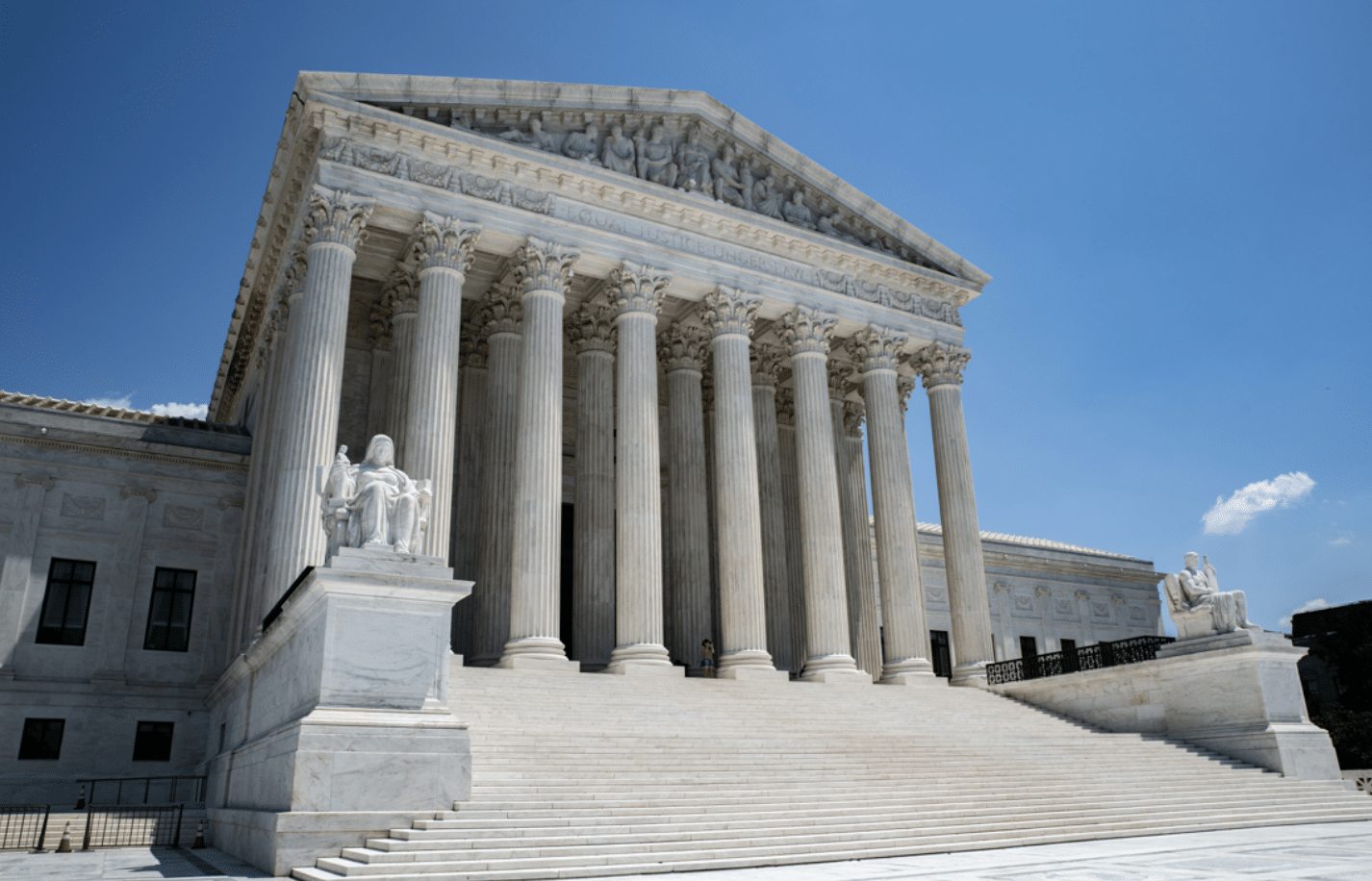
Last Tuesday, the Supreme Court decided two cases that TLB has been following: Enbridge Energy, LP v. Nessel and Hencely v. Fluor Corp.
Enbridge
Enbridge is a dispute about whether Michigan can effectively shut down a pipeline under the Straits of Mackinac, but the particular question before the Court was purely procedural: does equitable tolling apply to the thirty-day limit for removing cases from state to federal court, such that the defendants could remove a lawsuit brought by Michigan’s Attorney General 887 days after it was filed?
In a short opinion authored by Justice Sotomayor, the Court unanimously said “no.” Without deciding whether the deadline imposed by the removal statute is the functional equivalent of a statute of limitations, the Court explained that the statute would rebut any presumption in favor of equitable tolling. The statute phrases the thirty-day deadline in mandatory terms; it already specifies a limited number of exceptions; and concerns for judicial efficiency weigh in favor of early resolution of removal questions.
As I previously explained, this is the right answer. But I am still surprised that the decision was unanimous given the Justices’ concerns at oral argument that a rogue state court judge might upend U.S. treaty commitments with Canada. Perhaps the statutory question was just that clear cut (but then why grant cert to approve the Sixth Circuit’s correct analysis?). Perhaps the Justices’ trust in judicial federalism ultimately won out. The primary threat to U.S.-Canadian relations, after all, is not emanating from the states.
Fluor
In Fluor, U.S. servicemember Winston Tyler Hencely was permanently disabled after he intercepted a suicide bomber at Bagram Airfield in Afghanistan in 2016. The bomber was Ahmad Nayeb, an Afghan national employed to work on the base by a subcontractor of Fluor Corporation, a private defense contractor, pursuant to a U.S. military policy to employ local Afghans when possible. The military vetted Nayeb and cleared him to work on the base, but a military investigation later found that Fluor did not adequately supervise Nayeb, particularly when he entered and exited the base, in contravention of express requirements. When Hencely sued Fluor in federal court in South Carolina, the Fourth Circuit held that his state law claims were barred by its “battlefield preemption” doctrine, under which all tort claims arising out of a private contractor’s engagement in wartime combatant activities are preempted.
In a 6-3 decision authored by Justice Thomas, the Supreme Court rejected this broad preemption doctrine and remanded the case for further proceedings. The Fourth Circuit had overextended the reasoning of Boyle v. United Technologies Corp. (1988), which recognizes a federal common law defense for private contractors facing product liability suits when three conditions are met: (1) the government approved precise specifications; (2) the equipment met those specifications, and (3) the contractor had warned the government about possible dangers posed by those specifications. Thomas emphasized that Boyle was limited to instances where contractors are sued for doing the very thing the government directed them to do. In contrast, “Hencely sued Fluor for conduct that … was not authorized by, but was even contrary to, federal instructions.” The Fourth Circuit’s effort to frame a battlefield preemption doctrine thus “sweeps too broadly.” In the absence of a federal statute, “contractors ordinarily have a constitutional defense only when the contractor is being sued precisely for accomplishing what the Federal Government requested.”
Justice Alito dissented, joined by Chief Justice Roberts and Justice Kavanaugh. Because the Constitution entrusts war powers exclusively to Congress and the President, he wrote, “no state law, including state tort law, may intrude on the Federal Government’s authority over combat-related operations.” When state law intrudes on a unique federal interest delineated by the Constitution, he argued, there is no presumption against preemption (though many of Justice Alito’s examples still entailed a federal statute). Without preemption, defendants like Fluor could end up putting military policies on trial, and U.S. courts may be forced to answer “vexing choice-of-law questions” and apply foreign law.
Alito’s concerns that litigation will require application of foreign law and question government policies are common themes in decisions kicking transnational cases out of U.S. courts. Both are frequently overblown. As Justice Thomas retorted in a footnote, “American courts have long decided cases relying on foreign law.” The majority also pointed to Department of Defense regulations alerting contractors that they might be subject to the laws of the foreign nations in which they operate.
The concern about litigation trenching on military policy (similar to concerns about “foreign relations frictions” or offending foreign governments in other transnational cases) is likewise more about feels than facts. Doctrines like the state secret privilege protect national security decision making, and there is nothing inherently wrong about airing disagreements with government policies (whether domestic or foreign) in a courtroom setting. (Alito’s concern is in part driven by his own skepticism of the military’s push to hire Afghans: “Based on what is known about the events leading to the bombing,” he wrote, “it may well be that both the military and Fluor are responsible for petitioner’s injuries.”)
To be clear, Hencely’s suit does not require disagreeing with any government policy—his argument is that Fluor was negligent in a manner not required by and even contrary to military policy. I am reminded of Justice Scalia’s effort to rein in the act of state doctrine by limiting it to cases that directly challenge the validity of foreign law: “The act of state doctrine does not establish an exception for cases and controversies that may embarrass foreign governments,” he wrote, “but merely requires that, in the process of deciding, the acts of foreign sovereigns taken within their own jurisdictions shall be deemed valid.” That line roughly corresponds with Fluor’s limitation of Boyle’s government contractor defense.
Conclusion
Enbridge and Fluor both entail entrusting state courts and state law with questions that implicate foreign relations. They both also entail procedural questions that have, in my opinion, clear right answers. It is refreshing to see the Court cut through political rhetoric and public policy handwringing to reach those answers, along the way reaffirming core principles of judicial federalism and congressional prerogative.