
Throwback Thursday: The Helms-Burton Act’s 30th Anniversary
March 12, 2026
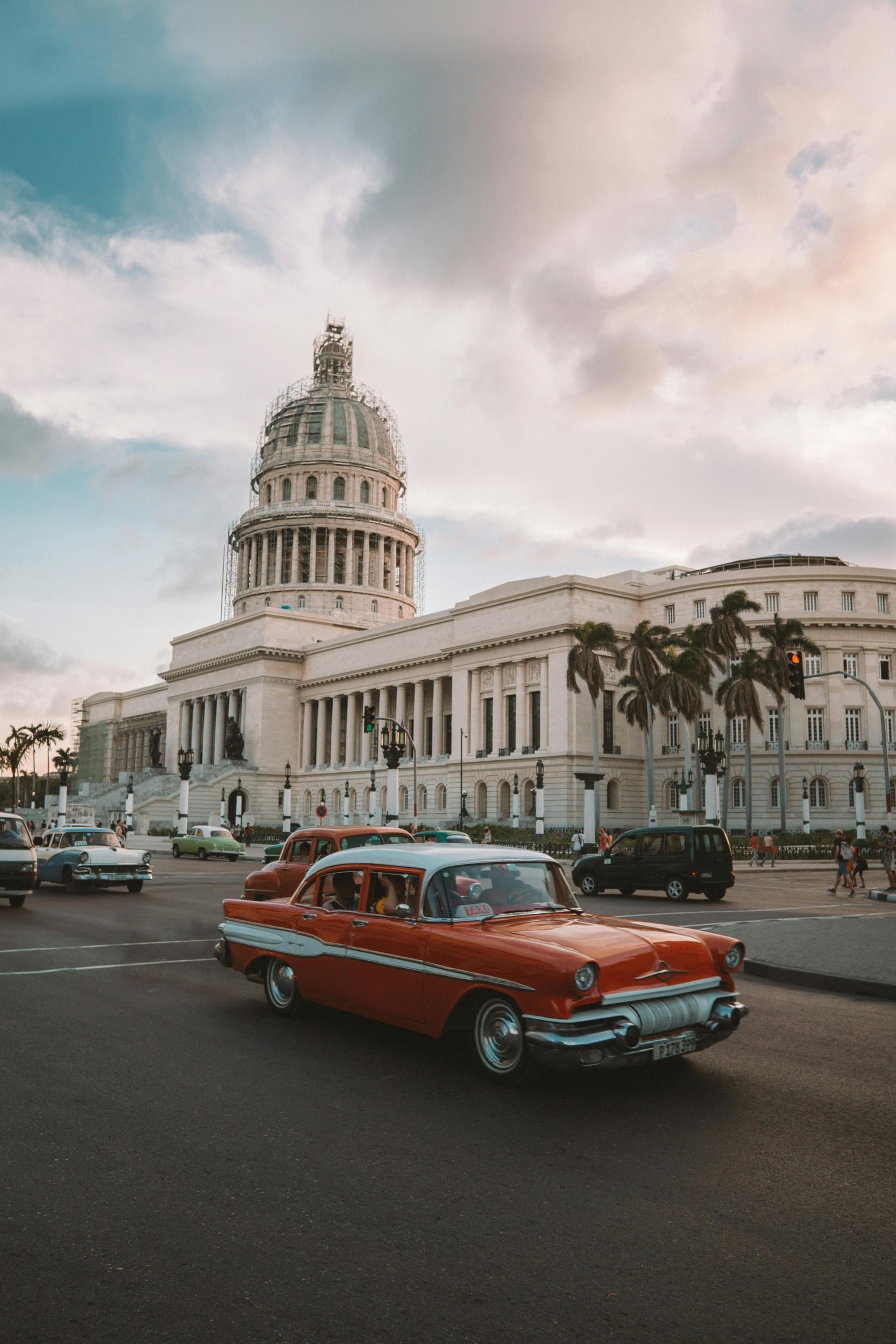
Photo by Alex Azabache from Pexels.
Thirty years ago today, on March 12, 1996, President Clinton signed into law the Cuban Liberty and Democratic Solidarity (LIBERTAD) Act of 1996, better known by the names of its principal sponsors as the Helms-Burton Act (“the Act”). The Act was designed to sanction Fidel Castro’s government and to encourage a transition to a democratically elected government in Cuba. The most controversial and best-known part of the Act – although not yet the most significant with respect to its actual effect on Cuba – is Title III. It controversially provides a broad remedy for U.S. nationals with interests in Cuban-confiscated property against “any person that traffics” in that property (emphasis added). The Act’s extraterritorial reach through the language “any person,” and through its expansive definition of “traffics,” generated widespread international backlash when it was passed. Congress intended the Act to deter companies from third-party countries from investing in Cuba, which was widely condemned as a violation of Cuban sovereign and as improperly regulating foreign corporations’ business ventures.
Title III allows the President to suspend its provisions, which every President did until 2019 when President Trump permitted Helms-Burton claims to be filed for the first time. President Biden did not reverse that action, and many large claims have been filed since 2019 against a wide variety of defendants, including cruise lines, airlines, online travel services, oil companies, and others.
Since 2019, the Act, particularly Title III, has received significant judicial and scholarly attention. Scholars, including this blog’s authors, have argued that Title III has backfired: instead of punishing foreign corporations for investing in Cuba, it has harmed U.S. companies with attenuated connections to Cuban-expropriated property. Recent litigation before the Supreme Court has also focused on the purpose of the statute. To understand the Act’s resurgence, the ways in which it may have backfired, as well as its purpose more generally, it is helpful to review what prompted its enactment in the first place.
The Evolution of the Helms-Burton Act: Legislative, Political, and Judicial History
Shortly after overthrowing the Cuban government in 1959, Fidel Castro nationalized industries and expropriated commercial property throughout Cuba, including much that belonged to U.S. nationals. American companies had been an integral part of Cuba’s economic development after it became independent from Spain in 1902, and by the late 1950’s they owned a large portion of Cuba’s land and oil, as well as most of Cuba’s utilities, mines, and cattle ranches. U.S.-based organized crime operations owned all Cuban casinos and many brothels. After their property was expropriated, aggrieved parties immediately sought recourse in the United States through political and legal channels.
Expropriation claims by U.S. companies against Cuba culminated in the 1964 case Banco Nacional de Cuba v. Sabbatino, in which the Supreme Court held that the act of state doctrine prevented U.S. courts from imposing liability based on the expropriation by Cuba of property located in Cuba – whether or not they were valid under customary international law. In response, Congress passed the Second Hickenlooper Amendment, directing that U.S. courts disregard the act of state doctrine, but Cuba never paid the resulting judgments. See Bill Dodge’s post discussing Sabbatino and its aftermath here.
As Sabbatino worked its way through the court system, President Kennedy imposed a strict embargo against Cuba under the Trading with the Enemy Act. The government broadly defined “persons subject to the jurisdiction of the United States” under the Act to include some foreign subsidiaries that did no business in the United States, but with a significant caveat: subsidiaries of U.S. firms in friendly foreign countries could get a license to trade with Cuba if they did not use U.S. property or U.S. money.
Over the following twenty years, Presidents adjusted the embargo regulations based on the political relationship with Cuba. Congress eventually restricted the President’s power to do so in the Cuban Democracy Act of 1992, which prohibited Cuban trade licenses to foreign subsidiaries. Dissatisfied with the Castro regime’s resilience as other Communist governments fell in the early 1990s, Congress also proposed the Helms-Burton Act to increase pressure on the Castro regime and provide financial recourse for Americans who had still not recovered judgments for Cuban expropriation. The Act was a direct response to Cuba’s efforts to attract foreign investors to bolster its economy. Congress justified the Act’s extraterritorial reach to “any persons” by asserting that foreign investments in Cuba would have a “substantial effect” in the United States.
Prior to 1996, the Act was dead in the water – President Clinton was adamant that he would not sign it, and Congress was in no hurry to pass it. In fact, while it was first under consideration in October 1995, President Clinton actually instituted measures to increase communications and information flow between Cuba and the United States. The Act advanced through Congress and was signed into law only after a disagreement around Cuban human rights violations led the Cuban Air Force to shoot down two U.S. civilian planes containing Cuban-American protestors and Cuba’s announcement that it was reviving a nuclear power program that it had terminated years earlier. Cuba and the United States each blamed the other for the plane incident, but the United Nations strongly denounced Cuba’s actions.
The Helms-Burton bill quickly passed the House and the Senate. President Clinton’s newfound support urged “Congress to pass the LIBERTAD bill in order to send Cuba a powerful message that the United States will not tolerate further loss of American life.” Congress reconsidered the extraterritorial component of the bill after Canada and Mexico complained, but it was too little, too late to stop the bill.
A Brief Summary of the Act
Title I of the Act codified the long-standing trade embargo and financial transaction limitations that began under President Kennedy. Title II called upon the President to produce a transition plan for assisting the rise of a democratic government in Cuba. Title III created the notorious private right of action against persons that “traffic[ked]” in expropriated property. Title IV required the Secretary of State to deny visas to and exclude persons that confiscated or “traffic[ked]” in property that previously belonged to U.S. nationals in Cuba. The Act was intended to deter foreign interests from investing in Cuba by creating economic uncertainty, which Congress hoped would help topple the Castro regime.
Canada and Mexico, as noted above, strongly opposed the Helms-Burton Act and sought consultation with the United States under the North Atlantic Free Trade Agreement (NAFTA). Even after President Clinton suspended lawsuits against foreign firms (suspensions which remained in effect until 2019), Canada and the European Union made plans to retaliate against American companies if the United States let Title III take effect. The New York Times issued an editorial acknowledging the horrors of Castro’s regime but emphasizing that “the Administration is about to make a huge mistake by signing into law a bill . . . that aims to coerce other countries into joining the American embargo of Cuba . . . [and] will inevitably slow the opening of Cuban society and pick a pointless quarrel with American allies.” Others criticized the bill as violating “elementary principles of international law,” for failing to adequately advance its purpose of bringing democracy to Cuba, for hampering “the discretion of the executive branch,” and for overemphasizing “property issues almost two generations old.”
Thirty Years On: Four Observations
The U.S. embargo of Cuba, which was codified in Helms-Burton, has remained controversial and has inflicted very significant economic harm on the people of Cuba over the ensuing 30 years. It has also failed to topple the regime. Today, however, the country appears to be in an increasingly untenable position from both deteriorating economic conditions and threats by the Trump administration.
As for Title III, immediately following President Trump’s 2019 decision to lift the suspension, litigation ramped up in a series of cases that have been covered extensively on TLB. Reflecting on that litigation in light of the statute’s history leads to four general observations.
First, U.S. Supreme Court cases since 1996 have made it more difficult to assert personal jurisdiction over foreign corporations, at least (following Fuld v. PLO) absent clear language by Congress about personal jurisdiction, which Helms-Burton lacks. The statute is, in other words, not reaching foreign corporations to the extent that some had feared or wanted.
Second, and probably relatedly, Title III litigation has generated no significant protests about violations of international law. I have not found any examples of foreign countries protesting actual cases under Title III. Although scholars have explained that some cases against agencies and instrumentalities of foreign governments might violate international law if the Supreme Court holds in Exxon v. Cimex that Helms-Burton abrogates foreign sovereign immunity otherwise conferred by the Foreign Sovereign Immunities Act, the actual effect of a ruling in that case remains unclear.
Third, the purpose of the statute has been frequently invoked in cases in which courts must decide how broadly to interpret its language, including in two recent oral arguments before the Supreme Court in Exxon v. Cimex and Havana Dock v. Royal Caribbean Cruises. Plaintiffs assert that the statute was intended to have a dramatic, punitive effect on Cuba and that its language should therefore be interpreted broadly to impose liability on as many defendants for as much conduct as possible. That argument is undermined by even the cursory discussion of the statute in this post, which shows that Congress was engaged in a decades-long effort to calibrate various economic measures against Cuba, rather than just using a massive one-time hammer. And if interpretation of the statute’s very expansive text as written did lead to under-enforcement, Congress has legislated repeatedly in this context and could do so again.
Fourth, if the Cuban regime falls, Congress should act immediately to suspend and then terminate Title III cases in favor of some kind of claim settlement agreement worked out between the United States and Cuba. The treble damages available under the statute, its very broad scope, and the congressional findings in the statute itself, all show that one purpose was to effect regime change. If the regime changes, the statute is no longer needed, and the two governments should sit down and craft a settlement that is as fair as possible to those who hold claims and also to the Cuban people.