
Greenpeace Anti-SLAPP Suit Blocked by International Antisuit Injunction
May 14, 2026
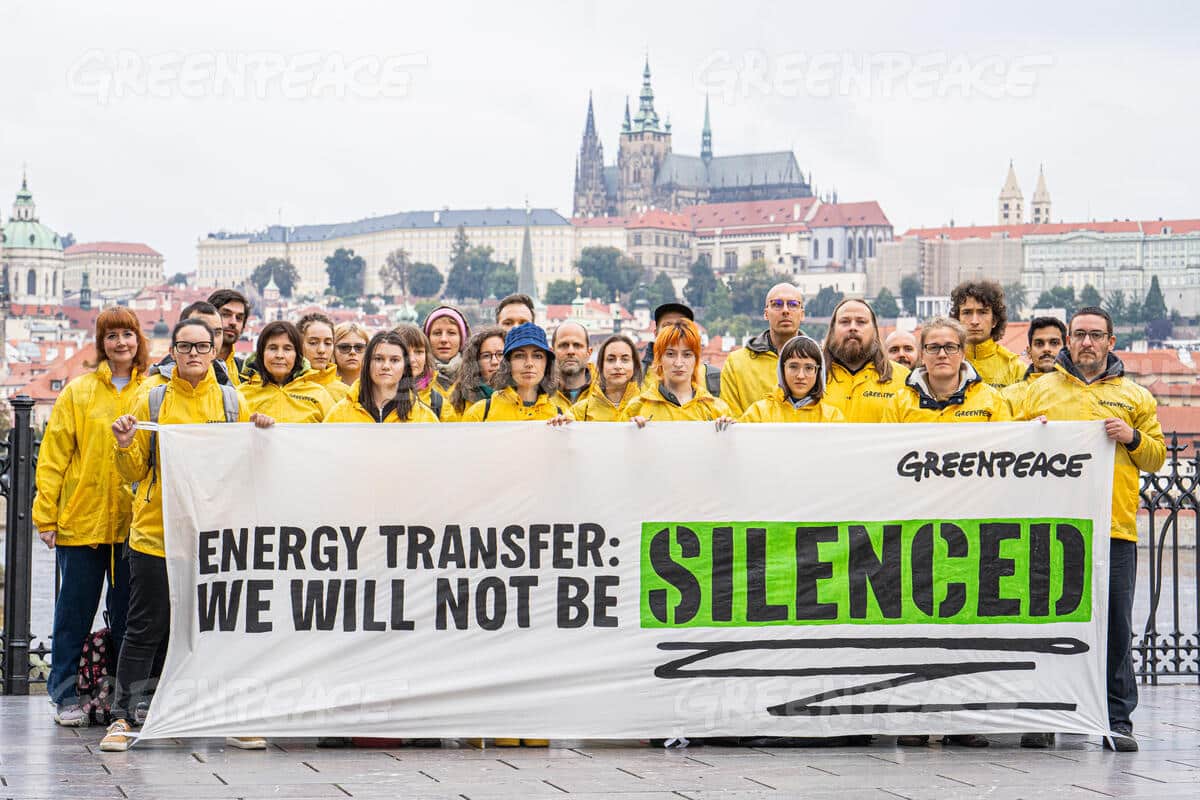
© Ray Baseley / Greenpeace
In 2019, Energy Transfer, the developer of the Dakota Access Pipeline, sued Greenpeace International, a Dutch foundation, in North Dakota state court. Last year, Greenpeace responded with an anti-SLAPP (Strategic Litigation Against Public Participation) lawsuit against Energy Transfer in Dutch court. In the latest twist in this lengthy dispute, the North Dakota Supreme Court issued an antisuit injunction last week blocking (partially) that anti-SLAPP suit.
The injunction is unusual in two respects. First, it does not actually bar Greenpeace from pursuing the Dutch action; rather, it purports to limit the issues that Greenpeace can raise in that litigation. Second, it was entered after judgment had already been reached in the North Dakota lawsuit.
Background
In 2016, the planned construction of the 1,000-mile Dakota Access oil pipeline engendered significant and sometimes violent protests near the Standing Rock Sioux Reservation in North Dakota. Greenpeace International was among the many civil society organizations that advocated against the pipeline project.
The U.S. Litigation
In 2019, Energy Transfer L.P. sued Greenpeace and its two U.S. affiliates, along with other environmental rights groups, in federal court in North Dakota. Energy Transfer alleged that Greenpeace had engaged in criminal activity violating the Racketeer Influenced and Corrupt Organizations Act (RICO). It also asked the court to exercise supplemental jurisdiction over a range of additional state law claims. This lawsuit was dismissed in its entirety for failure to state a claim—the racketeering claims with prejudice, and the state law claims without prejudice.
A week later, Energy Transfer filed a second lawsuit in North Dakota state court alleging defamation, tortious interference with business, and conspiracy under state law. On March 19, 2025, a jury found Greenpeace liable, concluding that it had supported the protests that delayed construction of the pipeline. It awarded Energy Transfer more than $650 million in compensatory and exemplary damages. In February 2026, the trial court finalized the judgment in Energy Transfer’s favor, though it reduced the total damages to $345 million. Greenpeace is currently seeking a new trial in that case.
The Netherlands Litigation
Greenpeace characterizes both the proceedings in North Dakota federal court and the proceedings in North Dakota state court as SLAPP suits. It contends that Energy Transfer filed these claims in order to block Greenpeace from exercising its right to participate in public debate regarding the pipeline. In July 2024, it sent Energy Transfer a notice of liability stating that the U.S. litigation constituted an abuse of its rights under Dutch and EU anti-SLAPP law. It demanded that Energy Transfer withdraw its U.S. claims against Greenpeace and “accept liability and responsibility for payment of all damage (including costs)” that Greenpeace suffered as a result of the proceedings.
Energy Transfer did not agree to these demands, and in February 2025, shortly before trial began in the North Dakota case, Greenpeace filed a summons initiating litigation in the District Court of Amsterdam. It seeks compensation for costs and damages, including reputational damage, and a declaratory judgment that Energy Transfer acted tortiously and abused Greenpeace’s rights by commencing the U.S. lawsuits.
Greenpeace’s suit in the Netherlands invokes the EU’s Anti-SLAPP Directive, which entered into force in May 2024. The goal of the Directive is to protect journalists and civil society actors from “manifestly unfounded claims or abusive court proceedings” initiated in order to chill their participation in public debate.
While the Directive’s primary objective was to address SLAPP suits initiated in European courts, it specifically recognizes and seeks to mitigate the threat of SLAPP suits brought in courts outside the EU against EU-based defendants. First, it includes an anti-enforcement provision (Article 16), which provides that a judgment rendered against an EU resident by a non-EU court can be denied recognition and enforcement if the foreign proceedings are deemed “manifestly unfounded or abusive under the law of the Member State in which recognition or enforcement is sought.”
Second, it creates a jurisdictional basis for claims initiated by an EU person targeted by a third-country SLAPP suit (Article 17). In the case of abusive proceedings, such a person “may seek, in the courts or tribunals of the place where that person is domiciled, compensation for the damage and the costs incurred in connection with the proceedings before the court or tribunal of the third country.” Such claims can be initiated before a decision has been rendered or become final in the foreign proceeding.
Although the deadline for EU member states to implement the Directive within their national legal systems has passed, it has not yet been fully transposed across the EU. Nevertheless, the Dutch Ministry of Justice and Security has stated that Dutch private international law already permits the exercise of jurisdiction in anti-SLAPP claims involving a third-country proceeding. Greenpeace’s anti-SLAPP claims against Energy Transfer are based on Dutch civil law.
The Antisuit Injunction
Five months after Greenpeace initiated its lawsuit in Amsterdam—and after the North Dakota state lawsuit had resulted in a jury verdict against Greenpeace—Energy Transfer filed a motion in the North Dakota court seeking an antisuit injunction prohibiting Greenpeace from proceeding with the Dutch anti-SLAPP suit.
Whether and under what circumstances a state court may issue an international antisuit injunction was apparently a matter of first impression in North Dakota. Given the lack of precedent, the state district court turned for guidance to federal law on the issuance of such injunctions. (Oddly, it relied not on Eighth Circuit precedent, but on a district court decision from another circuit.) The framework it chose laid out a three-step analysis, requiring the court to consider:
(1) Whether the parties and issues in the U.S. proceeding and the foreign proceeding are the same;
(2) Whether the foreign litigation would (a) frustrate a policy in the enjoining forum; (b) be vexatious; (c) threaten the enjoining court’s in rem or quasi in rem jurisdiction; or (d) prejudice other equitable considerations; and
(3) Whether principles of comity counsel against an injunction.
Applying this framework, the district court denied Energy Transfer’s motion for an antisuit injunction. Energy Transfer then petitioned the North Dakota Supreme Court for supervisory review. That court granted review and concluded that the district court had abused its discretion by misapplying the legal framework. Following the same framework, it concluded that an antisuit injunction was justified.
Although the North Dakota Supreme Court grappled with the challenges presented by anti-SLAPP litigation, the court’s analysis did not adhere very closely to the test it purported to adopt.
Threshold Question: Identity of Issues
As a threshold matter, the party seeking an antisuit injunction must establish that the issues at stake in the foreign proceeding and the U.S. proceeding are substantially the same, such that the outcome of the latter would dispose of the former. That was not the case here. As the district court had recognized, while the two proceedings arose from the same activities, they raised different issues.
The core of the Dutch proceeding was a claim that was not at issue in the U.S. proceeding, since North Dakota law does not have an anti-SLAPP law. Moreover, the Dutch lawsuit involved allegations that Energy Transfer had defamed Greenpeace, based largely on statements the company made in and in connection with the failed RICO litigation. The question of defamatory conduct by Energy Transfer was not at issue in the North Dakota proceeding, since Greenpeace had made no counterclaims there.
The state Supreme Court nevertheless concluded that the issues were “substantially similar,” holding that the threshold requirement had been met. However—presumably recognizing that its judgment would not in fact dispose of the Dutch proceeding—it offered a “narrowly tailored” injunction that left Greenpeace free to pursue claims premised on “matters the North Dakota proceedings did not adjudicate.”
Equitable Factors and the Role of Comity
Following the district court, the Supreme Court indicated that it was adopting the conservative approach to antisuit injunctions, which views international comity as a significant factor weighing against the issuance of such injunctions. Even under that approach, however, courts are typically willing to enjoin “interdictory” foreign proceedings whose aim is to preclude or interfere with the adjudication of a claim in U.S. court.
In this case, the court characterized the Dutch action as vexatious, stating that it was filed after the North Dakota case had been ongoing for more than six years and “on the eve of trial.” (It is worth pointing out that Greenpeace sent a notice of liability the previous year, after the EU Directive entered into force.) Nevertheless, as the district court noted, it is hard to see how the Dutch action could have actually blocked or interfered with the North Dakota proceeding, which had already proceeded through trial at the time the injunction was sought.
Courts adopting the conservative approach are also willing to enjoin foreign proceedings that violate an important public policy of the forum. Invoking this doctrine, the North Dakota Supreme Court voiced its core objection to the Dutch suit:
North Dakota provides an orderly process for challenging an adverse verdict—post-trial motions and review in this Court… . [Greenpeace]’s Dutch action seeks a declaration that the North Dakota case was “manifestly unfounded and abusive” and demands damages designed to offset the jury’s verdict. If successful, the Dutch action would contradict and offset the verdict, functionally nullifying it. This is not a legitimate parallel action. It is an attack on a fundamental policy of this state.
At this point, however, judgment in Energy Transfer’s favor has already been entered in the North Dakota proceeding, triggering the principle of res judicata. Unless and until a new trial is granted or that judgment is overturned on appeal, one would expect the Dutch court to consider that when assessing Greenpeace’s claims that the North Dakota proceedings were “manifestly unfounded or abusive.” (As recital 29 of the Directive indicates, if the claimant in the foreign proceedings “pursues claims that are founded, such proceedings should not be regarded as abusive.”) Issuing an antisuit injunction that indirectly takes that decision out of the hands of the Dutch court would seem inconsistent with the concept of international comity.
Conclusion
The North Dakota Supreme Court ultimately ordered the district court to enter a “narrowly framed” antisuit injunction. This injunction will bar Greenpeace “from pursuing any claim in the Dutch action whose elements require, as pleaded, a finding that the North Dakota case lacked legal foundation—including any claim premised on the ‘manifestly unfounded’ standard” of the EU Directive.
However, the injunction will not bar Greenpeace from asserting other claims in the Dutch litigation. Specifically, it would not bar claims “premised on Energy Transfer’s dismissed federal RICO suit and on alleged out-of-court defamatory statements—matters the North Dakota proceedings did not adjudicate.”
In a sense, this measure undermines international comity even more than a comprehensive antisuit injunction would. Its effect is to permit the foreign proceeding to continue while attempting to control the set of issues the foreign court can consider.