
Supreme Court Grants Cert in Cisco
January 12, 2026
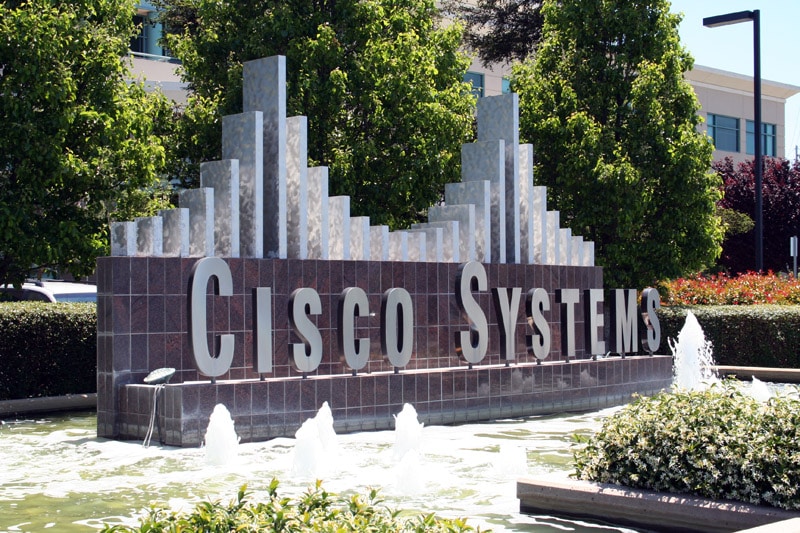
On Friday, the Supreme Court granted cert in Cisco Systems, Inc. v. Doe I to address two questions: (1) whether claims for aiding and abetting human rights violations can be brought under the Alien Tort Statute (ATS); and (2) whether such claims can be brought under the Torture Victim Protection Act (TVPA). I have discussed the merits of both question in prior posts. But I thought it might be worth looking briefly at how Cisco relates to other Supreme Court cases interpreting these two statutes.
The ATS was part of the first Judiciary Act of 1789, which established the federal courts. As codified today, it provides: “The district courts shall have original jurisdiction of any civil action by an alien for a tort only, committed in violation of the law of nations or a treaty of the United States.” The violations that the First Congress had in mind were infringement of the rights of ambassadors, violations of safe-conducts, and piracy.
In Sosa v. Alvarez-Machain (2004), the Supreme Court recognized an implied cause of action under the ATS. Significantly, the Court held that this cause of action is not limited to these three 18th-century torts—it also extends to “claim[s] based on the present-day law of nations [that] rest on a norm of international character accepted by the civilized world and defined with a specificity comparable to the features of the 18th-century paradigms we have recognized.”
In three subsequent cases, the Court substantially narrowed the ATS cause of action. Kiobel v. Royal Dutch Petroleum (2013) applied the presumption against extraterritoriality to the cause of action, holding that it did not apply to human rights violations committed by a foreign corporation abroad. Jesner v. Arab Bank PLC (2018) held that the ATS cause of action does not apply to foreign corporations at all. And, for suits against U.S. corporations, Nestlé USA, Inc. v. Doe (2021) required conduct in the United States that goes beyond decisionmaking.
Not many cases can satisfy all these requirements. ATS suits against individuals for human rights violations abroad are likely to fall afoul of Nestlé’s domestic-conduct requirement (though some such cases may be brought under the TVPA, discussed below). ATS suits against foreign corporations are barred under Jesner. And under Nestlé, ATS suits against U.S. corporations require substantial conduct in the United States. Thus, claims actionable under the ATS are generally limited to claims that U.S. companies engaged in domestic conduct that aided and abetted human rights violations abroad. Cisco is such a case—the defendant is a U.S. company that designed and built in the United States a surveillance system for the People’s Republic of China that was allegedly used to persecute practitioners of Falun Gong.
It is because the Supreme Court’s prior decisions have effectively limited the ATS cause of action to aiding and abetting claims that Cisco is so important. A decision that such claims are not, in fact, actionable would effectively mark the end of human rights litigation under the ATS, overruling Sosa in all but name.
Human rights litigation would continue, of course, under other statutes such as the TVPA and the Trafficking Victims Protection Reauthorization Act (TVPRA). The TVPA applies only to claims of torture and extrajudicial killing against individuals, however, and so cannot be used to sue corporations. The TVPRA does apply to corporations, but only covers claims such as forced labor and human trafficking.
A decision by the Supreme Court that aiding and abetting claims cannot be brought under the TVPA would not mark the end of that statute’s usefulness. Whereas corporations tend to violate human rights indirectly by aiding and abetting others, individual often engage directly in torture or extrajudicial killing. Such individuals could continue to be sued under the TVPA regardless of what the Court holds in Cisco.
Oral arguments in the Cisco case are expected to be scheduled for the week of April 20. TLB will be covering the arguments and the eventual decision, which should be handed down by the end of June.