
Oral Argument Recap: Suncor v. Boulder
October 6, 2026
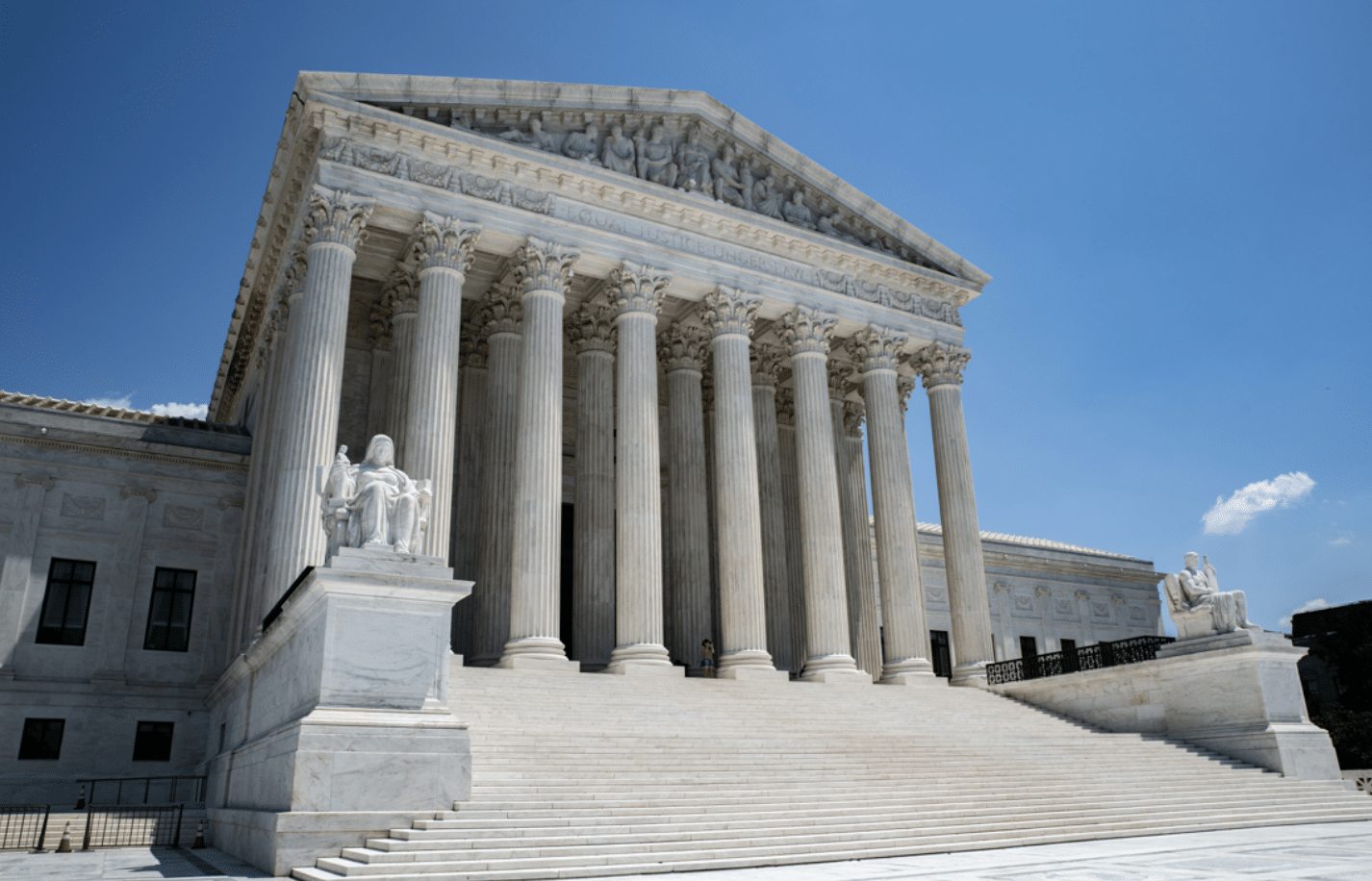
On Monday, the Supreme Court opened its new Term with oral arguments in Suncor v. County Commissioners of Boulder County (for background on the case, check out our preview post). Justice Alito did not participate as he has recused himself. Here are some takeaways as we await the Court’s decision.
No One Is Buying the “Extraterritoriality Principle”
Kannon Shanmugam, arguing for the petitioner/defendant gas and oil companies, opened with and kept returning to “the Constitution’s prohibition on extraterritorial regulation,” which he at one point termed “venerable.” He defined this extraterritoriality principle as prohibiting litigation of conduct that is not directed at the state, causes diffuse harm, and has only a “severely attenuated” causal nexus to the state. None of the Justices seemed receptive to this theory.
As Kevin Russell, arguing on behalf of the respondent/plaintiff localities, repeatedly and correctly emphasized, such concerns are already addressed through choice of law, the dormant Commerce Clause, personal jurisdiction, and tort law. I counted at least five Justices who were likewise frustrated by the blurring of these doctrines and the lack of constitutional or precedential hook for a broader “extraterritoriality principle.” As Justice Kagan memorably put it, “So there’s a default rule [against state extraterritoriality] that was part of the plan of the Convention. And I suppose it’s like: Wow, like, where is the text for that? Where’s the support for that? Where’s the precedent for that? Where’s the anything for that?”
When Chief Justice Roberts, Justice Kagan, and Justice Gorsuch all pressed Shanmugam on the distinction between this proposed extraterritoriality principle and choice of law, he kept falling back on preemption arguments specific to environmental law—a slippage that Kagan explicitly called out in another one of my favorite exchanges:
JUSTICE KAGAN: … And as you’re pressed on the extraterritorial aspect, you go back to your environmental theory. So is it really that your extraterritorial theory cannot stand alone?
SHANMUGAM: Like my children, I love both of our theories equally, Justice Kagan.
JUSTICE KAGAN: Well, but if … that’s true, then you can’t answer questions about the extraterritorial theory by referring to the nature of air and water regulation.
Maybe Preemption Applies—But Questions Remain
Luckily for petitioners, its preemption theory might have more legs. Kavanaugh made clear that he reads the Court’s precedents as establishing that “interstate air and water pollution are matters for federal law unless Congress specifically preserves state law.” But even then, he kept noting, the Court has permitted such state common law pollution claims to proceed under the law of the emitting state. If that’s correct, then the problem with this lawsuit is not the invocation of state law, but the invocation of the wrong state’s law. While Justice Kavanaugh developed this line of reasoning repeatedly and emphatically, it requires flipping the standard presumption against preemption into a presumption of preemption. Further, as Justice Jackson pointed out, it is not yet settled which state’s law would apply in this case: respondents didn’t plead any particular state’s law, and the trial court has yet to make its choice-of-law determination.
Justice Barrett likewise seemed interested in a preemption analysis, though perhaps a little less ready that Kavanaugh to flip the default rule. Gorsuch wondered aloud whether the Solicitor General wasn’t leading with preemption because there was something wrong with that line of argument. There are indeed a lot of questions that would have to be addressed for the petitioners to win on preemption, even beyond those raised by Kavanaugh’s approach. The EPA has repealed its endangerment finding, reasoning that the Clean Air Act does not address greenhouse gas emissions and climate change—a development that came up repeatedly during the arguments. Both Gorsuch and Barrett seemed to accept that this would leave space for residual common law claims, though they both seemed to think that law would be federal common law, not state law. Even if that’s true, what would be the content of that federal common law? The respondents, for their part, argued that the Clean Air Act—and any statutory preemption that follows in its wake—is simply inapplicable because they framed their allegations in terms of deceptive marketing, not emissions. (Sotomayor seemed to agree on this point, while Roberts was skeptical of the distinction.)
The Petitioners Want To Win the War
The petitioners were unwilling to accept Kavanaugh’s preemption approach, however, because they want the Court to rule that state law can never be invoked in cases related to climate change. Why? Shanmugam was explicit: because “there are dozens of these cases out there.” Holding that this case is preempted might only give plaintiffs a roadmap for how to properly plead their climate change claims in other cases.
Some of the Justices were explicitly sympathetic to this practical concern. Kavanaugh called the respondents “cavalier” about the burdens of litigation, expressing concern that these climate change cases might bankrupt the defendants. As Roberts pressed Russell, “presumably, if you prevail, the next day, a municipality in every single state will file a lawsuit, they’ll probably copy your pleadings …. how do you think that will work out on the ground?” In response, Russell noted the plaintiffs would still have to satisfy the dormant Commerce Clause, choice of law rules, personal jurisdiction, and proximate causation, and he pointed to the experience of asbestos and other product liability suits. “I don’t think there’s anything in the Constitution,” he summed up, “that says preemption arises from — whenever, you know, a state law, if copied in other states, could cause a lot of litigation.”
I am a bit worried that Roberts, Kavanaugh, and Thomas (and possibly others) were so concerned about the door the Court could leave open for climate change litigation. Roberts did not explain why he thinks “asbestos is a little different”: those cases also overwhelmed the federal courts, posed difficult attribution problems, and did bankrupt large companies. But there was no broad constitutional prohibition on the applicability of state law to those claims. There are real dangers that a broad holding in favor of the petitioners in this case could have sweeping effects on the scope of state power.
This May All Be Moot
Before the Court can reach either the question of preemption or the existence of an “extraterritoriality principle,” however, it will first have to decide that it has the authority to hear this case. That requires finding that the Colorado Supreme Court’s decision reviewing the state trial court’s decision not to dismiss due to preemption is a final judgment under 28 U.S.C. § 1957. Further, if the state court decision is treated as a final judgment independent from the underlying lawsuit, does that decision by itself harm the defendants so as to provide them with standing under Article III?
Justice Thomas’s initial question for both the petitioners and the Solicitor General was whether the Court has jurisdiction to hear this claim. Jackson repeatedly returned to the prematurity of this appeal and the problems caused by the procedural posture (including, for example, the lack of a choice-of-law determination). On standing, the petitioners argue they should not have to bear the heavy costs of litigation while awaiting review of their preemption arguments and other federal defenses following a final judgment on the merits. That litigation by itself is a constitutionally cognizable injury seems like a dangerously broad principle to adopt.
Conclusion
In sum, Kavanaugh, Barrett, and Gorsuch seem to be interested in a preemption-based rationale for shutting down this lawsuit, though it is unclear whether they will agree amongst themselves on precisely how to reach that result. Though Roberts asked little about preemption, his pragmatic concerns coupled with his obvious distaste for the petitioners’ proposed “extraterritoriality principle” might lead him to support a creative preemption holding. Meanwhile, Kagan, Sotomayor, and Jackson seemed utterly unconvinced by all of the petitioners’ arguments, from jurisdiction to preemption to new constitutional principles.
That leaves Justice Thomas as the likely deciding vote (as a tie would leave the Colorado Supreme Court’s judgment undisturbed). While Thomas pressed the petitioners on jurisdiction, he also pressed the respondents on the limits of their approach to state tort law. He may be less willing than Roberts to join a creative preemption rationale, however, given the opinion he authored last Term in Hencely v. Fluor Corp. (2026), which rejected a new doctrine of “battlefield preemption.” (Notably, Roberts and Kavanaugh joined Alito’s dissent in that case—a dissent motivated primarily by pragmatic concerns.)
It may be that Suncor produces a set of fractured decisions, not unlike the Court’s most recent dormant Commerce Clause decision in National Pork Producers Council v. Ross (2023). But one thing seems fairly clear: the petitioners are not going to get the sweeping victory they would like. If oil and gas companies want to shut down climate change litigation, their best bet is Congress.