
CIMEX’s Implications for Foreign Official Immunity in TVPA Cases
July 14, 2026
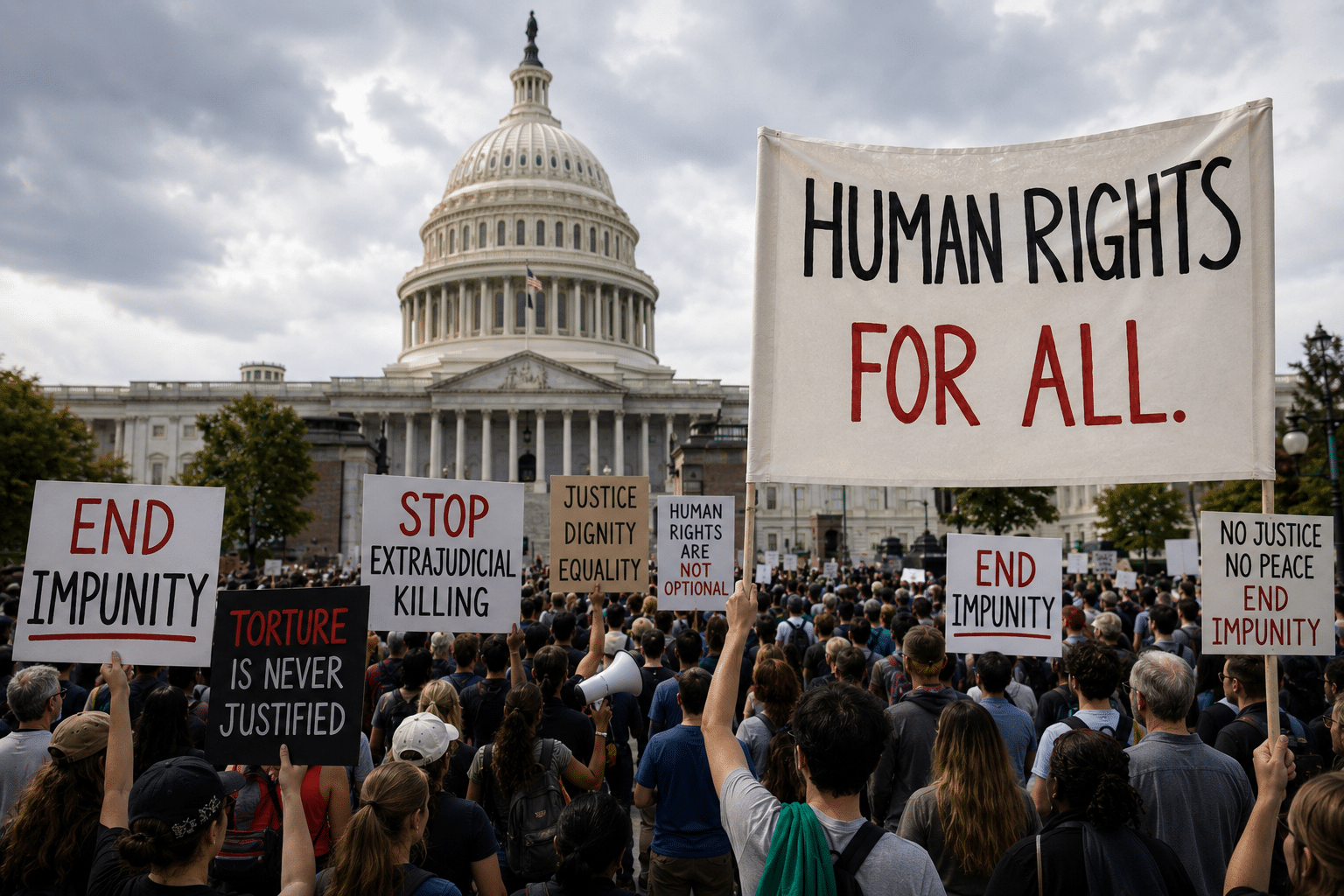
Image by ChatGPT
In Exxon Mobil Corp v. Corporación CIMEX, S.A. (Cuba), the Supreme Court held that Congress, by creating a cause of action against agencies and instrumentalities of foreign states, abrogated the immunity from suit that an instrumentality of Cuba would otherwise have enjoyed under the Foreign Sovereign Immunities Act (FSIA). (For analysis, see here.)
The Court relied on the fact that the Helms-Burton Act’s cause of action “expressly applies against foreign … agencies or instrumentalities.” It also reasoned that the Act was not “self-defeating.” Congress would not authorize suits against such defendants only to have them barred on immunity grounds.
In this post, I suggest that similar arguments justify reading the Torture Victim Protection Act (TVPA) to abrogate the federal common-law immunity of certain foreign officials. The TVPA creates an express cause of action against “[a]n individual who, under actual or apparent authority, or color of law, of any foreign nation … subjects an individual to torture … or … extrajudicial killing.” The requirement to act under color of foreign law means that TVPA defendants are almost always foreign officials.
As I have previously discussed, lower courts have generally concluded that the TVPA does not abrogate foreign official immunity. But CIMEX requires reconsideration of that conclusion. Like Helms-Burton, the TVPA creates a cause of action that runs against specific defendants. And, as with Helms-Burton, reading the TVPA not to abrogate immunity would render the statute self-defeating (at least if one takes a broad view of conduct-based immunity).
Foreign State Immunity and Foreign Official Immunity
In the United States, the FSIA governs the immunities of foreign states and their agencies or instrumentalities. It establishes a presumption that such defendants are immune from suit in federal and state court unless one of the Act’s exceptions to immunity applies.
But the Supreme Court held in Samantar v. Yousuf (2010) that the FSIA does not govern the immunities of foreign officials, which is instead governed by federal common law. Sitting heads of state, heads of government, and foreign ministers are absolutely immune from suit during their terms in office. This is commonly called “status-based immunity” or “head-of-state immunity.” Other foreign officials, and all former officials, are immune only from suits based on acts taken in their official capacities. This is commonly called “conduct-based immunity.” (For an overview, see here.)
There is a presumption that federal statutes do not displace well-established principles of common law. But there is also a presumption against the implied repeal of federal statutes. For the purposes of abrogating immunity, it should make no difference whether the immunity has been codified or not. Although CIMEX involved immunities codified in the FSIA, the Court relied heavily on a case involving the sovereign immunity of the United States, which is uncodified. It would be odd to make it harder for Congress to override judge-made rules of common law than to override a federal statute.
A Specific Cause of Action
The first reason CIMEX gave for reading Helms-Burton to abrogate the immunity of foreign state instrumentalities under the FSIA was that it creates a specific cause of action. “In the ordinary course, the FSIA applies when a plaintiff seeks to sue a foreign sovereign under a general federal or state cause of action,” Justice Kavanaugh wrote. “[W]hen Congress creates a general cause of action, it is not evident that Congress contemplates or intends that plaintiffs suing under that general cause of action could hale foreign sovereigns into U.S. court” (emphasis in original). Helms-Burton was “entirely different,” though, because “Congress took the highly unusual step of creating a cause of action that expressly applies against foreign … agencies and instrumentalities.”
The same may be said of the TVPA. Although the TVPA does not refer expressly to foreign officials, it applies only to torture and extrajudicial killing “under actual or apparent authority, or color of law, of any foreign nation,” which means that defendants will often be foreign officials. Moreover, the legislative history makes clear that Congress specifically contemplated suits against foreign officials. Senate Report 102-249 says “[t]he TVPA is not intended to override traditional diplomatic immunities” and that “visiting heads of state” should not be “subject to suit under the TVPA.” “However,” the Report continues, “the committee does not intend these immunities to provide former officials with a defense to a lawsuit brought under this legislation” (emphasis added).
To be sure, TVPA claims might be brought against defendants other than foreign officials. But Helms-Burton claims can be brought against defendants other than agencies and instrumentalities of foreign states. CIMEX does not require that a cause of action be exclusively directed against defendants entitled to immunity; it requires only that a cause of action be specifically directed against defendants entitled to immunity. The TVPA satisfies that test.
Avoiding Self-Defeat
CIMEX’s second reason for reading the Helms-Burton Act to abrogate immunity under the FSIA was to ensure that its provisions would be effective. “Congress does not ordinarily enact self-defeating statutes,” Justice Kavanaugh wrote. “It would make little sense for Congress to construct an elaborate statute authorizing suits against the Cuban government agencies and instrumentalities if, because of the FSIA, almost no suits could ever get through the courthouse door.”
What would make little sense for Helms-Burton would similarly make little sense for the TVPA. Courts in the United States are divided over whether violations of fundamental human rights, such as torture and extrajudicial killing, can be considered acts taken in an official capacity for purposes of conduct-based immunity. The Fourth Circuit has said no, whereas the Second Circuit has said yes. Under the Fourth Circuit’s view, foreign officials who engage in torture and extrajudicial killing are not entitled to conduct-based immunity in the first place, so there is no immunity to abrogate. But under the Second Circuit’s view, foreign officials who engage in torture and extrajudicial killing would be entitled to conduct-based immunity, rendering the TVPA largely self-defeating.
Some courts have previously responded to this argument by noting that foreign states may disavow their officials’ torture and extrajudicial killing, thereby waiving the defendants’ immunity. But this answer should carry less weight after CIMEX. The FSIA also recognizes exceptions to immunity, including waiver. Indeed, the district court in CIMEX held that the FSIA’s commercial activity exception covered some of the plaintiff’s claims. When immunity would “largely negate” a cause of action, CIMEX concluded, there is good reason to read the cause of action as abrogating immunity.
The other reasons CIMEX gave for reading Helms-Burton to override the FSIA turn on specific aspects of the FSIA (see here for discussion) and are therefore not relevant to the TVPA. But its first two reasons appear to be the central ones, and both apply equally to the TVPA. Like Helms-Burton, the TVPA creates a specific cause of action against defendants that may be entitled to immunity. And, like Helms-Burton, the TVPA would be “self-defeating” if the defendants could generally claim immunity from suit.
Conclusion
At the D.C. Circuit, Judge Randolph dissented from the panel majority in CIMEX, arguing that Helms-Burton “deprives the Cuban defendants of immunity from suit.” It is noteworthy that Judge Randolph also took the position, concurring in Lewis v. Mutond (2019), that the TVPA abrogates conduct-based immunity. “When there is such a clear conflict between statutory law and judge-made common law,” he wrote, “the common law must give way.”
Judge Randolph proved right with respect to Helms-Burton. Perhaps he will again with the TVPA.